English
 Español
 Français
 عربى
عربى italiano
A facility manager receives two quotes for the same parking lot retrofit. Both specify identical LED luminaires, but one price is 30 percent lower. The difference is not the lamp. It is the pole beneath it. For commercial LED pole lights, the supporting structure determines how long the installation performs, how much maintenance costs over the next two decades, and whether the project passes inspection. Choosing a pole only on price is a mistake that outlasts the LED driver, the photocell, and often the first LED module itself.
Content
- 1 What Defines a Commercial Grade LED Pole
- 2 Aluminum or Steel: Which Pole Material Performs Better
- 3 Aluminum versus Steel at a Glance
- 4 Choosing the Right Height and Mounting Method
- 5 Powder Coating, Anodizing, and Long-Term Protection
- 6 Solar Power and Smart Control Options
- 7 A Short Specification Checklist for Commercial LED Pole Lights
What Defines a Commercial Grade LED Pole
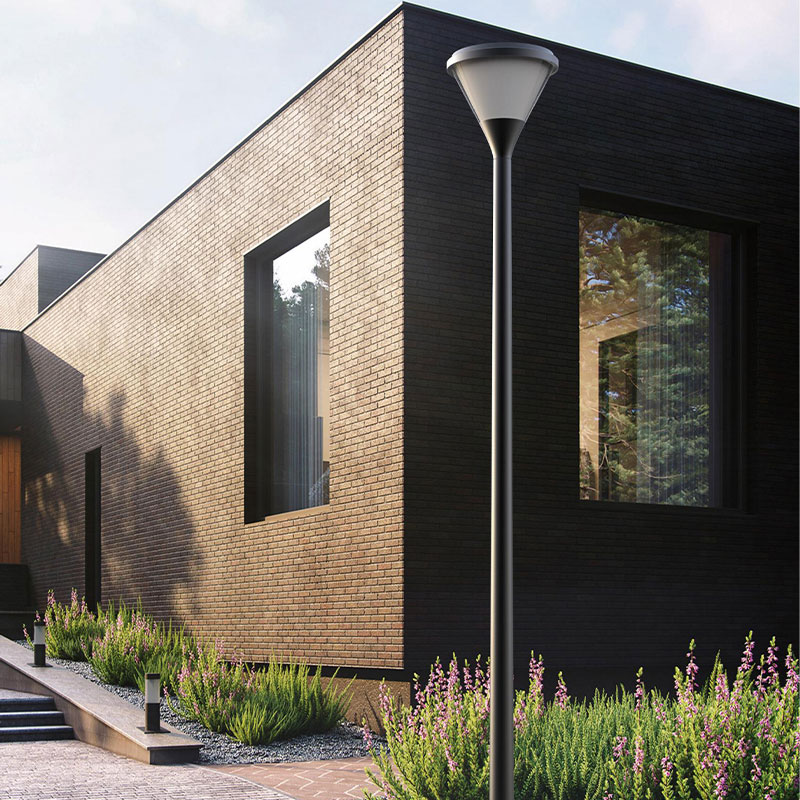
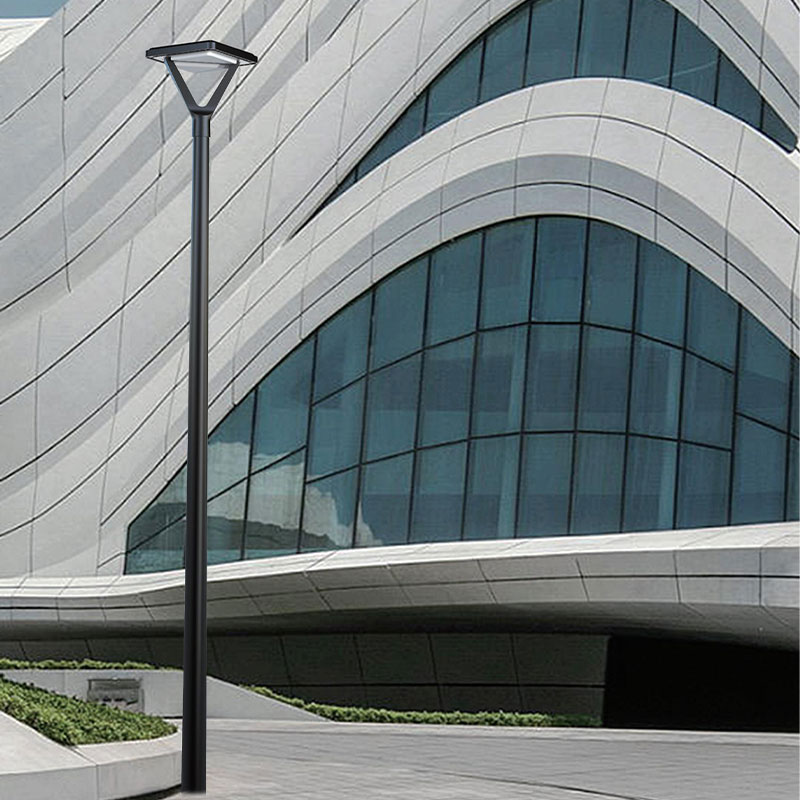
A commercial LED pole is a complete structural and electrical assembly, not a simple post. It must resist wind load, carry the weight of the luminaire, protect wiring inside the shaft, and provide a lockable access door at a working height.
Two engineering values matter more than any others: effective projected area, or EPA, and wind speed rating. EPA is the luminaire frontal area multiplied by a drag coefficient. If the pole is too light for the luminaire, the assembly can oscillate in steady wind, producing fatigue cracks at the welds or base plate. A reliable rule is to never buy a pole by height alone. The pole, anchor bolts, foundation, and luminaire must be designed as one system. That is why the best procurement documents specify the maximum EPA allowed for each pole model.
Poles are also rated by the maximum luminaire weight they can support at a certain wind speed. If the luminaire is large, such as a 400 watt LED floodlight, the pole size is driven by wind load rather than by height. This is a common reason project estimates increase.
Aluminum or Steel: Which Pole Material Performs Better
Manufacturers build commercial LED pole lights from three main materials. Aluminum and steel dominate because both can be tapered, welded, and finished to a high standard. Concrete appears at the high-mast end of the market.
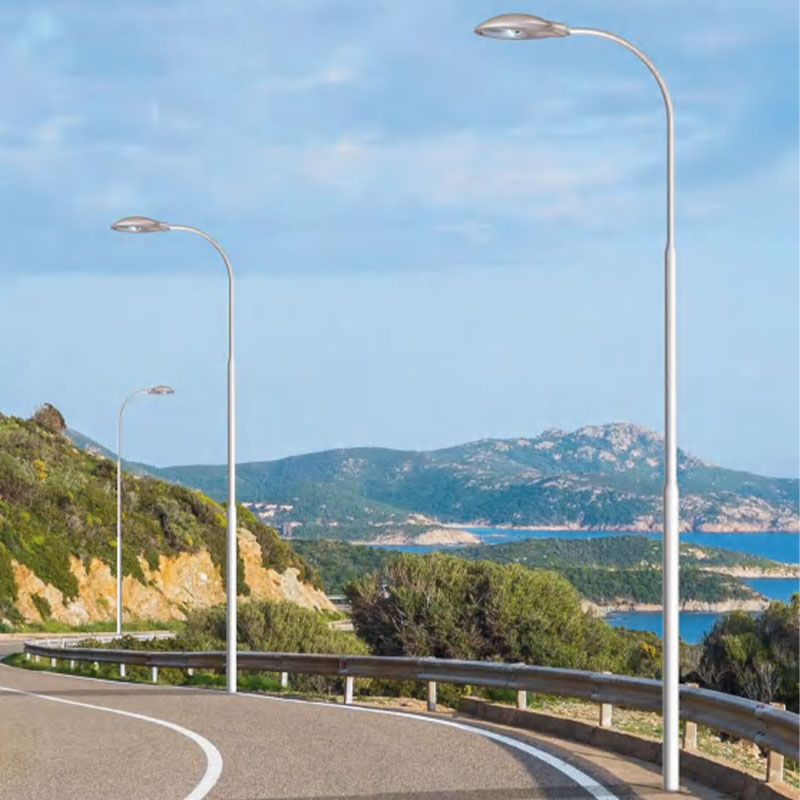
Aluminum offers natural corrosion resistance. The surface forms a thin oxide layer that stops further oxidation. A 6061 or 6063 alloy pole weighs about one third of a steel pole of the same strength, which reduces crane size and installation time. Aluminum is 100 percent recyclable. Morelux produces a commercial aluminum light pole with a flange base for the North American market, plus a full European and Middle Eastern series.
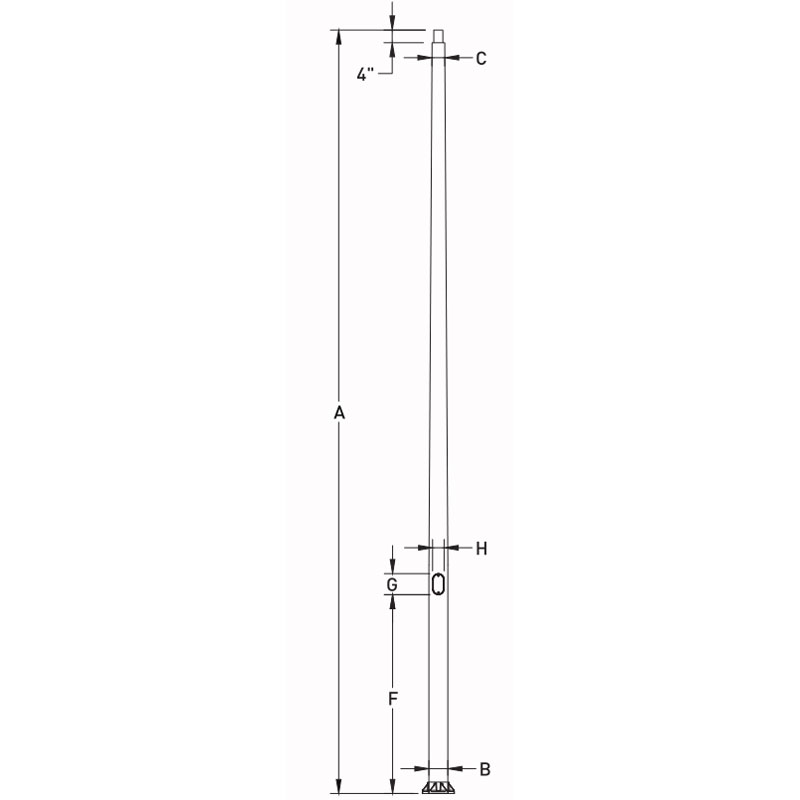 Custom 10ft-40ft Aluminum Conical Light Pole, Base Flange Mounting Supplier, FacNingbo Morelux Pole Technology Limited is China 10ft-40ft Aluminum Conical Light Pole, Base Flange Mounting supplier and factory, profess...View Product →
Steel remains popular for heavy loads and very tall structures. A galvanized steel pole has high tensile strength and a lower initial cost than aluminum. In inland climates, galvanizing with a durable topcoat protects the shaft for 25 years or more. But zinc can be damaged during transport or drilling. Once moisture reaches the steel, rust spreads under the coating. Public agencies that compare life-cycle cost often select aluminum even when the steel quote is lower. The trade-off is examined in our analysis of why steel light poles are preferred for certain high-load projects.
Service Life Comparison
The chart below summarizes typical service life for common pole materials in coastal and industrial exposure.
Chart 1. Typical service life of commercial light pole materials.
The horizontal bar chart compares the service life of four commercial pole materials in an outdoor installation. The values assume coastal or industrial exposure, where corrosion is the main aging factor. Aluminum alloy poles commonly exceed 35 years of service with limited maintenance. Galvanized steel poles average 25 years before re-coating becomes necessary. Pre-cast concrete reaches 30 years but offers no flexibility for retrofitting. Treated wood falls below 20 years. Life-cycle cost, not purchase price, should guide the final decision.
Aluminum versus Steel at a Glance
A radar chart helps visualize the six attributes that matter most when selecting a commercial LED pole material.
Chart 2. Material comparison across six key attributes.
The radar chart compares aluminum and steel across six attributes on a scale of 1 to 10. Aluminum scores 9 on corrosion resistance because it forms a self-healing oxide layer. Steel scores 9 on strength, which is why it is chosen for very tall poles. Aluminum is far lighter, scoring 9 against steel's 6, so installation requires a smaller crane. Both materials can be recycled, but aluminum retains full value in the recycling stream. Aluminum also delivers lower maintenance effort and wider design flexibility. Aluminum suits the majority of commercial LED pole installations, while steel remains the specialist option for extreme loads.
Choosing the Right Height and Mounting Method
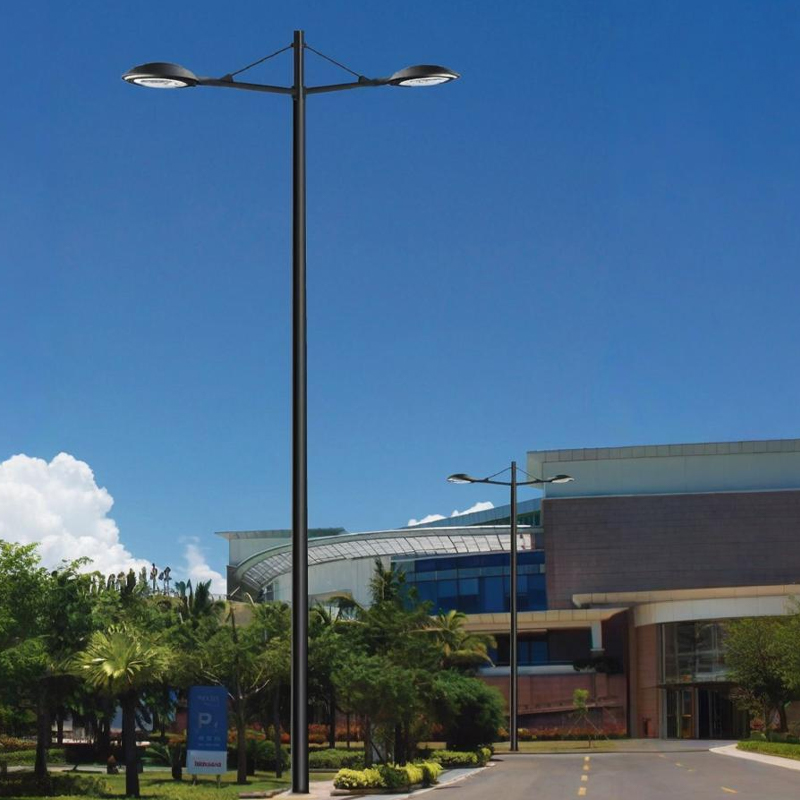
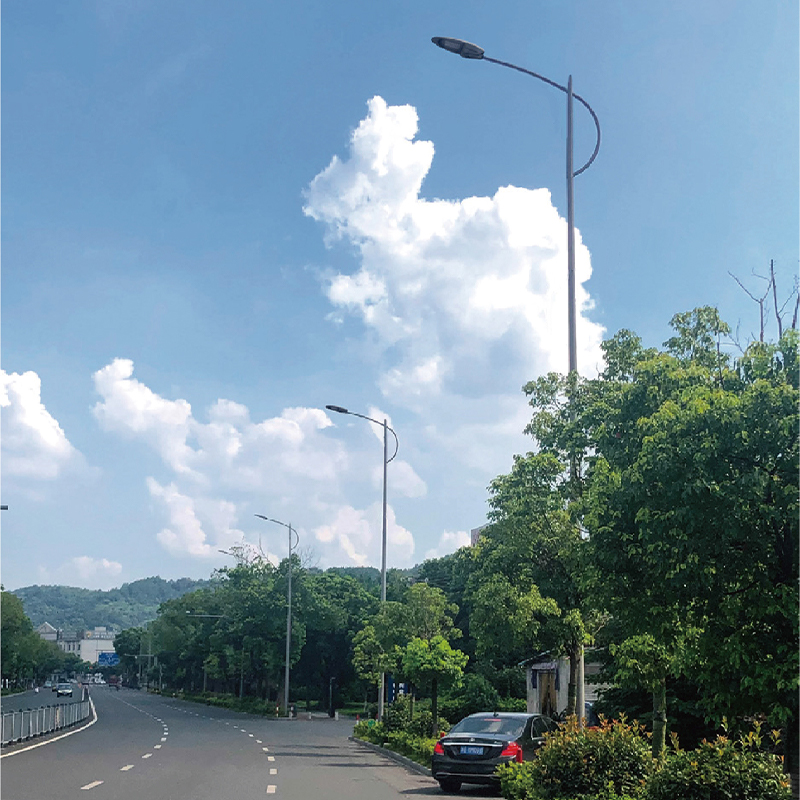
Commercial LED pole lights are grouped by mounting height because the height controls light distribution, glare, and the number of foundations required. Spacing between poles is a function of mounting height, luminaire distribution, and the required uniformity.
Chart 3. Typical mounting heights by commercial application.
The column chart shows the typical mounting heights used for commercial LED lighting applications. Walkways and bikepaths use 10 to 14 foot poles to keep the source close to the ground. Parking lots install 14 to 20 foot poles so that one luminaire covers several vehicles. Roadways and intersections require 25 to 30 foot mounting heights to spread light over multiple lanes. High-mast systems climb to 50 or 80 feet for ports and stadiums. A taller pole reduces the number of foundations but increases wind load. The correct height is confirmed after a photometric study verifies the target uniformity ratio.
Mounting method is the second half of the decision. Flange mounting uses anchor bolts cast into a concrete foundation and permits leveling after the concrete cures. Direct burial, sometimes called planted mounting, sets the pole into a bored hole and backfills around it. It saves foundation cost, but the soil must have consistent bearing capacity.
Tall poles and heavy floodlight frames create large moments at the base. For those conditions, a steel pole may be the correct structural answer. Morelux supplies a galvanized conical steel light pole that combines strength with a smooth taper.
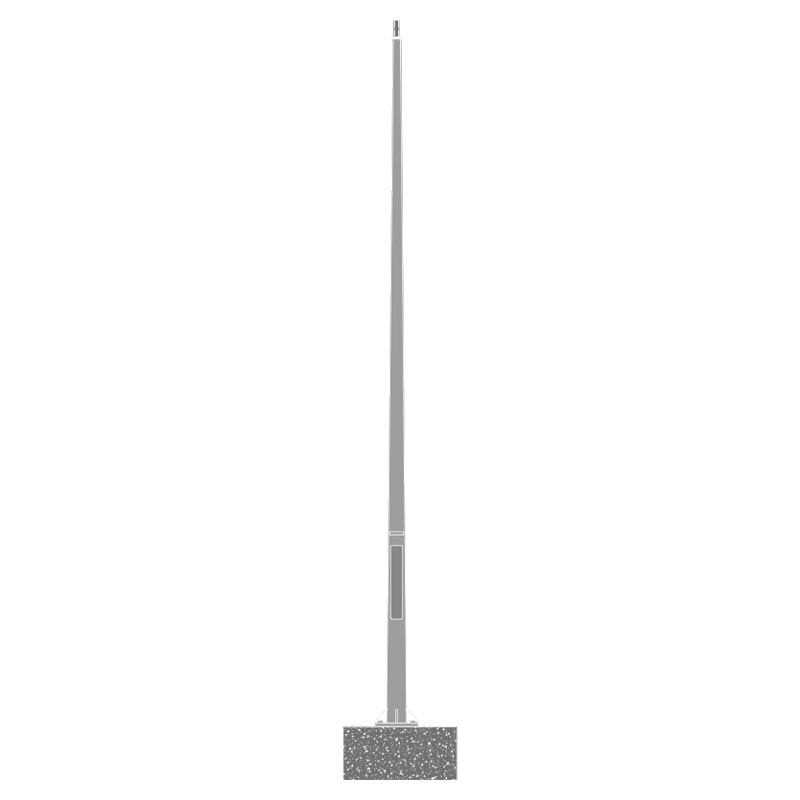 Custom Conical steel light pole Supplier, Factory - Ningbo Morelux Pole TechnoloNingbo Morelux Pole Technology Limited is China Conical steel light pole supplier and factory, professional custom Conical steel light po...View Product →
Powder Coating, Anodizing, and Long-Term Protection
A commercial LED pole light lives outdoors for decades. The surface finish is not cosmetic. It is the primary defense against corrosion, UV fading, and graffiti.
Powder coating applies a dry polymer that melts and cures into a thick film. Outdoor specifications normally require 60 to 80 microns of film thickness. Coastal installations should use a zinc-rich primer under the polyester topcoat. Anodizing creates a hard aluminum oxide layer that is part of the metal. A 15 to 25 micron anodic film resists salt and is extremely hard, but it offers fewer color choices.
Good manufacturers document the coating system in the submittal and verify the film thickness with a gauge. Morelux operates an in-house line that performs powder coating and anodizing under controlled conditions. Ask any supplier for a written warranty covering corrosion and fading. The cheapest finish rarely survives a five-year coastal inspection.
The access door is another durability detail. A cast aluminum door with a stainless steel hinge and a captive screw resists corrosion. The photocontrol receptacle on the pole head must match the twist-lock configuration of the local utility.
Solar Power and Smart Control Options
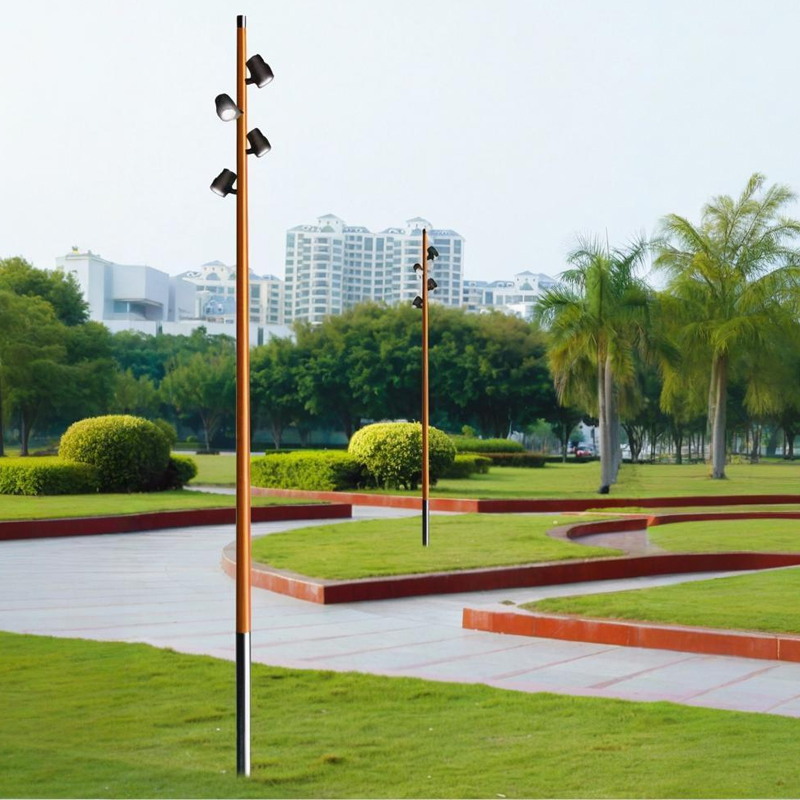
The fastest changing segment of the commercial LED pole light market is solar and smart integration. A solar pole eliminates trenching and grid connection, which matters for remote parking lots and parks. Modern all-in-one units combine an LED luminaire, photovoltaic panel, and lithium battery pack in one housing. Newer panels use flexible HJT cells that wrap around the pole shaft or mount flush on top, reducing wind load.
Chart 4. Cumulative cost of ownership over 25 years.
The line chart compares the cumulative ownership cost of a grid-powered commercial LED pole and a solar-powered pole over 25 years. The grid pole starts at 2,500 US dollars and consumes about 220 dollars per year in energy and maintenance. Its total cost reaches 8,000 dollars by year 25. The solar pole costs 4,200 dollars at installation but requires very little annual spending. The two cost curves cross around year seven. From that point, the solar configuration is cheaper. Sites that pay for trenching, meters, or electrical permits reach the break-even point much earlier.
Morelux builds a flexible HJT solar light pole that keeps a clean taper while integrating the photovoltaic panel. The battery pack fits inside the pole base or in a compact remote housing, depending on the capacity needed for the site.
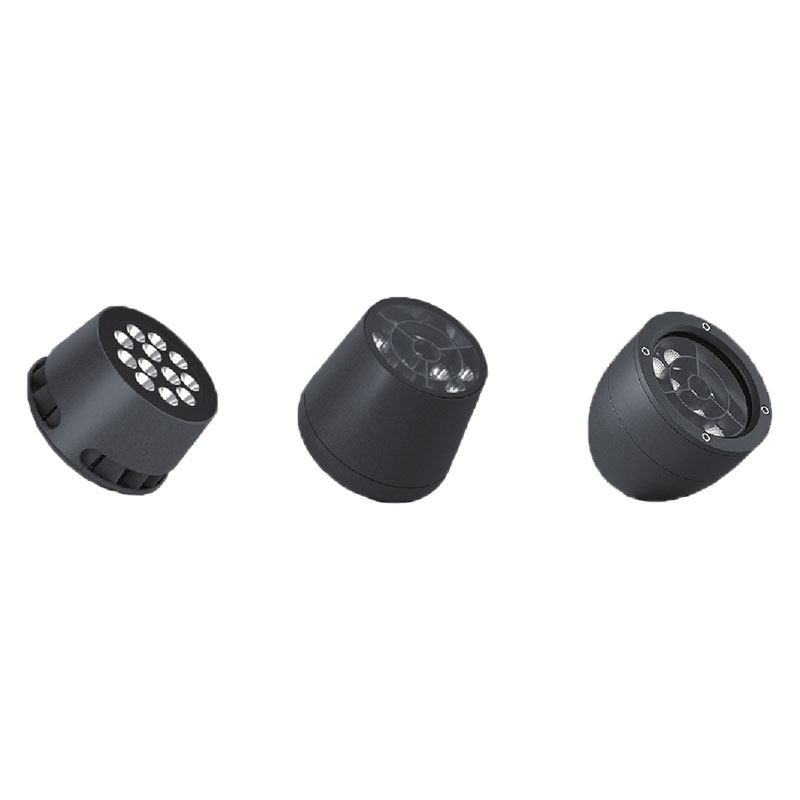 Custom ALBA Flexible HJT Solar Light Pole Supplier, Factory - Ningbo Morelux PolNingbo Morelux Pole Technology Limited is China ALBA Flexible HJT Solar Light Pole supplier and factory, professional custom ALBA Flexibl...View Product →
Smart control options go beyond solar. A pole can host a communication modem, a luminance sensor, or a traffic counting camera. The pole shaft must then include an internal raceway and a protective chamber for the electronics.
A Short Specification Checklist for Commercial LED Pole Lights
- Confirm the effective projected area of the luminaire against the maximum EPA allowed for the pole.
- Match the wind speed class to the local building code and exposure category.
- Choose aluminum for coastal sites and steel for very tall or heavy fixtures.
- Select flange mounting for exposed areas and planted mounting for low-cost parking lots.
- Verify powder coating thickness of at least 60 microns and request a written warranty.
- Review the access door height and interior wiring space before approving the shop drawing.
The pole is the quiet half of every commercial lighting system. It supports the LED fixture for decades, keeps maintenance crews safe, and survives storms without replacement. The right sequence is to define the pole specification first and then choose a luminaire that matches its EPA rating. Review the material, coating, mounting, and solar options with your manufacturer before the foundation is poured. If you need a pole configuration for a specific site, contact the Morelux team with the project details and receive a recommendation based on real manufacturing experience.