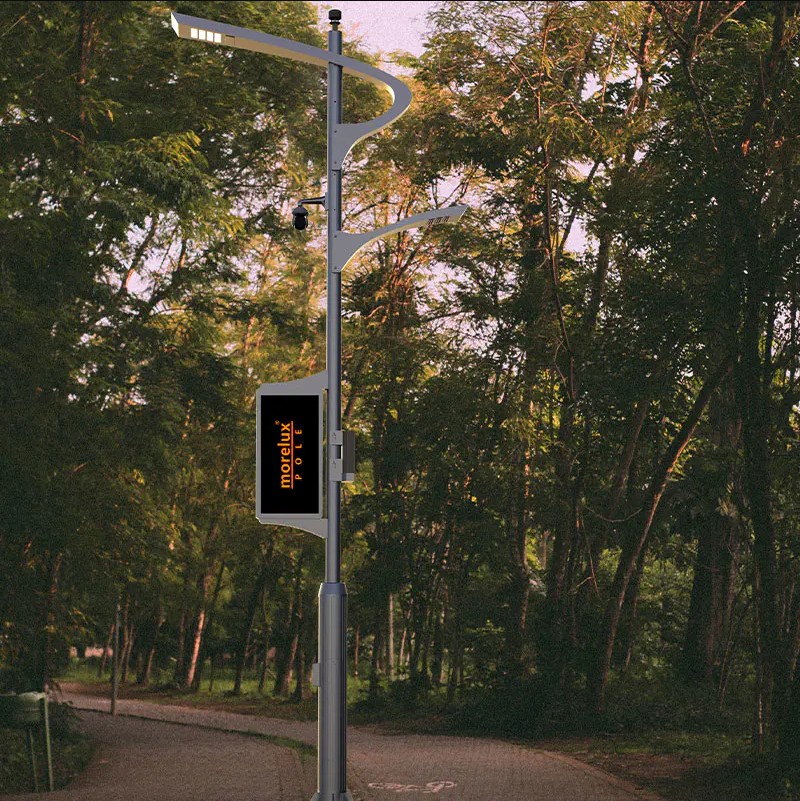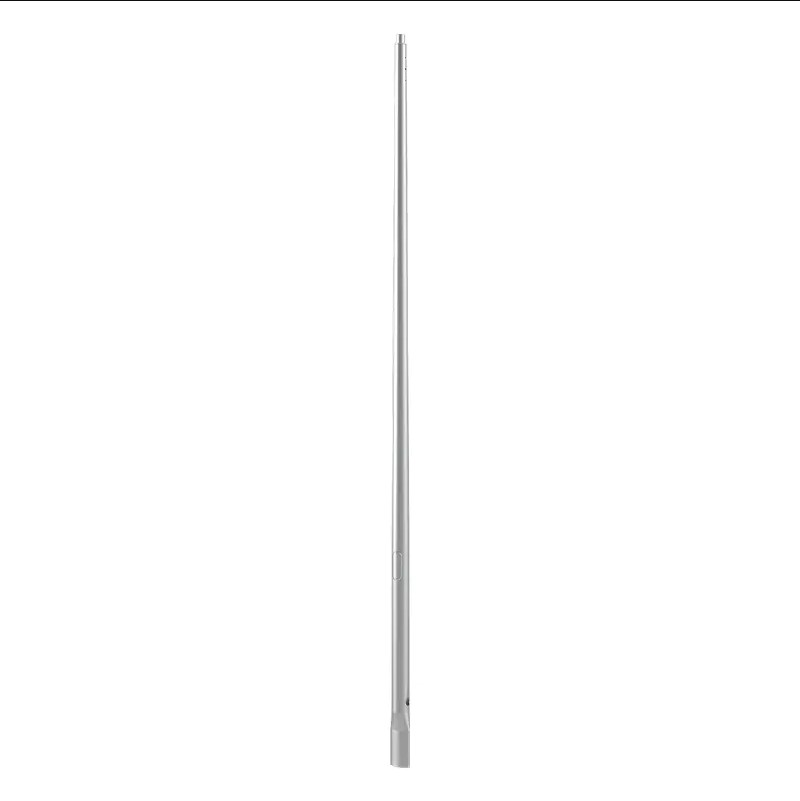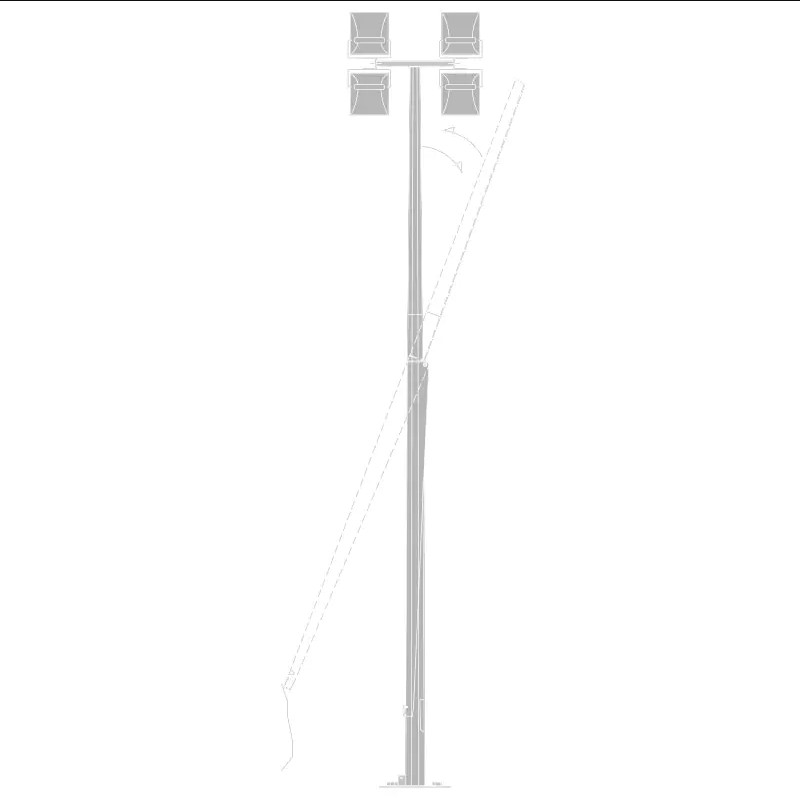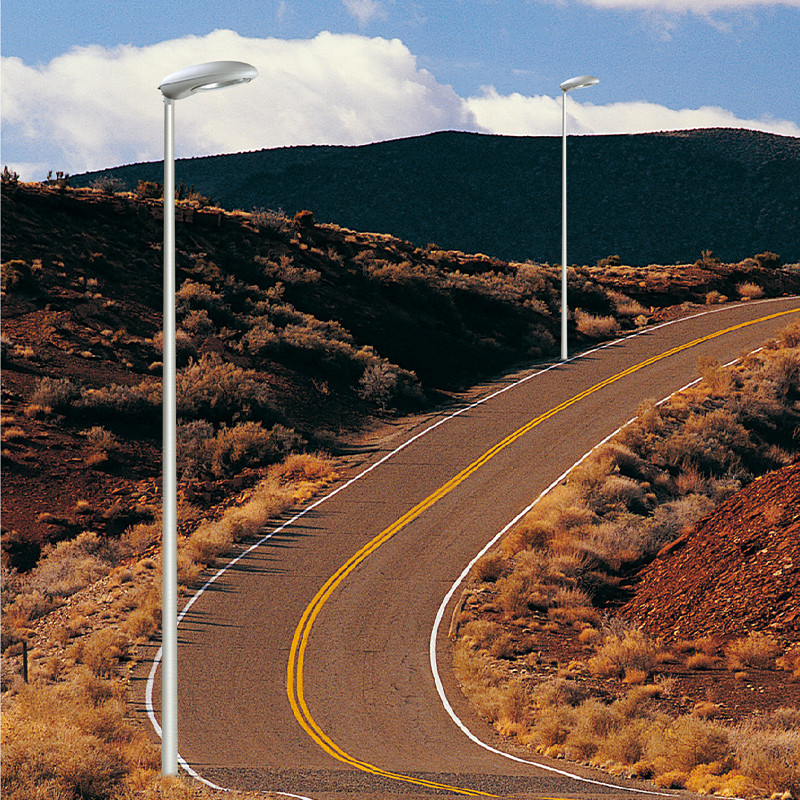
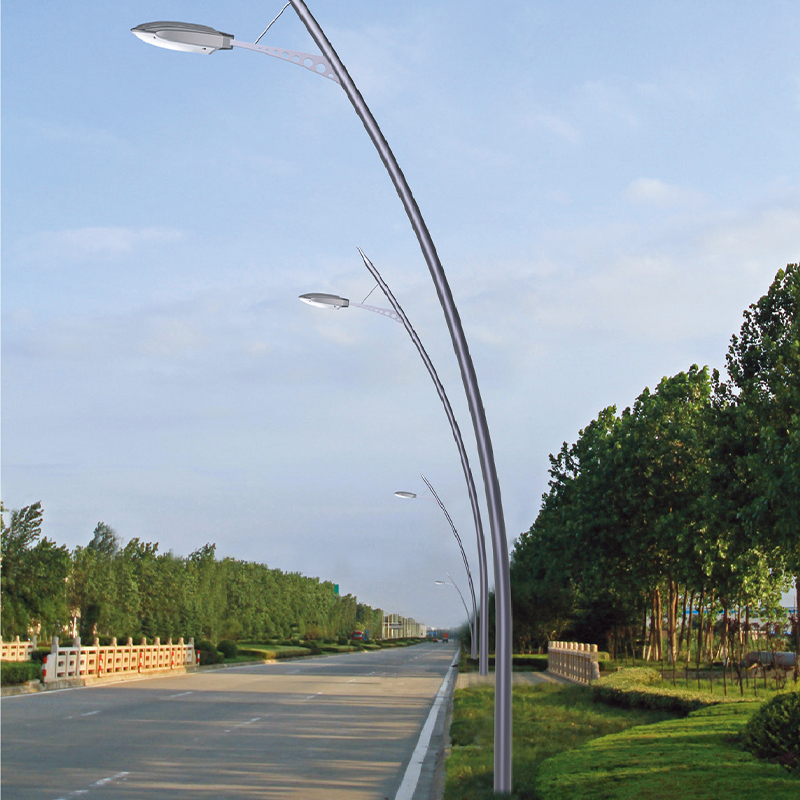
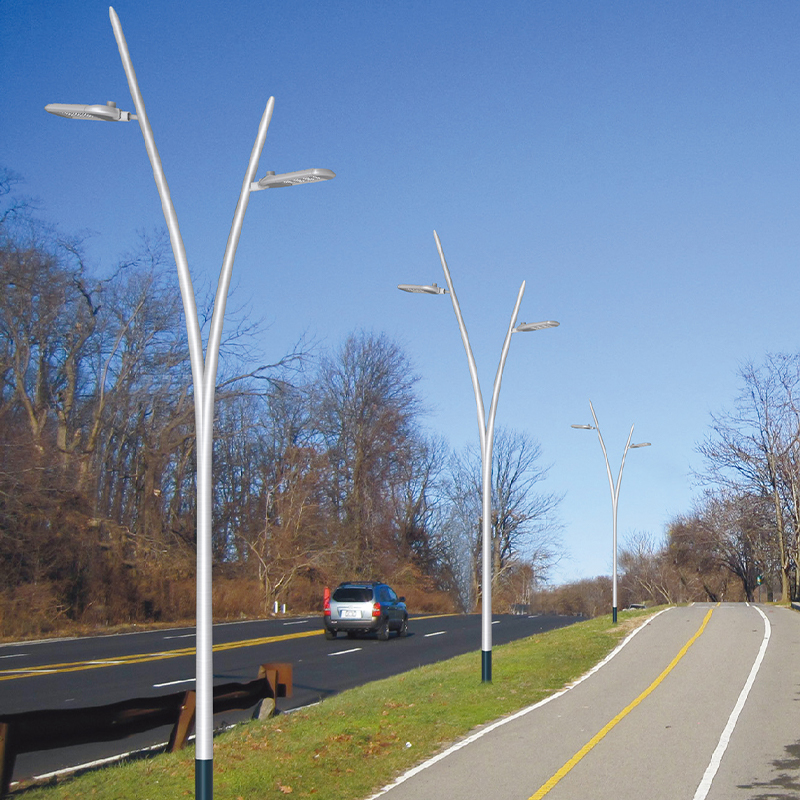
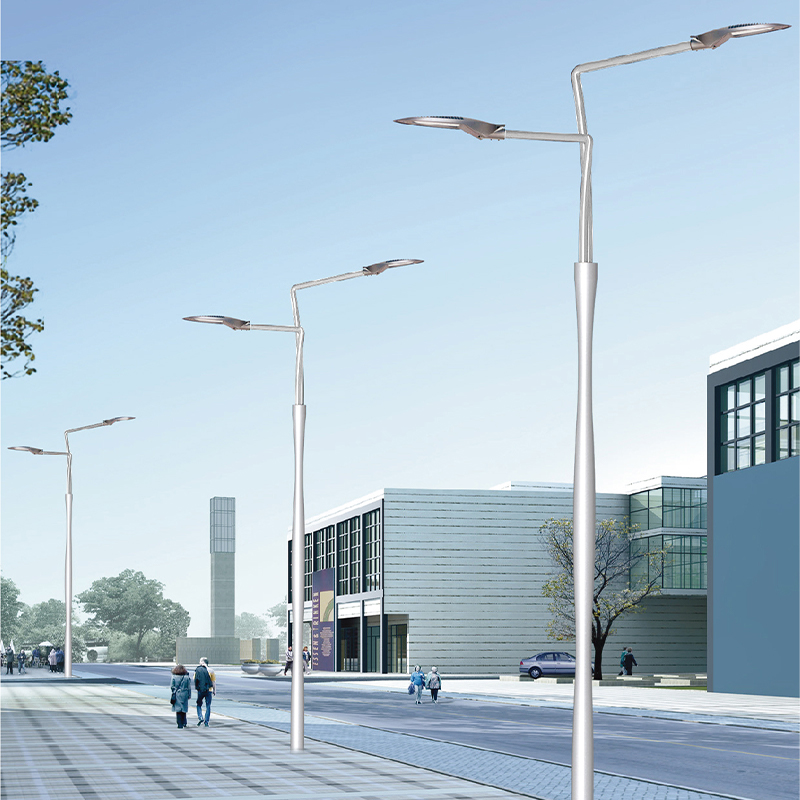
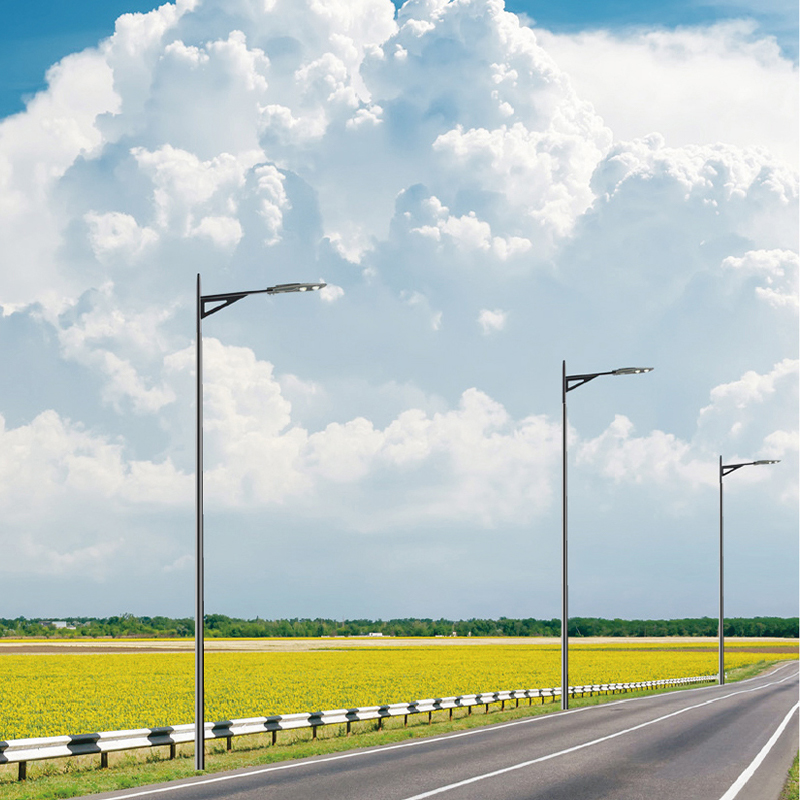
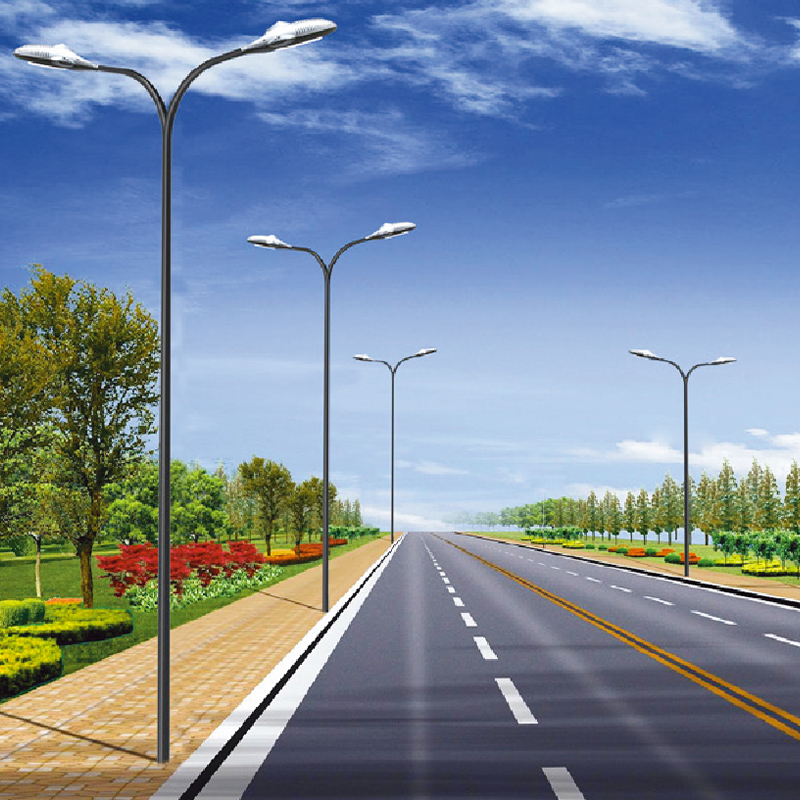
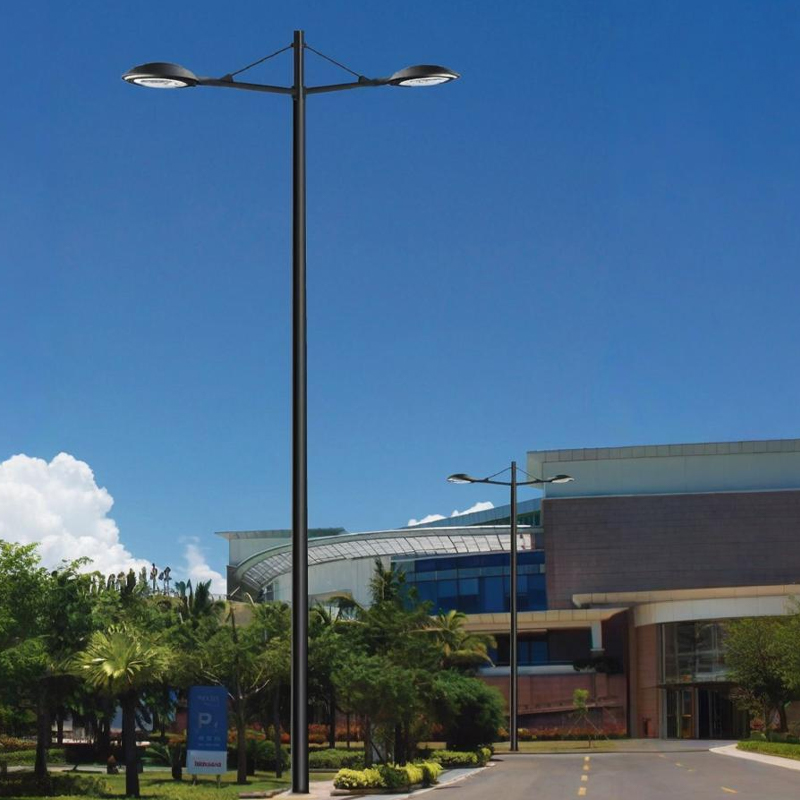
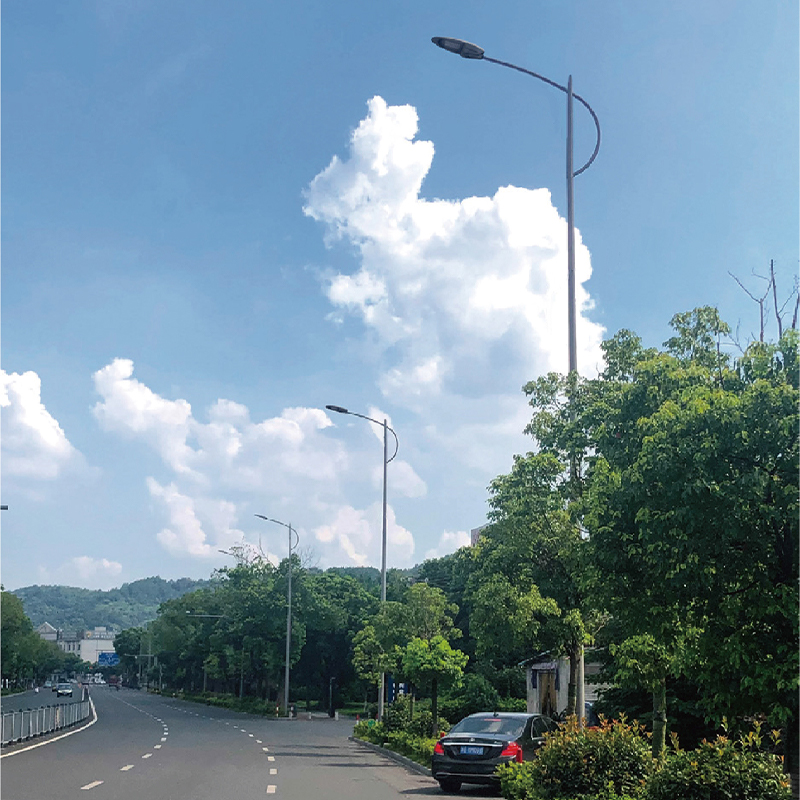
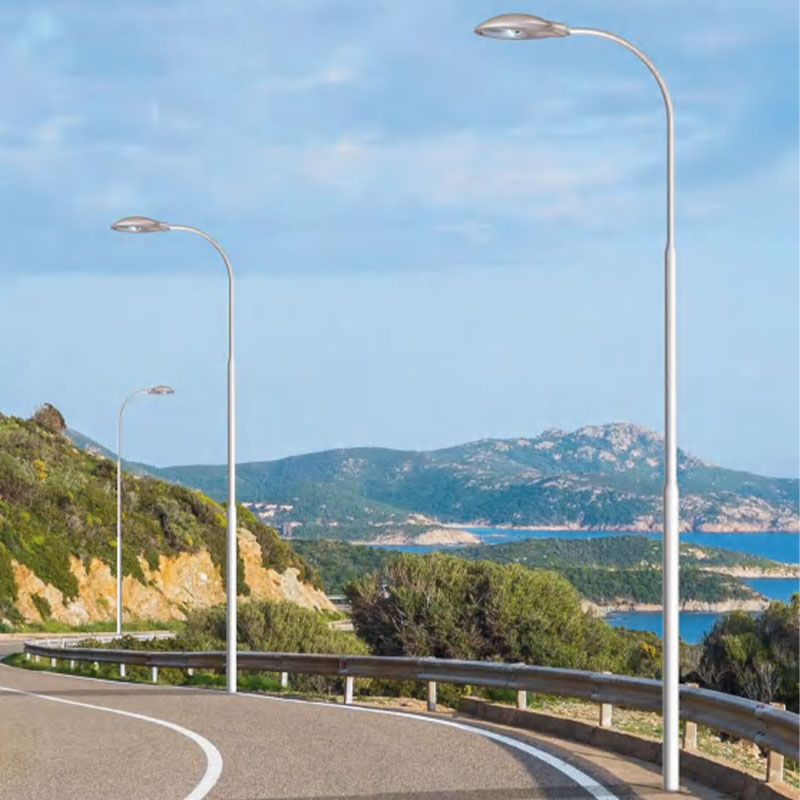
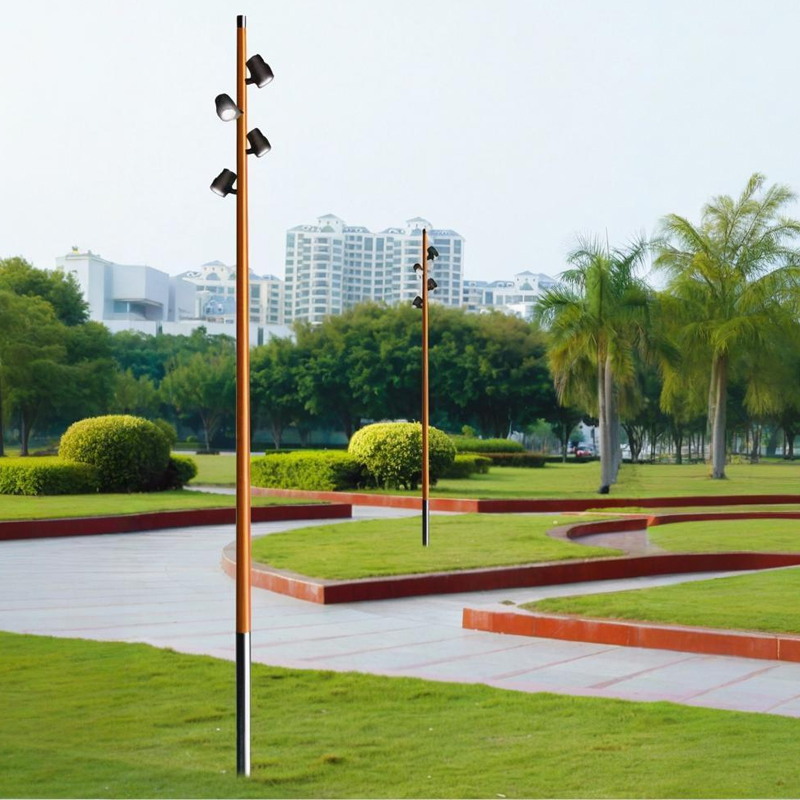
Morelux aluminum street light poles are made of 6063/6060 spun aluminum tubes, which are lightweight, wind-resistant, and corrosion-resistant. They support anodizing, fluorocarbon coating, powder coating, and water transfer printing, and can adapt to different environmental requirements. They can be widely used in outdoor lighting scenes such as urban roads, squares, and parks.
Morelux poles have passed CE certification and comply with EN40, EN12899, and EN12767 standards.
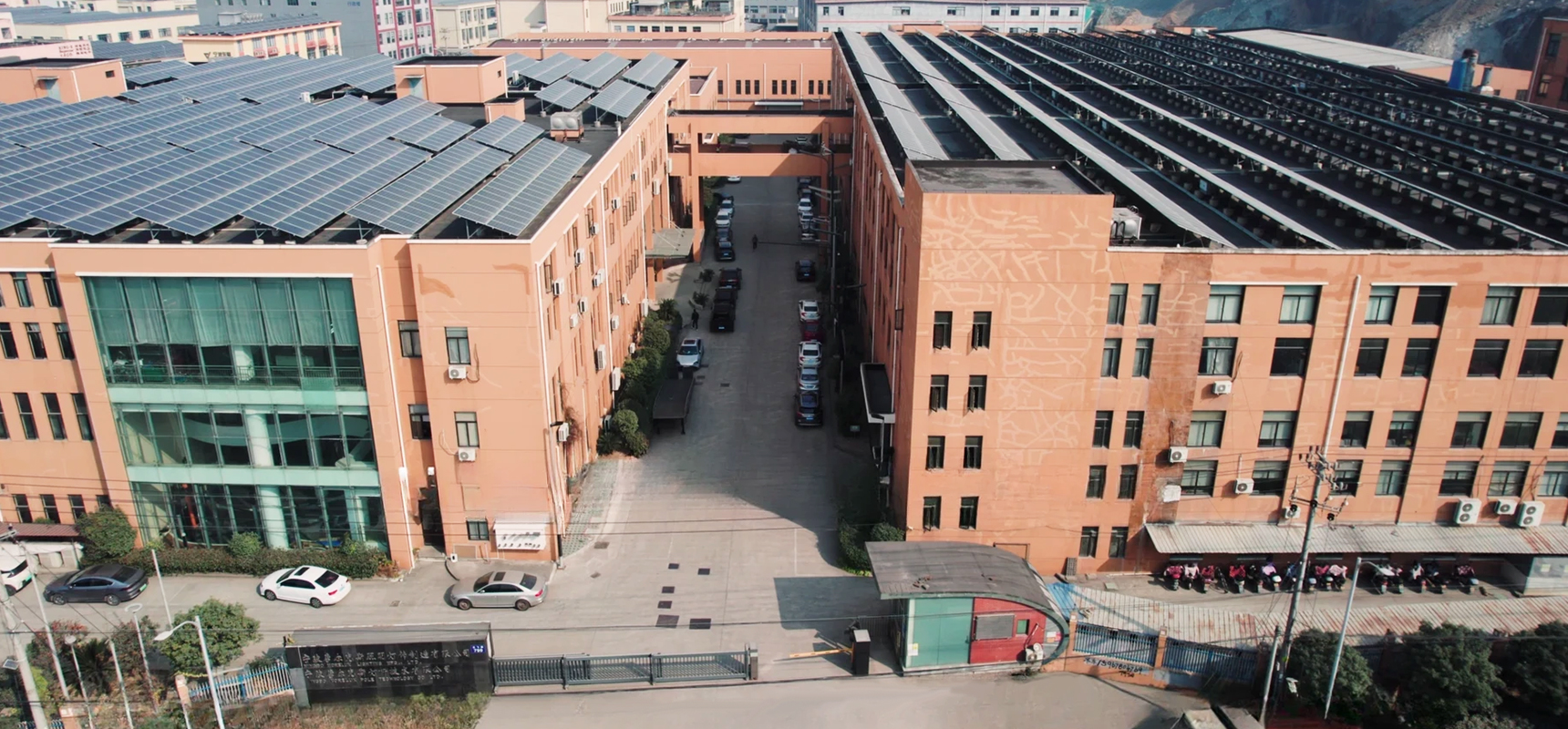
An American aluminum light pole is a tapered or straight outdoor lighting support structure made from high-quality aluminum alloy, designed and specified to meet North American engineering, safety, and aesthetic standards for road lighting, street lighting, parking lots, plazas, parks, and landscape illumination. The ...
View MoreSmart light poles go far beyond simply holding a luminaire. They function as multi-purpose urban infrastructure platforms that integrate intelligent street lighting management with 5G connectivity, environmental sensing, video surveillance, public broadcasting, EV charging, Wi-Fi access, and emergency communication — ...
View MoreA well-manufactured aluminum light pole has a structural lifespan of 30 to 50 years under normal outdoor conditions. The aluminum shaft itself is highly resistant to corrosion and fatigue, and quality manufacturers back their poles with structural warranties of 25 years as standard. The surface finish — whether anodiz...
View MoreAluminum Roadway Light Poles, as an important component of modern outdoor lighting facilities, play an increasingly vital role in urban infrastructure construction due to their unique material advantages and advanced manufacturing processes.
Basic Materials: Aluminum Roadway Light Poles are primarily made of 6063 or 6060 series aluminum alloys. These two alloys belong to the Al-Mg-Si alloy system, possessing excellent ductility, corrosion resistance, and moderate strength, making them ideal for outdoor structural components.
Manufacturing Process: The core manufacturing process is spin forming (or spin stretching).
First, aluminum alloy ingots are processed into tube blanks.
The tube blanks are then stretched and spun using specialized spinning equipment to form streetlight poles with varying tapers.
This process enables seamless, one-piece molding, ensuring the structural strength and smooth appearance of the pole.
| Advantages: | Detailed Description: | Industry Value: |
| Lightweight and high strength | Low density, only about 1/3 that of steel. Lightweight poles significantly reduce transportation, installation, and maintenance costs. Simultaneously, through a spinning process, they maintain high strength and excellent wind resistance. | Reduces construction difficulty and operating costs. |
| Weather and corrosion resistant | The aluminum alloy surface forms a dense oxide film in natural environments, possessing excellent corrosion resistance. Combined with subsequent surface treatments, it effectively resists erosion from harsh environments such as humidity, acid rain, and salt spray. | Significantly extends product lifespan, achieving maintenance-free or minimal maintenance. |
| Aesthetically pleasing | Aluminum alloys are easy to process and shape. Combined with various surface treatment technologies, they can provide a rich variety of colors and textures to meet the requirements of landscape lighting and urban aesthetics. | Enhances the overall quality of urban lighting projects. |
| Environmentally friendly and recyclable | Aluminum is a fully recyclable material with high recycling value. This aligns with current development concepts of "energy conservation and environmental protection" and "lightweighting." | Contributes to sustainable development and green infrastructure construction. |
To further enhance the weather resistance, UV resistance, and decorative effect of Aluminum Roadway Light Poles, professional surface treatment is typically required.
Through an electrochemical reaction, a thicker and harder oxide film is formed on the aluminum surface. It provides excellent wear resistance and corrosion resistance. A variety of color effects can be achieved.
Using fluoropolymer coatings, it has excellent weather resistance, UV resistance, and stain resistance, making it particularly suitable for highly corrosive or UV-intensive environments.
Powder coating is applied to the pole surface using electrostatic spraying and cured at high temperature to form a coating. It offers a wide range of color choices and good impact resistance.
A special printing technology that transfers simulated textures such as wood grain and stone grain to the aluminum pole surface, particularly suitable for landscape lighting poles to achieve an aesthetically pleasing effect that blends with the environment.
Application Scenarios: Aluminum poles, due to their comprehensive advantages, are widely used in the following outdoor lighting locations:
With the global emphasis on lightweighting and environmental friendliness, aluminum alloy lighting poles are gradually becoming an important alternative to steel lighting poles. Furthermore, the ease of integration of aluminum makes it a promising candidate for developing multifunctional smart lighting poles, laying the foundation for future urban infrastructure upgrades.
Brief answer: Aluminum lighting poles are lightweight (easy to install and transport), have excellent corrosion resistance, and high recycling value, effectively extending their service life and reducing later maintenance costs.
Brief answer: They are mainly made of 6063/6060 series aluminum alloys, manufactured through a spinning process. This process produces seamless, high-strength lighting poles with a smooth appearance.
Brief answer: These mainly include anodizing, fluorocarbon coating, powder coating, and water transfer printing. These treatments enhance the weather resistance, UV resistance, and aesthetics of the road poles.
Brief answer: Although aluminum has a low density, through precise spinning and structural design, aluminum road poles possess sufficient structural strength to meet the wind resistance requirements of urban roads.
Brief answer: Widely used in outdoor lighting locations such as urban roads, squares, and parks, especially suitable for coastal areas and scenic areas where corrosion resistance and aesthetic appeal are crucial.
Ningbo Morelux Pole Technology Limited All Rights Reserved. Wholesale Aluminum Roadway Light Poles Manufacturer OEM/ODM Aluminum Roadway Light Poles Company



 English
 Español
 Français
 عربى
عربى italiano