English
 Español
 Français
 عربى
 italiano
An 8 m pole on a main road, a 3 m pole beside a garden path and a 30 m mast above a port apron are all light poles, yet they belong to different engineering worlds. The height decides which luminaire can be mounted, how far apart the poles stand, how deep the foundation has to go, and how much wind load the shaft must survive for the next 25 years.
The practical answer first: garden and pedestrian poles usually run from 2.5 m to 6 m, street poles from 6 m to 12 m, and high mast poles from 20 m to 40 m and above. The rest of this guide explains how to pick the exact figure inside those bands and which details on a specification sheet decide whether the delivered pole matches the drawing.
Content
Standard light pole heights at a glance
Height is normally quoted as the above ground shaft length: in metres for European and Middle Eastern projects and in feet for the United States. The ranges below are the planning starting points engineers use before photometric software and wind load calculations take over.
| Application | Typical pole height | Typical spacing | Notes |
|---|---|---|---|
| Garden and landscape | 2.5 to 4 m (8 to 13 ft) | 6 to 10 m | Keeps light above eye level and below tree crowns |
| Driveway, residential | 2 to 3 m (7 to 10 ft) | 8 to 12 m | Aim light downward, keep glare away from windows |
| Footpath and cycleway | 4 to 6 m (13 to 20 ft) | 15 to 25 m | Uniformity matters more than peak output |
| Residential street | 6 to 8 m (20 to 26 ft) | 25 to 35 m | Spacing near four times the mounting height |
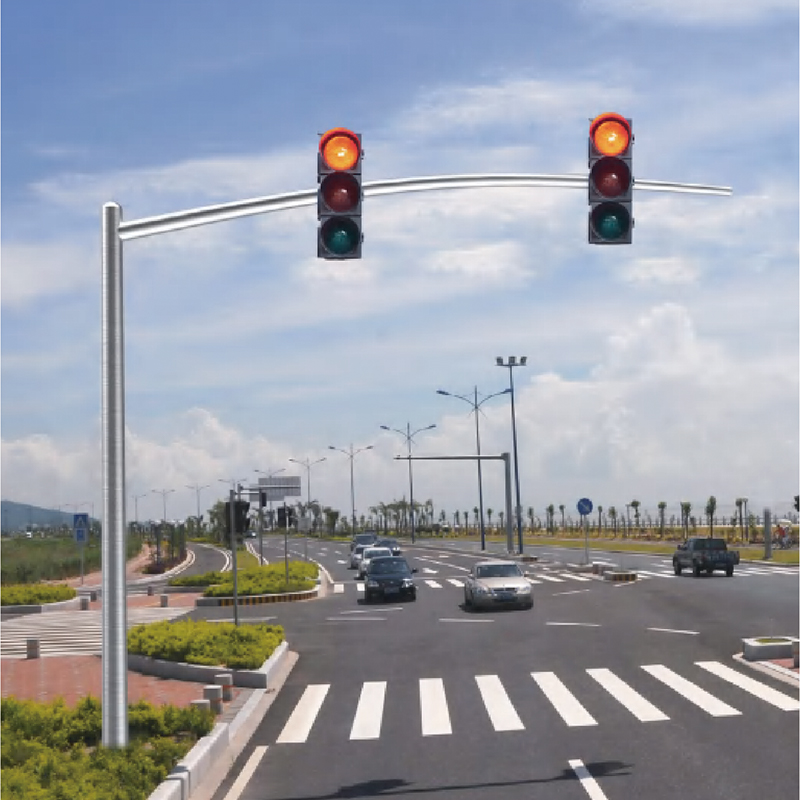
| Main road and city street | 7 to 9 m (23 to 30 ft) | 30 to 40 m | Twin arms common on wide carriageways |
| Highway | 9 to 12 m (30 to 40 ft) | 35 to 50 m | Taller masts improve long distance uniformity |
| Interchange, port, stadium | 20 to 40 m and above (65 to 130 ft) | 60 to 120 m | Lifting ring and maintenance platform normally specified |
Why the application sets the height, not the luminaire
Two constraints decide most height choices: the mounting height the lighting class requires, and the pole spacing that keeps uniformity acceptable. Both come from the road or the space itself, which is why a height chosen from a catalogue page rarely survives contact with a real site.
Mounting height is not shaft height
A luminaire on a 1 m rise arm sits higher than the shaft it is bolted to. If the design calls for a 10 m mounting height and the arm lifts the head 1 m, the shaft is 9 m. Confusing the two numbers is one of the most common ordering errors, and an expensive one: a 9 m shaft ordered against a 10 m mounting height requirement leaves the light below the specified photometric point. With post top and top mounted luminaires, by contrast, mounting height and shaft height are effectively the same figure.
The height to spacing rule of thumb
Street layouts commonly space poles at three to five times the mounting height, with four times as the usual starting point. A 10 m mounting height therefore suggests roughly 40 m between poles on a straight road. Tighter spacing improves uniformity but raises the cost per kilometre; stretching beyond five times the height produces dark bands between poles. Highway layouts accept wider spacing mainly because taller masts throw light further along the carriageway.
Height ranges by application
Garden, park and landscape lighting: 2.5 m to 4 m
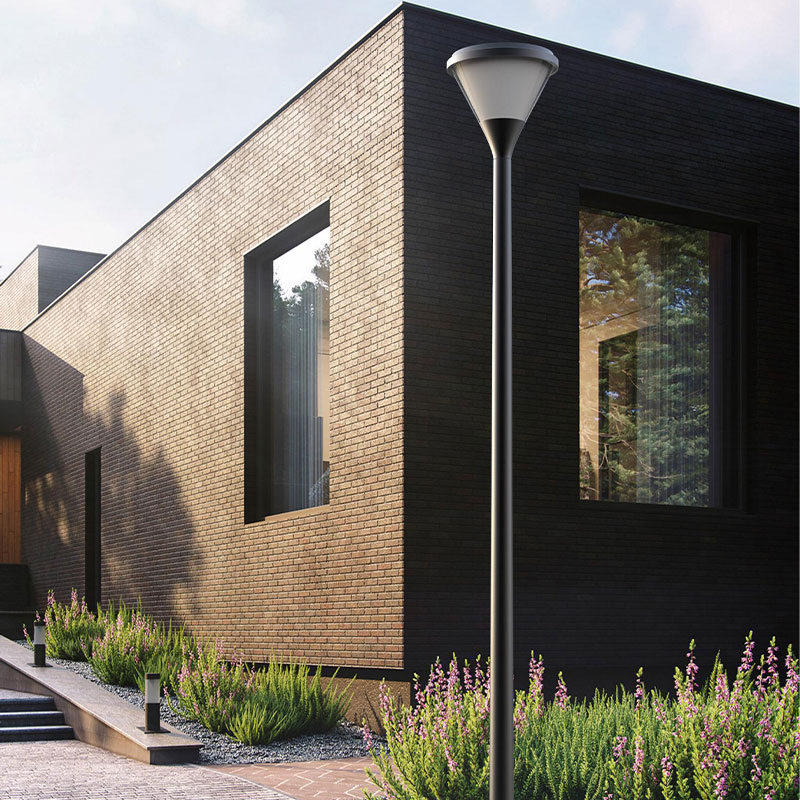
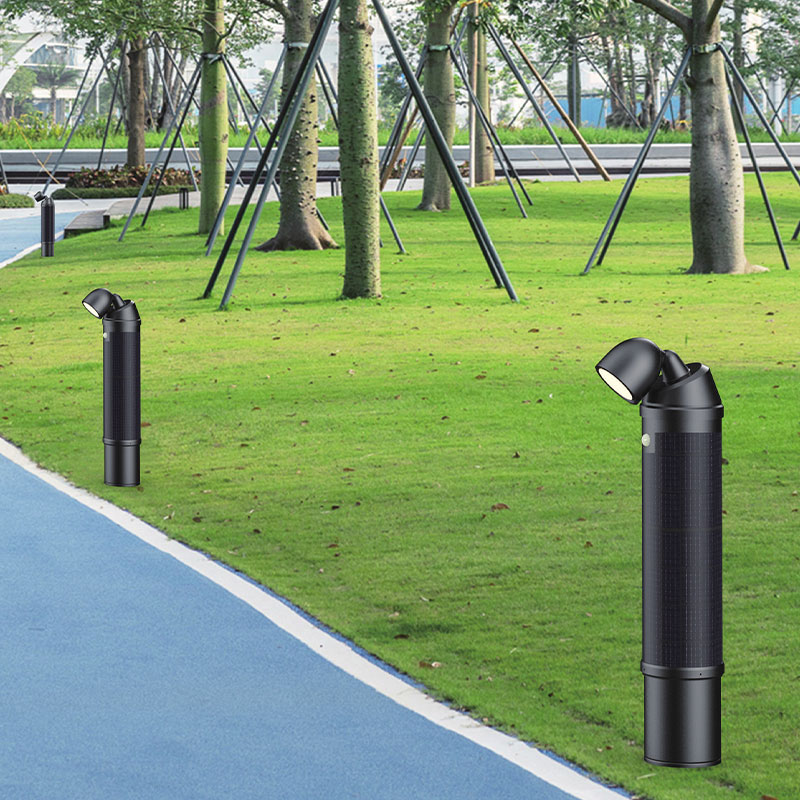
These poles are about people rather than traffic. At 2.5 m to 4 m the light stays above eye level but below most tree crowns, glare is manageable, and the fittings remain reachable without a platform. Spacing typically falls between 6 m and 10 m. Because appearance counts as much as output, stepped and decorative shafts dominate this range, and cast aluminium bases add a heavier visual look without adding much weight.
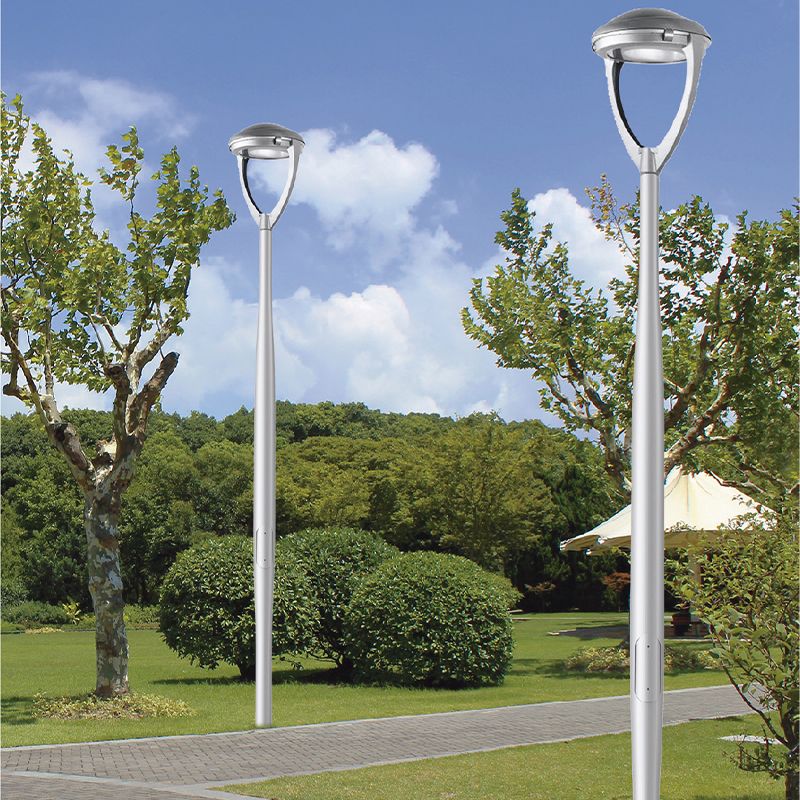 DUBLIN Aluminum Garden Light Pole for Pedestrian-Scale SpacesFlange-mounted aluminum garden pole available in 2.5–4 m heights, with 89 mm base and 76 mm top, well suited to pedestrian-scale garden lighting.View Product →
On planting schemes where trees will mature, keep the shaft closer to 3 m and choose a shorter arm; otherwise the canopy will shade the head within a few seasons and the installation will look under lit no matter how powerful the lamp is.
Driveways, footpaths and car parks: 2 m to 6 m
A residential driveway pole usually lands between 2 m and 3 m so the light reaches the ground instead of a neighbour's window. Footpaths and cycleways generally need 4 m to 6 m, since the pole has to clear pedestrians and small vehicles while keeping the illuminated band even. Car parks sit at the top of the band, 5 m to 6 m, because the pole must reach over parked cars without being struck by them.
City streets and main roads: 6 m to 12 m
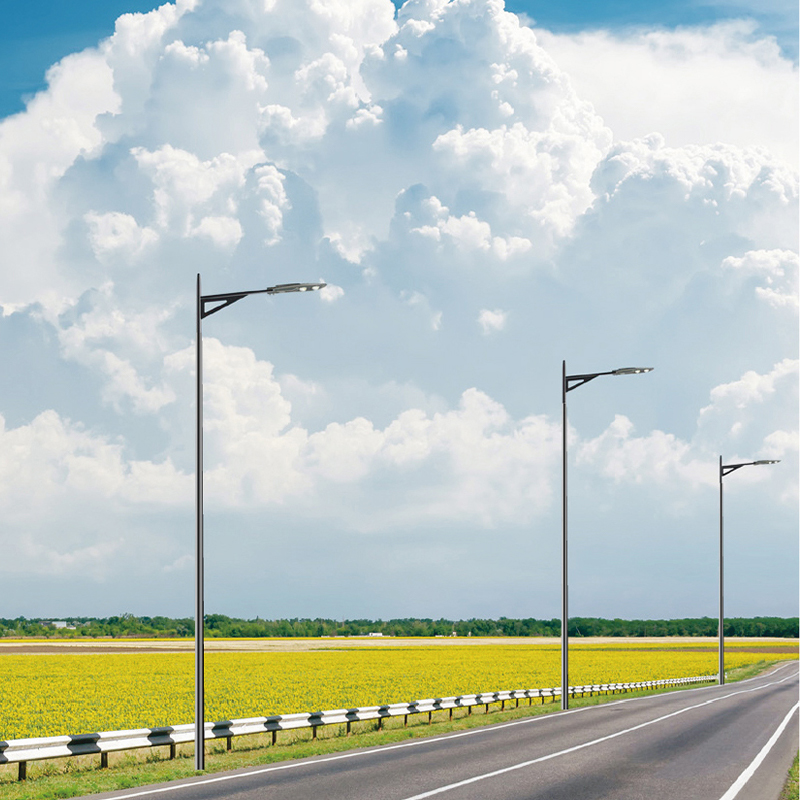
Residential streets typically use 6 m to 8 m poles, main roads and city streets 7 m to 9 m, and wide carriageways, dual carriageways and intersections 10 m to 12 m, often with two arms so the illuminated area doubles. Wind load rises quickly with height, and base diameter, wall thickness and anchor bolt size all follow it upward.
Roadway light poles are conventionally described as those below 15 m; anything taller is treated as high mast and specified differently.
Highways, interchanges and high mast areas: 9 m to 40 m and above
Highway lighting sits at 9 m to 12 m. Large area lighting for interchanges, ports, stadiums and logistics yards uses high mast poles from 20 m to 40 m or more, where a lifting ring and maintenance platform are normally specified so the head can be lowered safely for service. Above roughly 15 m, steel becomes the practical material in most cases, because higher stiffness keeps a long slender mast within its deflection limit.
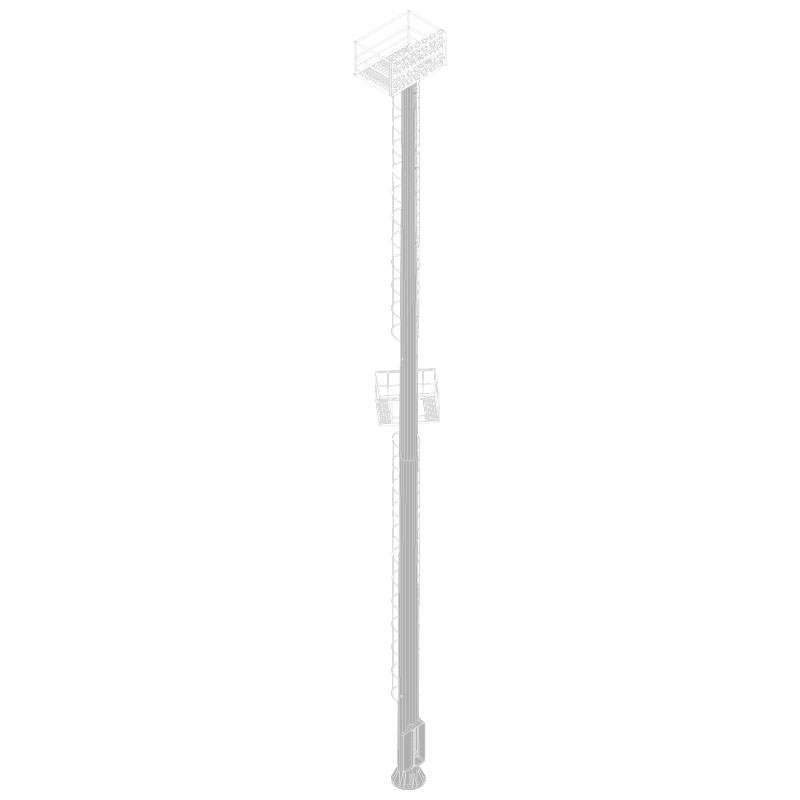 Steel High Mast Light Pole for Large-Area LightingPolygonal steel high mast from 16 m to 50 m, designed to illuminate ports, airports, car parks, industrial areas and sports grounds with high uniformity.View Product →
Solar and smart poles: height follows the load
Solar poles usually land between 4 m and 12 m. Height affects how much panel area can be fitted and how far the battery box sits above ground, but a taller pole also needs a larger panel to compensate for the shadow the mast itself casts. Smart poles carry cameras, sensors, signage and sometimes communications equipment, so the shaft is designed around a load schedule rather than a lighting calculation alone, and 6 m to 12 m is the common working range for urban deployments.
How height changes the pole structure
Taper: the ratio that keeps a tall pole standing
Conical poles narrow from base to top. A quick check many buyers run is (lower diameter minus upper diameter) divided by pole height. The result shows whether the shaft is proportioned like a street pole or like a flagpole. Too shallow a taper leaves a heavy, over priced pole; too steep a taper makes the top flexible, so deflection under wind becomes the limiting factor rather than strength. Typical roadway tapers fall between about 1 in 75 and 1 in 120.
Wall thickness, material and wind load
Bending moment at the base grows roughly in proportion to height, so a 12 m pole is not a stretched 8 m pole. Wall thickness, base plate dimensions and bolt circle all increase, and the design wind speed for the site governs the final section. Aluminium is light, corrosion resistant and fully recyclable, which suits coastal and landscape work; steel delivers higher stiffness where deflection limits are tight. Steel light poles are often chosen for long high mast and heavy camera or floodlight installations for exactly that reason.
Foundation depth and planting method
Height also sets the foundation. Direct buried poles generally need burial depth of about one tenth of the above ground height plus a minimum cover, with published guidance commonly using 0.9 m for poles up to roughly 5.5 m and 1.2 m for poles up to roughly 7.6 m. Flange mounted poles instead use a concrete foundation sized around the base plate and the anchor bolts supplied with the pole, and that concrete must be cast and cured before the pole arrives on site.
What to confirm before placing the order
- Whether the quoted height is above ground shaft length or mounting height including the arm rise
- Installation method: flange base or direct burial
- Base plate size, bolt circle and anchor bolt length
- Handhole position and orientation for the wiring entry point
- Tenon or adapter size at the top, such as 4 inch or 5 inch, round or square, horizontal or vertical, so the luminaire fits the first time
- Surface finish, whether powder coating or anodising, plus the colour reference
- Design wind speed and the deflection limit required for the site
- Transport and site access limits, since a 12 m pole needs the right truck and a clear approach
Send the road class, the required mounting height and the site wind speed to contact our team and it is straightforward to return a proposed shaft length with matching base, taper and tenon details.
Four height mistakes that keep appearing in real projects
- Quoting shaft height when the specification means mounting height, or the reverse. A difference of 30 cm is irrelevant on a driveway pole and significant on a highway pole, because it shifts the photometric result.
- Mixing feet and metres across documents. A 20 ft pole is 6.1 m, and a 6 m pole is 19.7 ft; conversions rounded to the nearest whole unit gradually accumulate error down a long tender list.
- Forgetting the arm. On twin arm poles over a wide carriageway, the mounting height is measured from road level to the luminaire, not from road level to the pole top.
- Retrofitting solar heads to existing poles without checking panel area and shading. An 8 m pole that carries a street luminaire well may be too tall or too shaded for the panel needed to run the same lumen output off grid.
Height is the first number on a light pole drawing, and everything else follows from it: taper, wall thickness, base plate, anchor bolts and foundation depth. Fix the application, the mounting height and the design wind speed early, and the shaft length stops being a guess and becomes a calculation. Get those three inputs onto one page before the order is released, and the pole that arrives on site will match the layout the lighting designer calculated.