English
 Español
 Français
 عربى
عربى italiano
A spec sheet that says "hot dip galvanized" tells you only half of what you need to know. Two steel light poles can carry the same two-word description and behave completely differently after fifteen years in service. One holds a dull grey zinc surface with no red rust. The other shows white rust around the base, bare patches beside the handhole, and brown staining running down from the base plate weld. The difference is almost never the word galvanized. It is coating thickness, the steel grade underneath, and whether the fabricator drilled drain and vent holes before dipping.
The short answer for most roadway, parking lot and site lighting projects: hot dip galvanizing is the default and usually the correct choice for steel poles. It protects the pole inside and out, it keeps working after the surface is scratched, and it removes the repaint cycle that quietly consumes maintenance budgets. What it does not do is rescue a pole that was detailed badly or coated thin. Here is what to verify before you release a purchase order.
Content
- 1 What Hot Dip Galvanizing Actually Does to a Light Pole
- 2 Why Galvanized Steel Stays the Default for Roadway Lighting
- 3 Galvanized Steel, Aluminum and Powder Coated Steel Compared
- 4 What to Write Into the Specification
- 5 Six Checks Before a Galvanized Pole Ships
- 6 Matching the Pole to the Site
- 7 Maintenance and Touch-Up
- 8 Working With a Manufacturer
What Hot Dip Galvanizing Actually Does to a Light Pole
Galvanizing is not paint. The finished pole is cleaned and fluxed, then immersed in molten zinc at roughly 445 to 460 C. The zinc reacts with the iron in the steel and forms a series of zinc-iron alloy layers that are metallurgically bonded to the base metal. There is no film to peel, because the coating becomes part of the surface itself.
Thickness is where projects diverge. ASTM A123, the North American reference for structural steel, calls for an average coating of 3.4 mils (about 85 microns) on steel 1/8 in and thicker, with no single reading below 2.75 mils (about 70 microns). ISO 1461, used across most export markets, sets the same 85 micron average and 70 micron local minimum for sections 6 mm and thicker, with slightly lower values for thinner walls. Those numbers are the reason a galvanized pole can go twenty to fifty years before its first major maintenance, while a thin or uneven coating fails at the weld seams within a decade.
The interior of the tube is coated too, though the layer is normally thinner because excess zinc drains during withdrawal. That interior protection matters more than most buyers expect. In coastal air, a pole that breathes humid salt air from the inside will eventually show rust weeping through the handhole, even when the outside still looks clean.
Why Galvanized Steel Stays the Default for Roadway Lighting
Three practical reasons keep galvanized steel ahead of aluminum and painted steel on most civil and commercial projects.
- Cathodic protection. Zinc corrodes in place of the steel. A scratch or a stone chip does not start a creeping rust bloom the way it does under a paint film, because the surrounding zinc sacrifices itself first.
- Stiffness with height. Steel has roughly three times the modulus of elasticity of aluminum, so a steel pole deflects less under the same wind load. This matters for high mast installations, poles carrying cameras or banner arms, and long arm configurations where tip deflection is a design limit.
- Lifecycle cost. Galvanized steel usually costs less than aluminum at the same height and wind rating, and it avoids the repainting cycle that painted poles require every seven to twelve years.
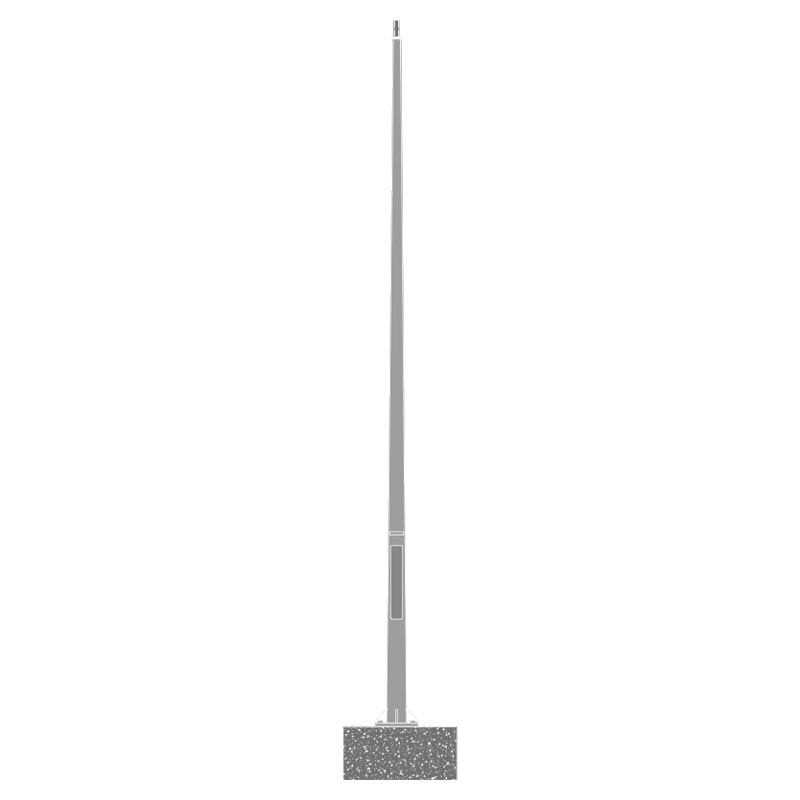 Conical Steel Light Pole for Lighting and Utility ApplicationsTapered EN40 pole up to 12 m with 3–8 mm walls for lighting, power, communication and signs; a custom steel option for galvanized-steel projects.View Product →
A tapered, hot dip galvanized steel pole is the standard workhorse for street and area lighting, and most projects can be specified around it from 3 m garden heights up to long roadway spans. The engineering details behind that preference are covered in this overview of why steel light poles are chosen for so many installations.
Galvanized Steel, Aluminum and Powder Coated Steel Compared
The table below summarizes how the three common pole materials behave in real projects. Treat the service life figures as ranges, not promises: atmosphere, coating thickness and pole detailing move them significantly.
| Factor | Hot dip galvanized steel | Aluminum | Powder coated steel |
|---|---|---|---|
| Protection mechanism | Zinc-iron alloy layer, protects inside and outside, self-sacrificing at scratches | Natural oxide film, good in most atmospheres, needs care in salt and acid air | Paint film only, rust spreads under chips if surface prep is imperfect |
| Time to first major maintenance | 20 to 50 years depending on atmosphere | 25 to 40 years, shorter near salt water | 7 to 15 years, then repaint |
| Weight for a 9 m pole | Heavier, larger foundation and lifting equipment | About one third of steel, easier manual handling | Same as steel |
| Repair in the field | Zinc-rich paint on scratches, no repainting | Cosmetic touch-up only | Localized repainting, color matching is difficult |
| Best suited to | Roadway, high mast, camera, floodlight and parking lot poles | Garden, landscape and decorative poles where weight matters | Dry inland sites that need a specific color |
What to Write Into the Specification
Vague wording is the main cause of disputes and premature rust on galvanized poles. Include these items in the purchase specification so the quotation and the delivered product can be compared against something concrete.
- Steel grade and wall thickness. ASTM A572 Grade 50 or A36 for US projects, EN 10025 S355JR or S235JR for European work, with the wall thickness stated in millimeters or gauge.
- Coating standard and values. Name ASTM A123 or ISO 1461 and write the minimum average and minimum single-reading thickness instead of relying on the word galvanized.
- Design wind speed and load. State the wind speed, the fixture weight, and any additional load such as a banner arm, camera or loudspeaker, so the pole is engineered rather than copied.
- Base and anchorage. Base plate size and thickness, bolt circle diameter, anchor bolt grade such as ASTM F1554 Grade 36, and galvanizing of bolts and nuts per ASTM A153.
- Handhole details. Size, typically 3 x 5 in or 4 x 6 in, height above the base plate, cover type, and whether the opening must face the roadway or the sidewalk.
- Drain and vent holes. Confirm they are drilled before galvanizing and never punched or cut afterwards.
Six Checks Before a Galvanized Pole Ships
- Confirm vent and drain holes exist. A pole dipped without them traps air, which leaves uncoated patches inside the tube and can eject molten zinc during the process.
- Measure coating thickness with a magnetic gauge at the base, mid height and top, taking several readings on each section, and compare against the standard rather than the supplier's summary.
- Inspect the handhole interior and the inside of the base plate area. Zinc should reach them, and the handhole cover should be galvanized as well.
- Check straightness and the base plate weld. A leaning pole needs shimming on site, and a poor weld is difficult to repair after installation.
- Test anchor bolt threads and nuts by hand. Galvanized threads should be tapped or chased after coating so a nut turns freely.
- Verify that any hole drilled or weld made after galvanizing has been repaired with zinc-rich paint in line with ASTM A780.
Matching the Pole to the Site
Galvanizing performance is not uniform across environments, and the right pole configuration changes with the application.
- Coastal and industrial sites. Request ISO 1461 or ASTM A123 coating values plus a powder topcoat, a duplex system that can roughly double the time to first maintenance, and specify stainless or hot dip galvanized hardware.
- Large areas and high mounting heights. High mast installations are almost always galvanized steel because of the stiffness requirement and the difficulty of repainting tall structures.
- Parking lots and US projects. Imperial sizing from 10 ft to 40 ft, in round tapered, round straight or square straight form, with either a base flange or direct burial.
- Off grid and solar lighting. Galvanized steel shafts are commonly paired with flexible HJT or monocrystalline modules and compact battery packs where trenching power cables is impractical.
- Camera and floodlight positions. Factory welded brackets and reinforcement plates should be part of the drawing, because site welding on a galvanized pole damages the coating and requires repair.
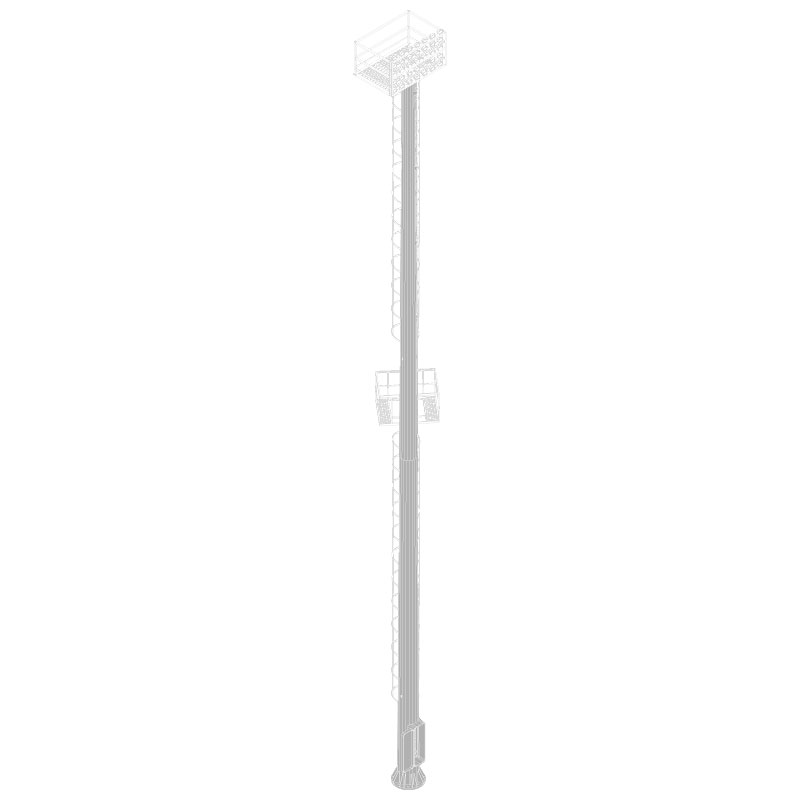 Steel High Mast Light Pole for Large Area LightingPolygonal EN40 high-mast pole from 16 m to 50 m for ports, airports, car parks, industrial areas and sports grounds needing uniform high-intensity light.View Product →
For US style roadway and lot lighting, a round tapered section with the correct base detail is usually the most straightforward choice, and the pole dimensions should be confirmed against the anchor bolt layout before the foundation is poured.
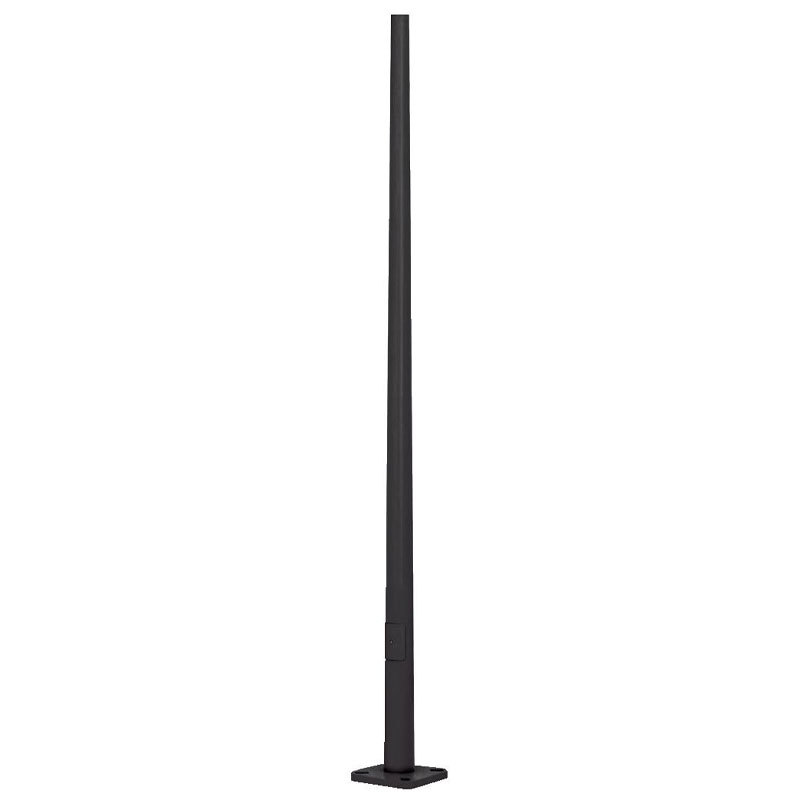 Round Tapered Steel Light Pole for Roadway LightingASTM A500 Grade C round tapered pole with 4-bolt base, cast-iron handhole, and anchor bolts; confirm anchor layout before foundation work and follow base maintenance.View Product →
Maintenance and Touch-Up
Galvanized poles need very little attention, but the attention they do need is specific. Inspect annually after the first two years, paying attention to the base, the handhole and any welded bracket. Scratches and small areas of damage should be cleaned and coated with zinc-rich paint, which restores sacrificial protection locally. Do not wash galvanized surfaces with acidic or strongly alkaline cleaners, since both attack the zinc layer, and never grind or weld on a pole in place without repairing the coating afterwards. A thin, even layer of white rust on new poles stored outdoors is normal and does not indicate a coating defect; it forms when moisture sits between stacked poles and disappears once the surfaces dry and carbonate.
Working With a Manufacturer
Ningbo Morelux Pole Technology Limited has produced poles and city beautification structures since 1998, with more than 200 employees and exports to over thirty countries. Manufacturing stays in house from cutting, bending, spinning and welding through polishing, powder coating, anodic treatment and final inspection, and the company produces both aluminum and hot dip galvanized steel poles, along with solar and smart pole assemblies. That range means a single supplier can quote a galvanized steel roadway pole, an aluminum garden pole, and the accessories needed to fit luminaires to either one. If you are comparing coating standards or need a pole engineered for a specific wind speed, send the drawing and load data to the team and confirm the specification before the order is placed.