English
 Español
 Français
 عربى
 italiano
A buyer comparing two light poles can easily end up arguing about a number that neither datasheet explains. One sheet says IP65, another says IP66, and a third says fully waterproof with no digit at all. The number describes a sealed enclosure, usually the luminaire, the driver box or the wiring compartment, not the aluminium or steel shaft that holds everything up. Once that distinction is clear, specifying ingress protection becomes a practical exercise instead of a marketing one.
The short answer: for permanent outdoor lighting, IP65 is the sensible floor for anything exposed to weather, IP66 is the safer call where wind driven rain, coastal storms or washdown are routine, and IP67 or IP68 should be reserved for equipment that may sit in standing water. The International Electrotechnical Commission defines these levels in IEC 60529, and the digits describe tested performance rather than the quality of the material.
What follows explains both digits, the levels that actually appear on pole mounted equipment, and the places where water finds its way into a pole assembly that looked perfectly sealed on the drawing.
Content
Reading the two digits of an ingress protection level
An IP code carries two numbers. The first covers solids and contact with live or moving parts. The second covers water. A rating such as IP65 is read as 6 for solids and 5 for water. The two are independent, so a dust tight pole with basic drip protection such as IP64 does exist and can be entirely correct for a covered walkway. A letter X replaces a digit when that property is not specified, which is why IPX4 and IP2X appear on fittings, and the suffix K on IP69K marks a specific high pressure, high temperature test rather than a higher general level of protection.
| Digit | Level | What it withstands |
|---|---|---|
| 0 | No protection | No specific protection against solids or contact |
| 1 | Objects over 50 mm | A hand or similar large body part |
| 2 | Objects over 12.5 mm | Fingers, and tools of that size |
| 3 | Objects over 2.5 mm | Tools, thick wires and similar items |
| 4 | Objects over 1 mm | Small tools, screws and thin wire |
| 5 | Dust protected | Limited dust ingress that does not interfere with operation |
| 6 | Dust tight | No dust ingress at all under the test conditions |
| Digit | Level | Test condition in simple terms |
|---|---|---|
| 0 | No protection | No water protection specified |
| 1 | Dripping water | Vertical drips onto an upright enclosure |
| 2 | Dripping water, tilted | Drips with the enclosure tilted up to 15 degrees |
| 3 | Spraying water | Spray up to 60 degrees from vertical |
| 4 | Splashing water | Splash from any direction, no pressure |
| 5 | Water jets | Jets from a 6.3 mm nozzle at low pressure |
| 6 | Powerful jets | Jets from a 12.5 mm nozzle at higher pressure |
| 7 | Temporary immersion | Immersed at about 1 m for 30 minutes |
| 8 | Continuous immersion | Depth and duration agreed between buyer and maker |
| 9K | High pressure, hot jets | Close range cleaning with high pressure hot water |
Two notes matter when you compare quotations. First, the step from 5 to 6 in the first digit is larger than it looks, because dust protected allows a small quantity of dust inside while dust tight allows none. Second, levels 7 and 8 are not simply better versions of level 6. They describe immersion, and an enclosure tested for continuous immersion may resist a directed jet less well than an IP66 product does.
Levels that appear most often on pole mounted equipment
In street lighting catalogues, a small group of ratings covers nearly every project:
- IP54 for fittings under canopies, arcades and bridge soffits, where splash is possible but driven rain is not.
- IP65 for roadway luminaires, drivers, gear trays and control boxes, the working standard for exposed sites.
- IP66 for coastal promenades, industrial plants and locations where hose cleaning takes place.
- IP67 for low lying car parks, underpasses and riverfront walkways where standing water appears after storms.
- IP69K for depots and food processing areas where hot water is sprayed at close range.
Anything above IP66 is usually driven by a documented site condition, not by a general preference. Paying for immersion protection at a hilltop roundabout adds cost without adding service life.
Where water actually enters a pole system
A sealed luminaire mounted on an unsealed pole still fails. Maintenance crews know the entry points well, and they rarely involve the shaft itself:
- Handhole covers and their gaskets, which take a compression set and harden under UV over several summers.
- Cable entries with the wrong gland, or spare entries left open after installation.
- Tenon adapters and bracket joints, where water runs down the arm and into the pole.
- Bolted flange base joints and anchor bolt pockets that hold water against the coating.
- Welded seams and internal condensation, especially in steel poles with large day and night temperature swings.
- Missing drain paths in poles designed to breathe, so moisture accumulates instead of escaping.
Decorative columns and garden poles are a special case. They sit low, take splash from irrigation and soil, and are opened for maintenance more often than roadway poles, so a waterproof column with a properly gasketed access door is worth more than a higher rating on the luminaire alone.
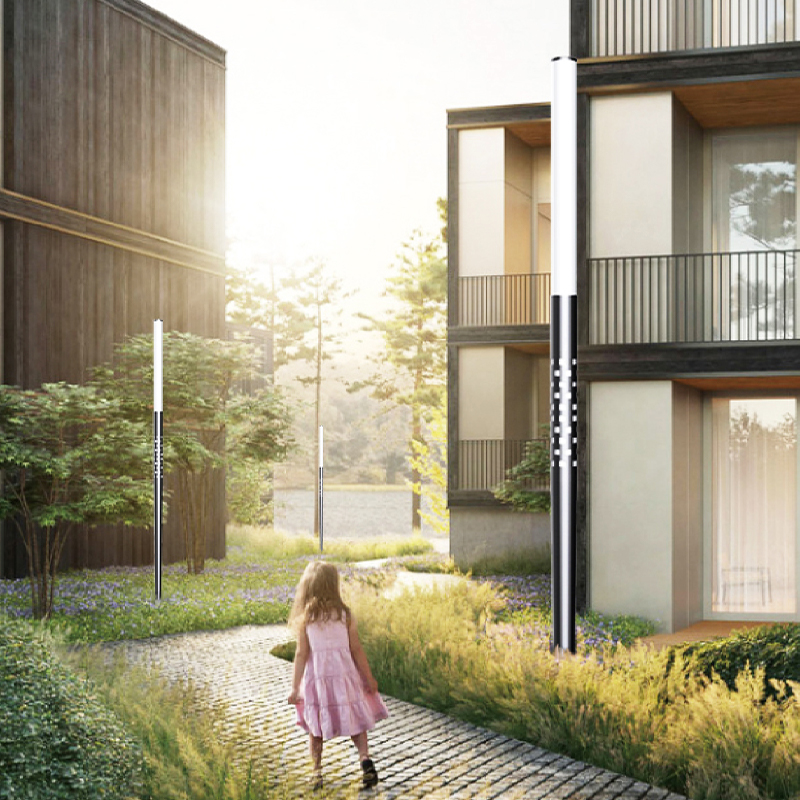 ABERRANT Aluminum Waterproof Landscape Light ColumnA flange-mounted 6063-T6 aluminum column with a 100 x 400 mm access door, suited to low decorative and garden pole installations exposed to irrigation splash.View Product →
Camera poles move the problem upward. The shaft has to carry a dry cable path to an enclosure usually rated IP66 or IP67, and the joint between pole and camera box is where most faults begin, particularly when the cable is pulled through before the gland is tightened.
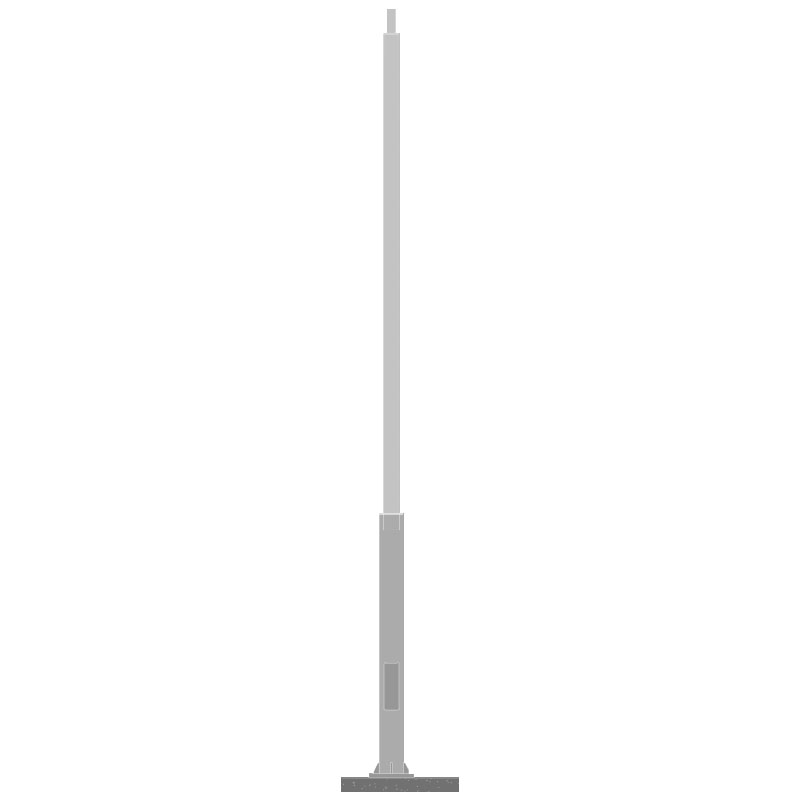 Steel Camera Light Pole for Security Camera MountingA 3–20 m steel camera pole in square, cylindrical or octagonal form, offering durable mounting for security cameras on highways, bridges, fences and trees.View Product →
Matching the level to the site
The rating should follow the environment rather than the page of the catalogue that looks most impressive. A simple site matrix keeps specifications honest and comparable between suppliers.
| Site condition | Sensible minimum | Reason |
|---|---|---|
| Sheltered walkway, canopy or arcade | IP54 | Splash and dust, no driven rain |
| Open street or car park | IP65 | Wind driven rain at all angles |
| Coastal promenade or harbour | IP66 plus corrosion resistant fixings | Salt spray, storms and jetting waves |
| Desert or dusty industrial yard | IP6X, so first digit 6 | Fine sand penetrates gaskets and joints |
| Washdown plant or depot | IP66, IP69K if cleaned at close range | High pressure hot water and detergents |
| Low lying underpass or riverside path | IP67 with a drainage path | Occasional standing water after storms |
Coastal sites deserve a second look. Salt spray attacks gaskets, fixings and coatings, so IP66 on the enclosure should be paired with sealed cable entries, stainless or coated hardware and a powder coating system suited to that atmosphere. Solar poles in these locations add a further detail, because the panel, battery box and controller each carry their own rating and their own cable joints.
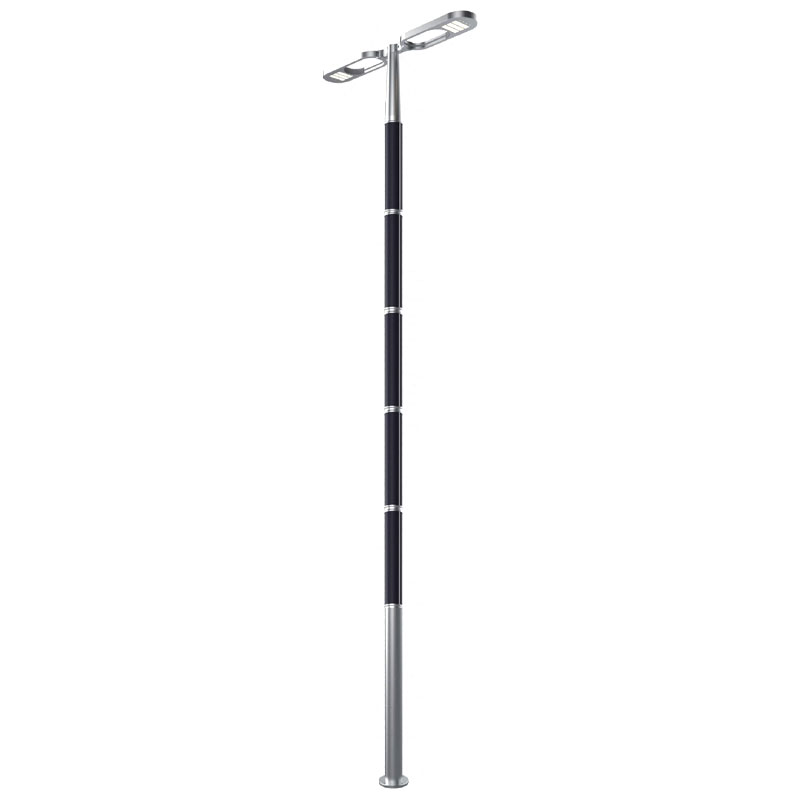 EGER Flexible HJT Solar Light Pole for Corrosive SitesAn aluminum solar LED pole with flexible HJT panels and LiFePO4 storage, designed for coastal, high-humidity and salt-spray lighting applications.View Product →
IP is not the only label on the box
Impact resistance, rated as IK to IEC 62262, describes how an enclosure survives a mechanical strike, and a pole beside a loading bay needs both numbers to be meaningful. NEMA 250 enclosure types are often quoted on North American projects and do not map one to one onto IP codes, so a specification that mixes the two standards should state which one governs acceptance. Ambient temperature range, UV stability and resistance to cleaning chemicals are separate tests again, and a product can pass IP66 while its gasket still fails after three summers of sun.
What to write into a purchase specification
A clear specification removes most of the argument before it starts. These points are worth including on any outdoor lighting order:
- State the rating per component, covering luminaire, driver compartment, handhole, joint kit and control box, rather than one number for the whole assembly.
- Name the test standard, IEC 60529, and require the rating to be verified by a recognised laboratory rather than declared internally.
- Specify gasket material, for example EPDM or silicone, and the expected service temperature range.
- Require a drainage and breathing path so condensation can escape without letting water in.
- Pair the water rating with an impact rating and a corrosion requirement for the site.
- Agree on sample inspection and a pre shipment check of glands, covers and spare entries.
For projects with unusual exposure, such as a marina walkway or a dusty logistics yard, send the site conditions and the required rating table through our contact page and we will match the pole, coating and sealing details to the environment instead of guessing from a catalogue.
Ingress protection levels are a compact language, and like any language they only help when both sides use them the same way. Read the two digits separately, decide which one your site actually stresses, and write both into the order. A pole that stays dry inside for fifteen years is rarely the one with the biggest number on the cover of the brochure. It is the one where the handhole gasket, the cable gland and the drain hole were all considered at the same time as the luminaire rating, which is also how the better aluminium garden light poles are put together.