English
 Español
 Français
 عربى
 italiano
An LED court light package is usually judged by the fixture. That is a mistake. On a tennis, pickleball, or basketball court, a 300 W class LED luminaire is only as stable and repeatable as the pole that carries it, the arm that positions it, and the foundation that resists wind. If the pole is too short, too flexible, or drilled for the wrong tenon, even a well-designed optical layout can lose uniformity and create glare.
The short answer: select the pole and mounting arrangement from the court dimensions, playing level, and luminaire photometry first. Then confirm wind load, foundation design, finish, and maintenance access. The light source matters, but the structure decides whether the light lands where the designer intended.
Content
- 1 Why Pole Geometry Decides LED Court Light Performance
- 2 Match Pole Height and Layout to the Court
- 3 Wind Load, EPA, and Foundation Risk
- 4 Mounting Details: Tenons, Arms, and Aiming
- 5 Control Glare and Spill Light at the Property Line
- 6 Procurement Checklist for LED Court Light Poles
- 7 Get the Pole and the Light to Agree
Why Pole Geometry Decides LED Court Light Performance
LED court lights are more compact and lighter than many older floodlights, but that does not make the pole less important. A narrower fixture can concentrate light more precisely, and that precision depends on mounting height and aim. Lower the mounting height by two feet and the installer may need to tilt the heads more steeply. Steeper aiming often pushes light across the court instead of down onto it, which raises glare at the baseline and reduces uniformity.
Pole location matters just as much. Court lighting is typically designed with poles set back from the playing surface, outside the run-off area, and coordinated with fencing and drainage. Moving a pole one foot can change the aiming angle, the spill light at the property line, and the wind exposure. Good LED court lighting design is therefore a joint exercise between the lighting designer, the pole supplier, and the site contractor, not a catalogue exercise.
Match Pole Height and Layout to the Court
Court type sets the working range, but the final mounting height should come from a photometric calculation. The table below gives practical starting points for early planning and budget discussions.
| Court type | Typical mounting height | Common pole layout | Main check |
|---|---|---|---|
| Tennis | 20 to 30 ft | 4 or 6 poles outside the run-off area | Uniformity at baseline and net |
| Pickleball | 18 to 24 ft | 4 poles, often at corners or mid-court | Glare between adjacent courts |
| Basketball | 25 to 30 ft | 4 or 6 poles near end lines | Light on the key and backboard |
| Multi-use court | 25 to 35 ft | 6 or 8 poles on the perimeter | Cross-court aiming and spill light |
Treat these figures as a starting point, not a specification. A recreational court can often use a lower mounting height than a competition court, but the pole still needs to place the luminaire outside the player's field of view. For multi-court installations, a single taller pole with crossarms may reduce the number of foundations, yet it also increases the effective projected area and may require a larger foundation.
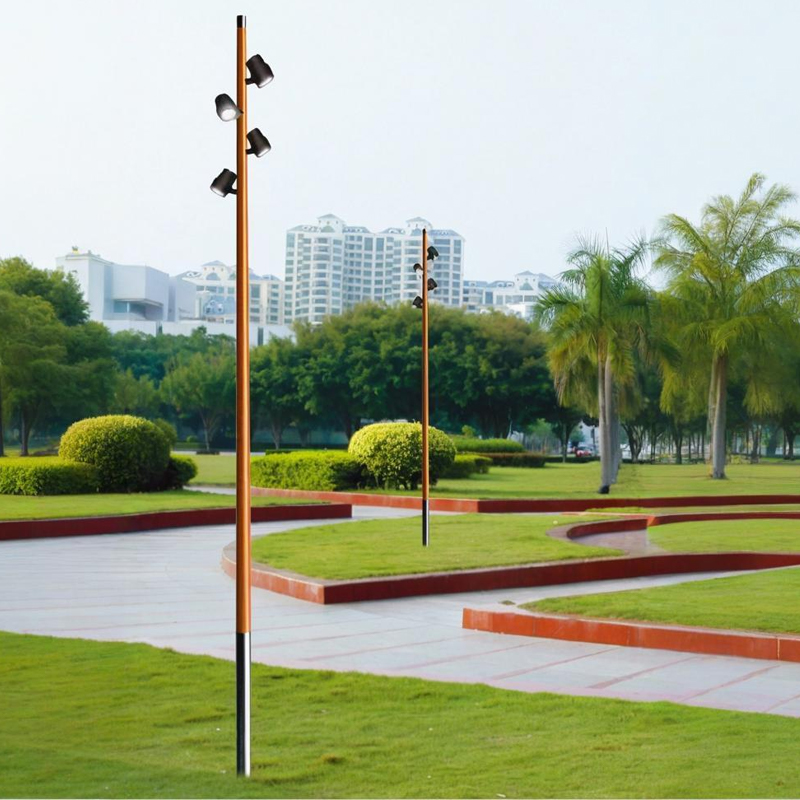
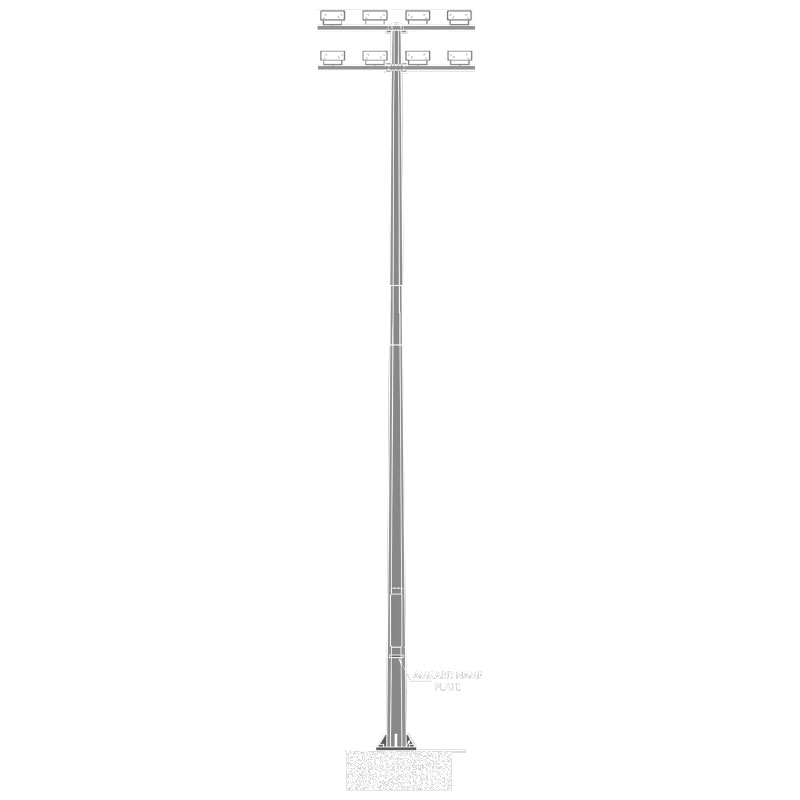 Custom Steel Floodlight Poles for Court and Area LightingCompare height, shape, wall thickness, and diameter options as wind loading and luminaire mounting requirements shape the pole design.View Product →
Wind Load, EPA, and Foundation Risk
Wind is where outdoor court lighting projects get expensive. The pole must be designed for the site wind speed, exposure category, and height, and the calculation must include the luminaires, brackets, and crossarms. Suppliers often quote a pole by height and wall thickness, but the useful number is the allowable effective projected area, or EPA, at the specified wind speed. A pole that is adequate for two small floodlights may be inadequate for four larger LED heads on long arms.
Ask for the EPA calculation and compare it with the fixture schedule. Confirm the design wind speed, safety factor, and whether the foundation is designed for the actual soil. A standard foundation drawing is not a soil-specific design. Frost depth, water table, and existing fill can change the footing size. On coastal sites, specify the corrosion protection clearly: hot-dip galvanizing plus powder coating for steel, or a suitable aluminum alloy and finish. The steel light pole range is one place to compare pole types, but the structural data still has to match the project.
For large multi-court facilities, high mast construction can consolidate equipment, but it raises maintenance and structural questions. The higher the mounting point, the more important the winch, access, and lightning protection provisions become. If the project needs a high mounting point, start with the structural brief rather than choosing a mast from a photo.
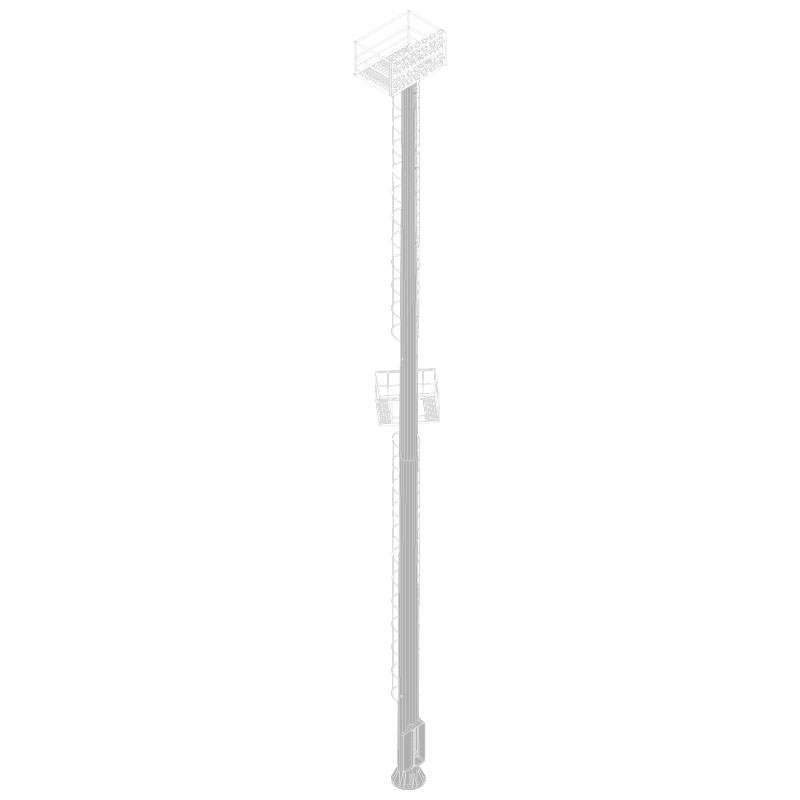 Steel High Mast Light Poles for Large-Area LightingReview the 16–50 m height range and polygonal tapered design where high mounting points are needed for sports grounds or multi-court facilities.View Product →
Mounting Details: Tenons, Arms, and Aiming
The fixture connection is a common source of site problems. LED court lights may use a slip fitter, an adjustable bracket, or a direct yoke. The pole tenon must match the fixture in diameter, length, and orientation. A 2-3/8 inch tenon, a 3 inch tenon, a 4 inch tenon, and a 5 inch tenon are not interchangeable without an adapter. Horizontal and vertical tenons also serve different aiming needs.
Check the anchor bolt pattern, bolt projection, and template before the concrete is poured. Confirm the access door orientation so wiring can be serviced without climbing over a fence or standing in a drainage swale. For retrofit work, measure the existing tenon and confirm whether the new LED head can use it. An adapter can solve a mismatch, but it adds a connection that must be checked for load and corrosion.
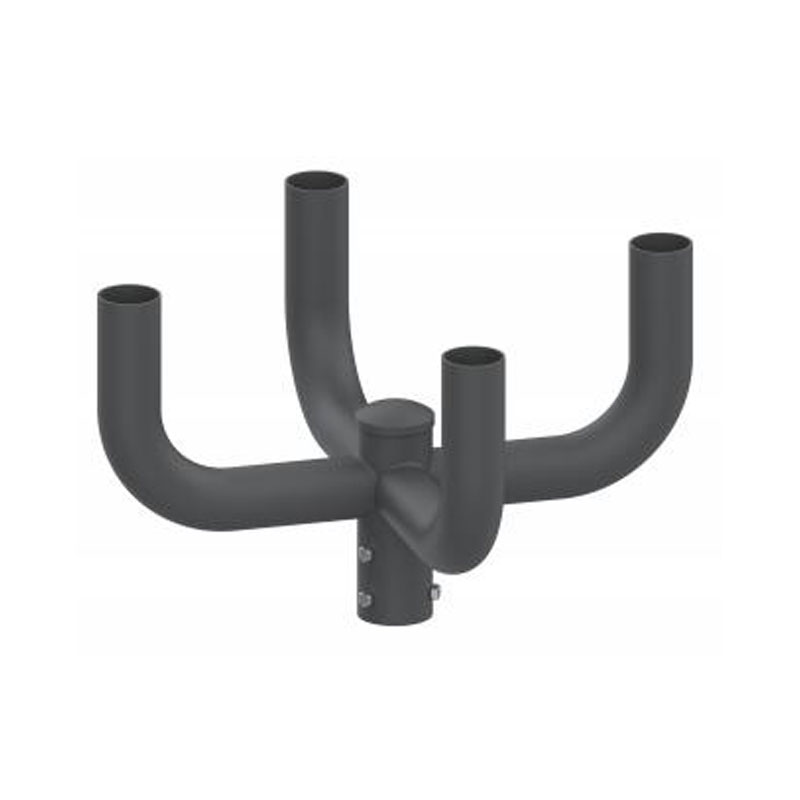 5-Inch Round Vertical Tenon Adapters for Light FixturesCompare twin, triple, and quad bullhorn configurations in steel construction when fixture tenon matching and load checks affect installation.View Product →
Control Glare and Spill Light at the Property Line
Court lighting complaints usually concern glare and spill light, not illuminance on the court. A pole that is too low, or a luminaire aimed too flat, can send light into windows, roads, and adjacent courts. Use the fixture's backlight, uplight, and glare ratings as screening tools, but confirm the result with a point-by-point calculation that includes the pole positions.
Setbacks, shields, and careful aiming are often more effective than adding more light. On residential sites, review the house-side elevation and the view from upper windows. On multi-court sites, check cross-court glare between courts. A lighting design that meets average lux but fails uniformity or glare control is not a good design.
Procurement Checklist for LED Court Light Poles
Use this list to keep the pole package aligned with the lighting design before the order is released.
- Confirm the design wind speed, exposure category, and risk category for the site.
- Request EPA data for the complete assembly, including arms and luminaires.
- Match tenon diameter, length, and orientation to the selected LED fixtures.
- Check anchor bolt pattern, template, projection, and foundation interface.
- Specify the finish system and touch-up requirements for the site environment.
- Review access door position, wiring space, grounding, and lightning protection.
- Require a photometric layout using the actual pole height and arm lengths.
- Plan maintenance access for fixture aiming, driver replacement, and cleaning.
For aluminum poles, confirm the alloy and temper, and note that aluminum is fully recyclable, which supports project sustainability goals. For steel poles, confirm galvanizing thickness and coating build. In both cases, ask for inspection records and a packing plan that protects the finish during transport.
Get the Pole and the Light to Agree
LED court lights work best when the pole, arm, foundation, and luminaire are treated as one system. Start with the court layout and the playing level, set the mounting height and pole positions, then verify EPA, foundation, tenon, and finish. That sequence reduces retrofit risk and gives the contractor a clear installation target.
If you have a court plan and fixture cut sheets, send them early. A pole supplier can check the mounting details and structural assumptions before the foundation is cast. Contact the team with the court dimensions, fixture weights, and target wind speed to move the review forward.