English
 Español
 Français
 عربى
 italiano
A common street upgrade starts with a purchase order for 2,000 LED luminaires. Months later, the team finds that 300 existing poles have the wrong tenon size, 40 poles cannot carry the new arm under local wind load, and 60 replacement poles do not match the anchor bolt pattern. The lighting is efficient, but the street is not finished.
The practical rule is simple: buy LED street lighting as a system. Luminaire, pole, mounting arm, foundation, wiring, and controls must be selected together. When one part is chosen in isolation, energy savings can disappear into adapters, rework, and delayed energization.
Content
Start with the pole, not just the luminaire
LED street lighting changes more than wattage. An LED head may weigh less than an old high-pressure sodium fixture, but it can have a different center of gravity, a longer arm, or a larger effective projected area. The pole sees the result. A small increase in arm length can raise bending moment more than a small weight reduction removes.
During a pre-purchase survey, the following checks prevent most interface surprises.
| Check | Why it matters | Practical starting point |
|---|---|---|
| Luminaire weight and projected area | Drives bending moment, foundation design, and pole class | Obtain the cut sheet, arm length, effective projected area, and local wind pressure |
| Mounting interface | Adapters add cost and joints, and can change light position | Measure tenon diameter and orientation, then compare with the pole drawing |
| Pole material and finish | Corrosion and coating damage drive long-term cost | Match aluminum or steel to the environment and specify powder coating or anodizing |
| Foundation and anchor bolts | A mismatch stops installation and can affect safety | Confirm bolt circle, projection, grout, and torque before fabrication |
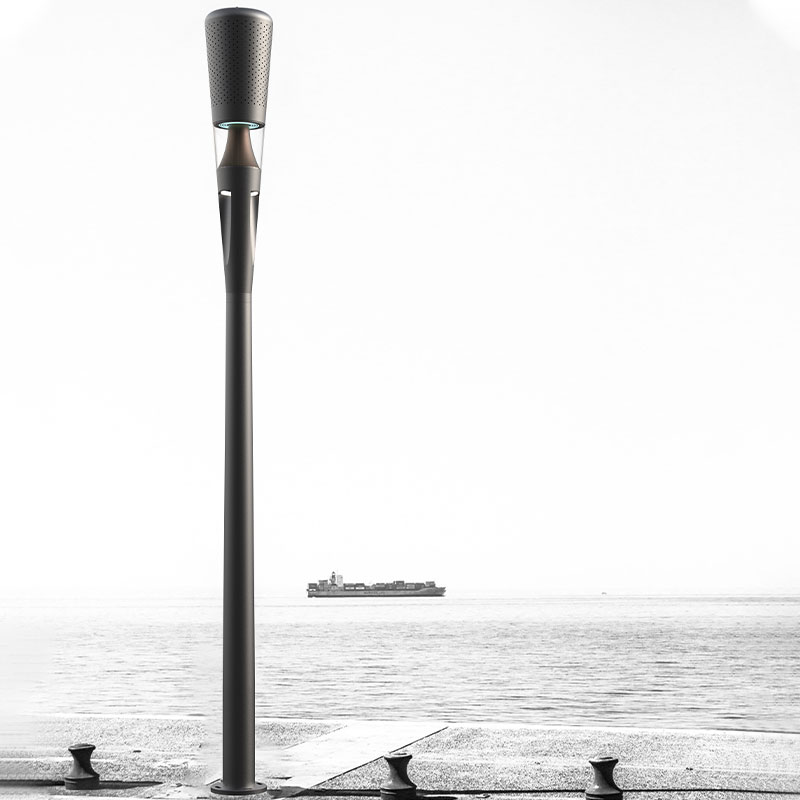
For new roadway installations, a purpose-built pole is easier to document than an unknown legacy pole.
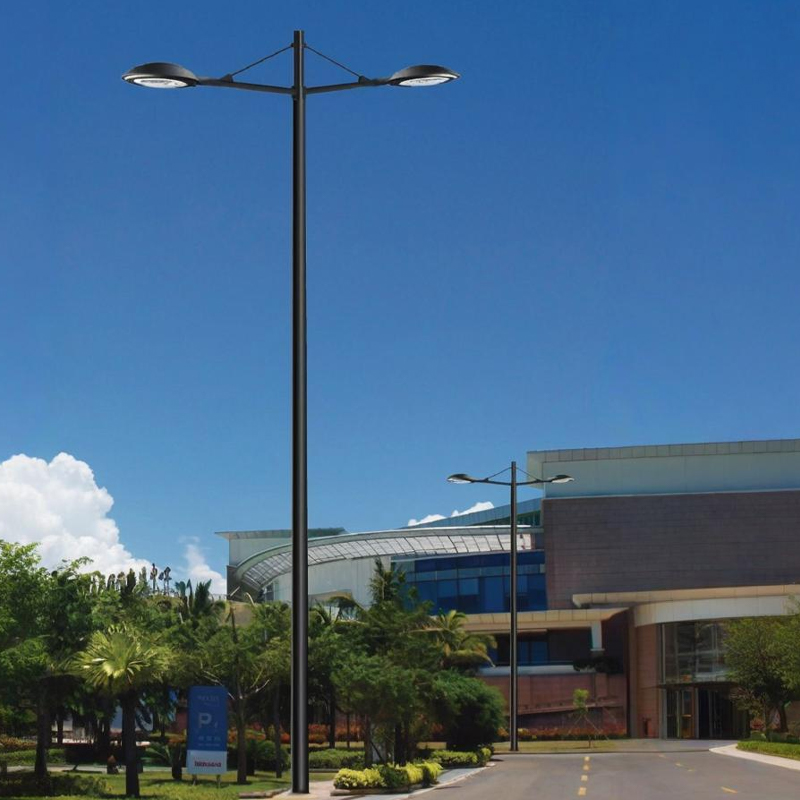
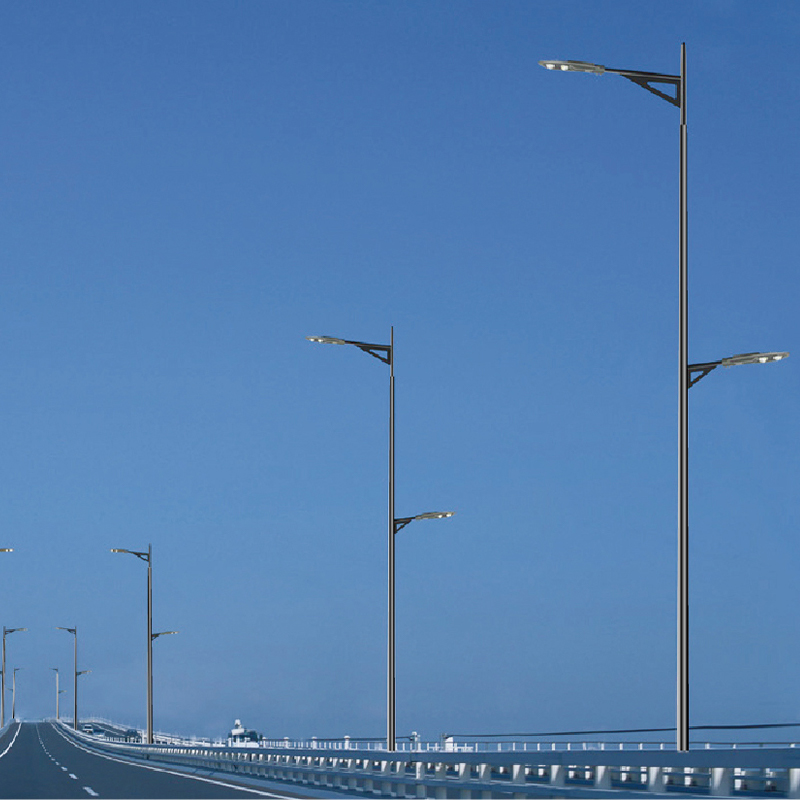 BERMUDA Conical Aluminum Roadway Light Pole SeriesFlange-mounted 6063-T6 aluminum roadway pole with six- to ten-meter models, specified flanges, bolt circles, and finish options for new installations.View Product →
Retrofits and material choice
Old poles were designed around older luminaires, arms, and wind assumptions. A visual check is not a structural review. Look for section loss at the base, cracks near welds, deformed handhole covers, missing anchor nuts, and water inside the pole. Confirm whether the pole is direct buried or flange mounted. If drawings are missing, measure the tenon, bolt circle, base plate, and arm reach, then have an engineer verify the new load case. Reusing a sound pole can be the lowest-cost option. Reusing a pole with unknown wall thickness or active corrosion is a schedule risk.
Aluminum and steel both work when specified correctly. Aluminum poles are light, corrosion resistant, and can use 100 percent recyclable aluminum. They suit coastal areas, landscape streets, and projects where handling weight matters. Steel poles offer stiffness and can be economical for long spans, high masts, and heavy assemblies, but coating damage needs attention. Morelux makes both materials and performs cutting, bending, spinning, welding, polishing, powder coating, anodizing, and inspection in house. The buyer should still tie those process claims to the specific order with drawings and inspection records.
Mounting and planning details
Most field mismatches happen at the tenon. US projects often use a 2-3/8 inch tenon, while European projects may use 60 mm or 76 mm, and horizontal or vertical orientation changes the adapter. A 4 inch or 5 inch round or square adapter can solve a mismatch, but it adds a joint, changes mounting height, and may increase wind area. Check set screw access, drain paths, and the final angle of the luminaire. For wall or facade lighting, a wall mount bracket may avoid a new pole, but confirm the substrate and pull-out capacity.
An LED lighting street project is a small infrastructure program. A practical sequence is:
- Inventory every pole, arm, foundation, and electrical point, including photos and measured dimensions.
- Run the photometric layout with the chosen luminaire, mounting height, spacing, and tilt.
- Check structure and foundations against local wind criteria, not against the old fixture alone.
- Define power, surge protection, controls, metering, and driver access before the pole design is frozen.
- Build a mockup of one complete assembly and inspect it with the installation crew.
A mockup of one pole, arm, luminaire, and foundation detail can reveal access problems before a full order. It also gives maintenance crews a chance to test driver replacement and handhole access.
Where solar and smart poles fit
Solar street lighting can avoid trenching in parks, rural roads, and temporary sites. It is not a universal replacement for grid power. Panel shading, battery life, cleaning, and theft protection must be planned. A cost-effective flexible HJT solar pole may suit a low-demand path or secondary road where grid connection is expensive. Treat battery capacity and autonomy as design variables, not catalog afterthoughts.
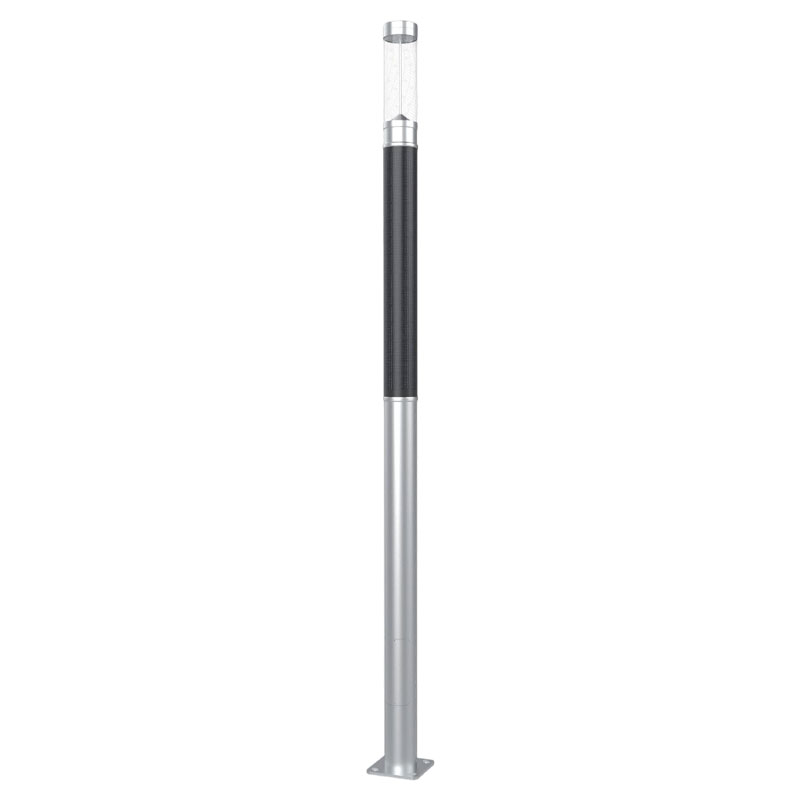 ABISKO Flexible HJT Solar Light PoleIntegrated 4,000 mm solar pole with 120 W flexible HJT panel, 30 Ah LiFePO4 battery, and 20 W LED for low-demand outdoor lighting.View Product →
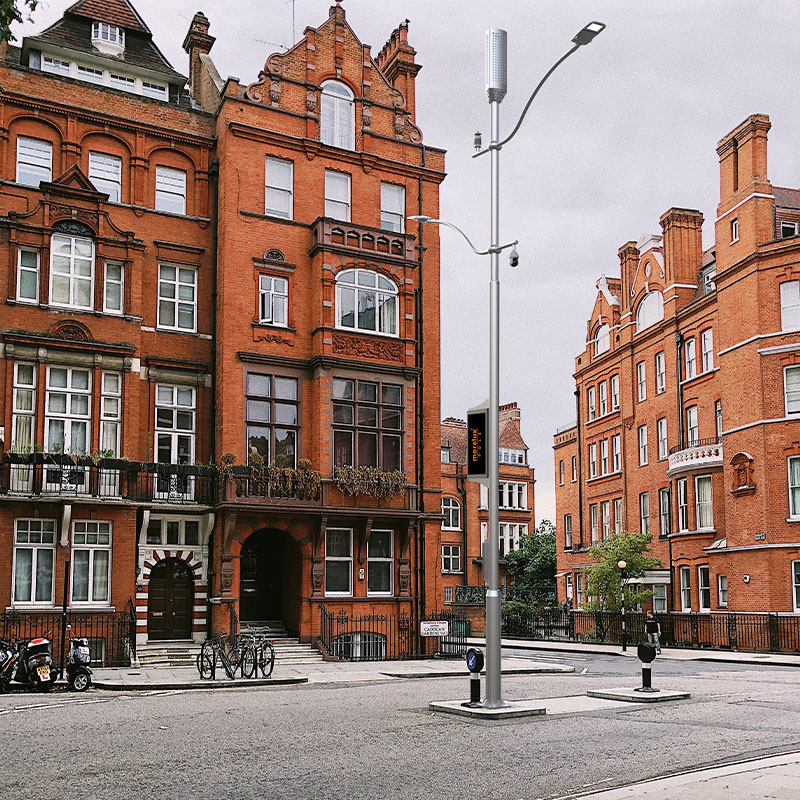
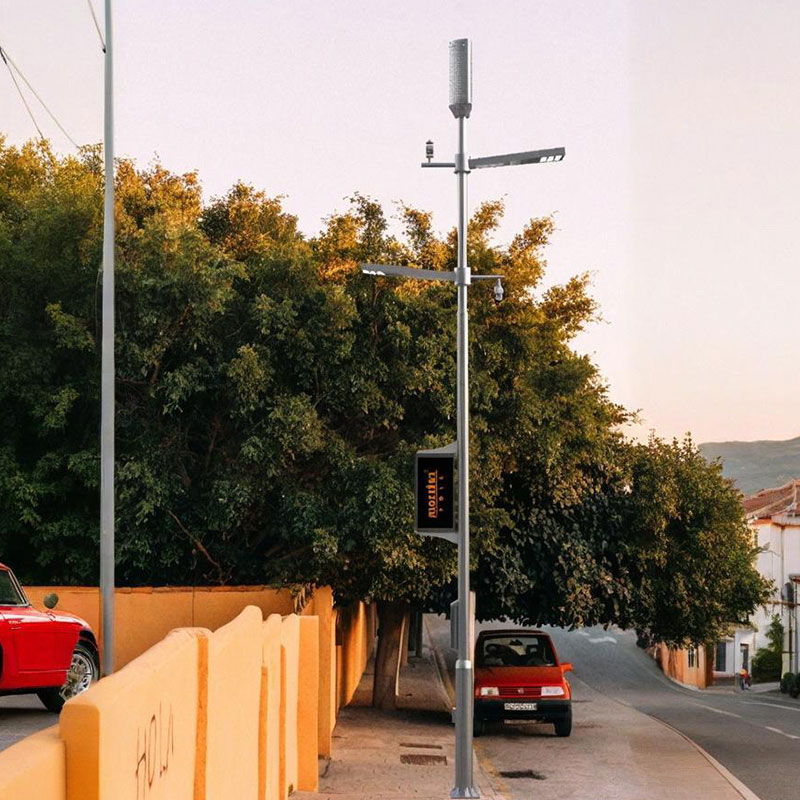
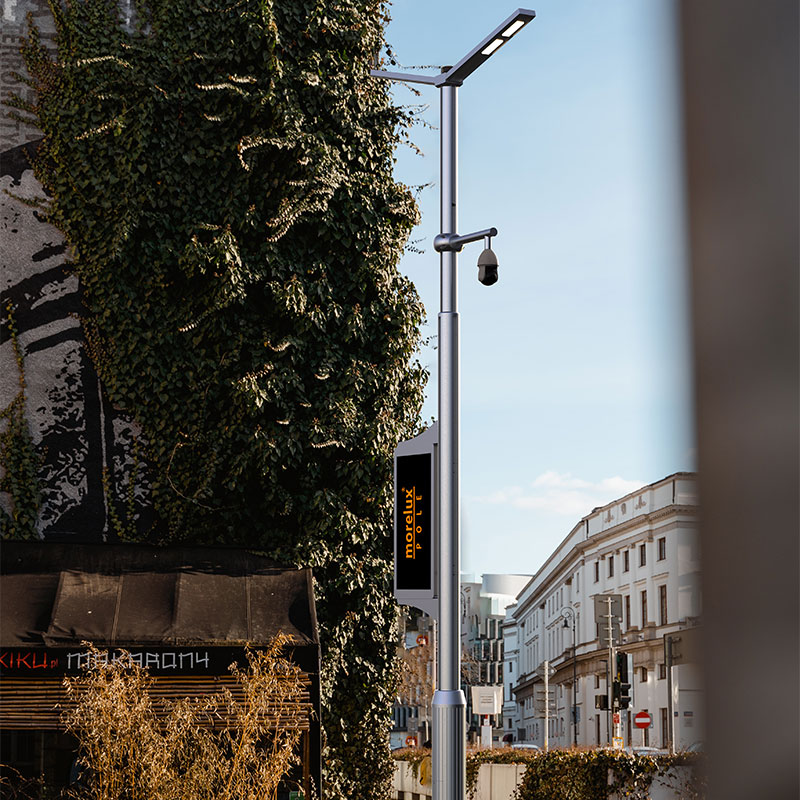
Smart poles can consolidate LED lighting, cameras, signage, and communications gear, but they raise procurement complexity. Start with the services the street actually needs, then size the pole, power budget, and access points. A smart city street light pole can be a clean base, but only if data, electrical protection, and maintenance responsibilities are agreed early.
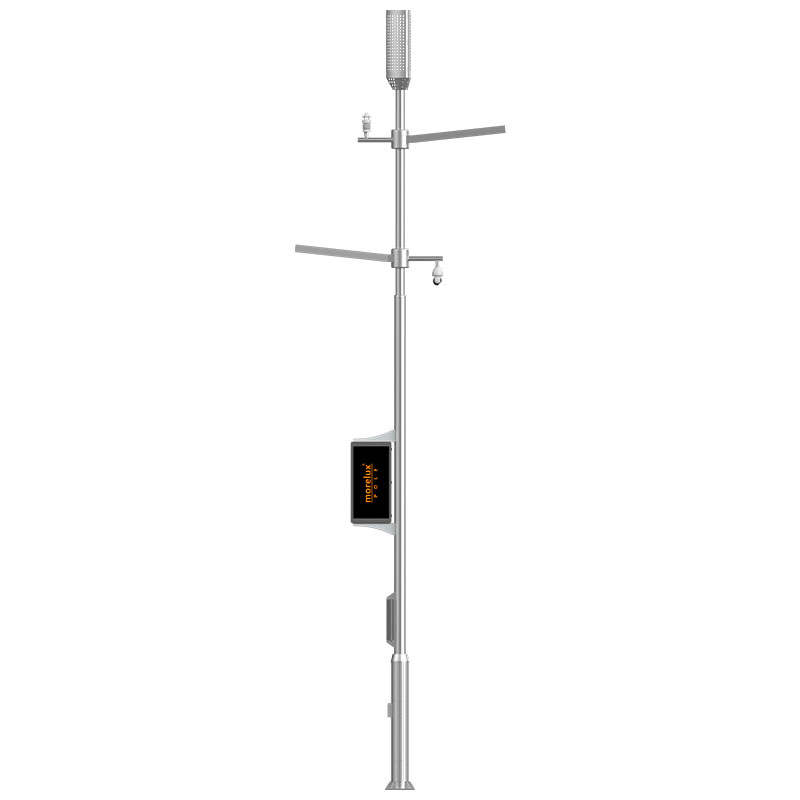 Aluminum Alloy Smart City Street Light PoleCustomizable 8–12 m smart-city pole for multi-lane roads, combining lighting with cameras, sensors, connectivity, displays, charging, alarms, and broadcast functions.View Product →
Procurement checks that protect the schedule
Price comparisons are misleading unless the quotes cover the same scope. Ask for pole drawings, wind calculations, material and finish reports, anchor bolt details, packing method, and the inspection plan. Confirm whether the supplier makes the pole or only trades it. Morelux, for example, has produced poles since 1998, employs more than 200 people, exports to over 30 countries, and performs cutting, bending, spinning, welding, polishing, powder coating, anodizing, and inspection in house. Those facts do not replace project documents, but they show where the supplier controls the process.
Before releasing an order, send the luminaire cut sheet, arm drawing, site wind criteria, and foundation detail through the contact page. A short document review can prevent a container of poles from arriving with the wrong bolt circle.
LED street lighting delivers its best value when the light and the structure are designed as one package. Choose the pole for the street, the arm for the luminaire, and the foundation for the soil and wind. Check the tenon, bolt circle, finish, and access before price is finalized. The result is a safer street, fewer site changes, and a lighting system that is easier to maintain long after the first switch-on.