English
 Español
 Français
 عربى
عربى italiano
Content
- 1 Why the Base Cover Matters More Than the Pole Itself
- 2 Casting vs. Stamping: How Manufacturing Affects Fit
- 3 Alloy and Coating Specifications That Prevent Premature Failure
- 4 Sizing and Fit: Avoiding the Gap That Invites Water Ingress
- 5 Installation Methods and the Set Screw Problem
- 6 Procurement Considerations for Commercial Ordering
- 7 Integrating Base Covers with Full Pole Assembly Specifications
Why the Base Cover Matters More Than the Pole Itself
Maintenance crews replacing rusted anchor bolts on a five-year-old parking lot installation face a common but avoidable problem. The structural integrity of an aluminum light pole rarely fails first. The failure point is almost always at the base, where moisture, road salt, and landscaping debris accumulate inside an exposed bolt circle. A properly specified aluminum light pole base cover solves this by creating a physical barrier that prevents standing water, minimizes corrosion, and gives the installation a finished, professional appearance. What looks purely decorative on a catalog page is actually a critical component for extending service life by years.
Purchasing managers and specifiers often treat base covers as a commodity afterthought, ordering whatever stamped metal piece ships with the pole. This approach ignores significant differences in alloy grade, wall thickness, and fastening methods. When a base cover cracks during bolt torqueing or deforms under direct sunlight, the cost of a replacement plus the labor to install it quickly erases the initial savings. Matching the cover to the expected environmental load and daily wear should happen during the design phase, not the warranty claim phase.
Casting vs. Stamping: How Manufacturing Affects Fit
Two production methods dominate aluminum light pole base covers: stamped sheet and cast aluminum. Each has a distinct risk profile depending on pole diameter and installation standards.
Stamped base covers are formed from flat aluminum sheet, usually 0.08 to 0.12 inches thick. They are cost-effective for straight-sided, smaller-diameter poles under 8 inches. However, the deep-draw process required for steep angles can thin the material at the shoulder, making the rim of the cover prone to cracking if a maintenance worker overtightens the set screws or if the cover is removed and reinstalled multiple times over its life.
Cast base covers are poured into a mold, allowing uniform wall thickness across the entire profile, often reaching 0.15 inches or more. This method makes them the preferred choice for heavy-duty applications like roadway lighting with high traffic vibration or coastal installations where salt spray is constant. The as-cast surface also accepts powder coating with excellent adhesion, reducing the risk of peeling around the bottom edge where moisture collects. When reviewing specifications, ask whether the cover is a single-piece casting or a welded two-piece assembly: welds on thin-gauge cosmetic parts often form the first corrosion cell if the surface treatment is scratched during installation.
Alloy and Coating Specifications That Prevent Premature Failure
Not all aluminum is suitable for a component that sits inches from wet concrete or soil. The alloy matters as much as the aesthetic finish.
- 6061-T6 Aluminum: Offers the best combination of corrosion resistance and strength. It withstands frequent removal for internal wiring access without permanent deformation. This grade is typically specified for covers on light poles in commercial and municipal projects where maintenance access is a regular requirement.
- 5052 Aluminum: Excellent corrosion resistance and formability, particularly suited for stamped covers used in marine environments. It resists saltwater pitting better than many common alloys.
- 3003 Aluminum: A general-purpose alloy with good workability. It is acceptable only for decorative applications with low mechanical stress, not recommended for poles subject to vibration from traffic or wind.
Surface treatment is not purely cosmetic. A high-quality polyester powder coating, cured correctly between 1.5 and 3.0 mils thickness, provides a barrier that prevents the base cover from turning chalky white after three to five years of UV exposure. For installations in highly corrosive industrial zones, specify a chromate conversion coating under the powder layer. Without it, any scratch through the surface will initiate filiform corrosion that spreads under the film and remains invisible until large sections blister off. Anodized finishes provide a harder surface, but the color match to the pole shaft is more difficult to control across different production batches, making powder coating the safer choice for uniform appearance.
Sizing and Fit: Avoiding the Gap That Invites Water Ingress
The most common installation complaint is a base cover that rocks on the base plate or leaves an uneven gap around the pole shaft. This is almost never a manufacturing defect. It stems from ordering a cover with an inside diameter tolerance that does not account for the actual pole butt diameter and the thickness of the anchor bolt nuts protruding above the base plate.
Pole butt diameters follow nominal sizing, but actual outside diameter can vary by plus or minus 0.05 inches between production runs. A base cover with a shaft opening exactly matching the nominal diameter might not fit over the pole if the production tolerance lands on the high side. A practical rule is to specify a shaft opening 0.25 inches larger than the nominal pole butt diameter. This allows for variation in pole finish thickness, small out-of-round conditions, and thermal expansion on hot days when the cover expands at a different rate than the cast aluminum base flange.
Height is equally important. A base cover must be tall enough to completely enclose the anchor bolt projection above the base plate, including the nut height and any exposed threaded portion. Typical anchor bolts for 20- to 30-foot poles project 2.5 to 3 inches above the plate. A cover height of 4 inches is the practical minimum for these sizes, but 5 to 6 inches provides a visual proportion that looks intentional rather than undersized. For poles with a breakaway base or transformer base, verify the bolt pattern dimensions directly, as these often use non-standard bolt circles that standard covers will not fit.
Installation Methods and the Set Screw Problem
The majority of base covers are retained by stainless steel set screws threaded through the side of the cover and tightened against the pole shaft. This method works reliably when specified with a nylon or brass tip insert that prevents the steel screw from gouging the pole's powder-coated surface. A hardened stainless screw without a soft tip will cut through the coating in a ring pattern, creating a corrosion track that wicks moisture directly to bare aluminum.
Three retention mistakes show up repeatedly in site inspections:
- Using only two set screws on a cover taller than 5 inches, allowing the top of the cover to rattle in wind and eventually crack at the fastener hole.
- Overtightening stainless screws into an aluminum housing without anti-seize compound, causing galling that fuses the threads and makes future removal impossible without destroying the cover.
- Placing drain slots incorrectly, or not having them at all. A base cover should include a small weep hole at the lowest edge so that condensation or driving rain that enters through the pole handhole can exit rather than pool inside the cover cavity.
For installations where the cover must be removed frequently, such as poles housing smart city sensors or camera equipment, consider a two-piece clamshell design. These covers hinge or split apart without needing to be slid up the pole shaft, protecting the surface finish and cutting access time significantly. Check with your supplier about specifying this option if maintenance access is a known requirement from day one.
Procurement Considerations for Commercial Ordering
Ordering aluminum light pole base covers as a standalone line item, separate from the pole contract, introduces avoidable coordination risk. The color match drift between a pole manufacturer's own coating line and a third-party cover supplier can be noticeable enough to trigger punch-list rejections by architects or property owners.
The safer procurement path is to source base covers from the same manufacturer supplying the light poles, as they control the powder formulation and curing process and can batch-match covers to poles in the same production run. If this is not possible, request a physical color swatch or a small sample panel, not a digital photo, and evaluate the match under both natural daylight and the correlated color temperature of the luminaires that will illuminate the site at night. Metallic finishes are especially sensitive to lighting conditions and show mismatches more aggressively than solid colors.
Spare covers should be ordered as part of the initial contract at a ratio of approximately 5 percent per size, stored in conditioned space if possible. When a snowplow clips a pole base cover or landscaping equipment punches a hole in one, having a spares kit avoids a six-week lead time and ensures the replacement matches the rest of the site exactly. Municipalities with large inventories of poles should consider standardizing on two or three base cover heights and bolt circle patterns across projects to keep spares interchangeable across their asset base.
Integrating Base Covers with Full Pole Assembly Specifications
A base cover cannot be evaluated in isolation. Its performance depends on the base plate design, the anchor bolt arrangement, and the pole's overall coating system. The historical focus on cover aesthetics alone misses the real procurement advantage: a well-matched cover and pole assembly from a single source reduces the number of installation issues and warranty claims over the life of the project.
When comparing suppliers, ask for documentation that covers alloy grade, coating mil thickness, and salt-spray test hours for both the pole and the base cover. If a manufacturer provides complete fabrication capability, including cutting, bending, welding, powder coating, and anodizing in their own facility as observed with producers like Morelux, the quality control traceability across components is fundamentally stronger than sourcing from multiple job shops. For specifiers managing large-scale installations, selecting full aluminum pole assemblies that include a matched flange mounting system reduces the administrative burden and ensures the base cover fits correctly without modification. For sites requiring direct burial, a different pole foundation approach applies, and the base detail changes completely with options available for planted mounting configurations that eliminate the above-ground fastener exposure entirely. This upfront coordination prevents the all-too-familiar scenario of field modifications that compromise corrosion protection and create long-term maintenance liabilities.
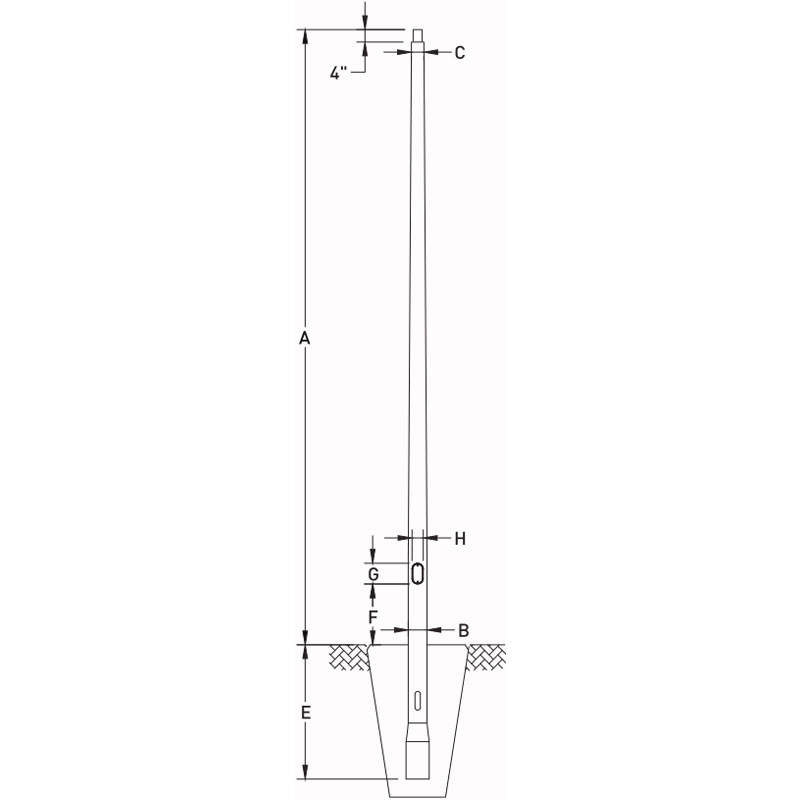 Custom 10ft-40ft Aluminum Conical Light Pole, Planted Mounting Supplier, FactoryNingbo Morelux Pole Technology Limited is China 10ft-40ft Aluminum Conical Light Pole, Planted Mounting supplier and factory, professiona...View Product →
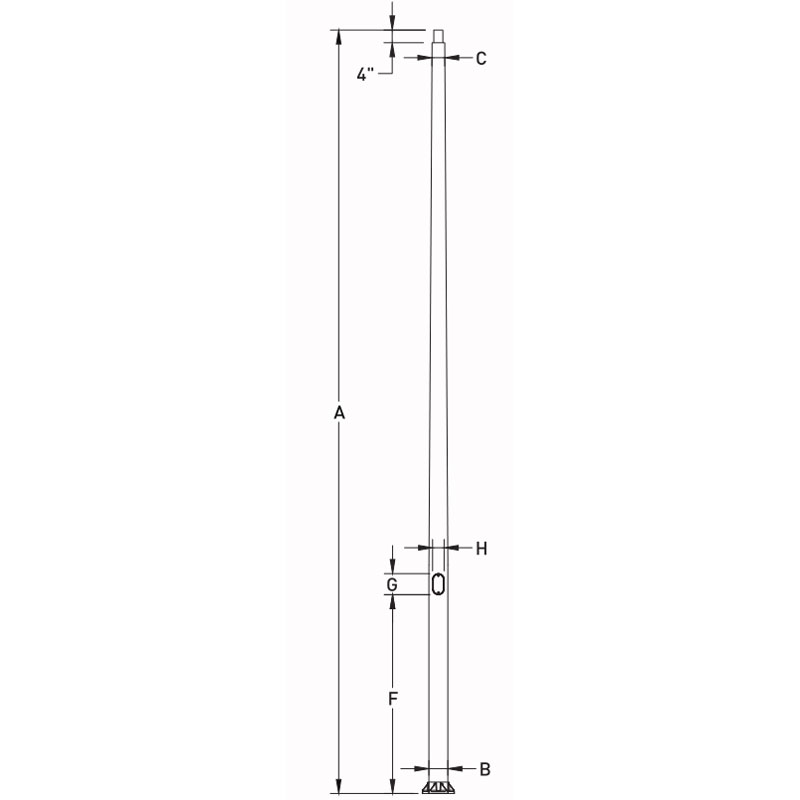 Custom 10ft-40ft Aluminum Conical Light Pole, Base Flange Mounting Supplier, FacNingbo Morelux Pole Technology Limited is China 10ft-40ft Aluminum Conical Light Pole, Base Flange Mounting supplier and factory, profess...View Product →
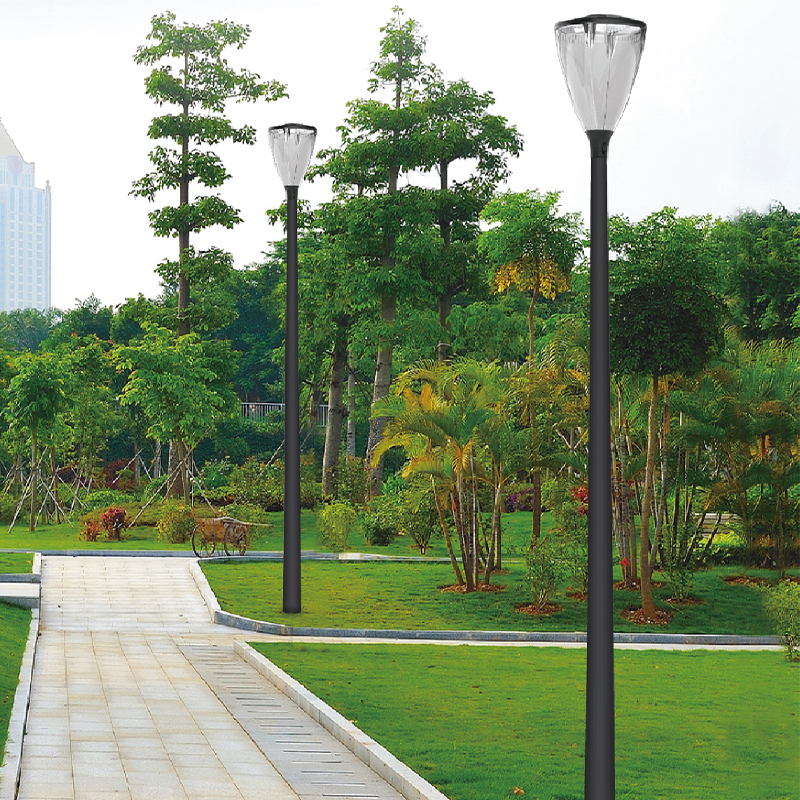 Wholesale Garden Poles Supplier, OEM/ODM Decorative Poles CompanyNingbo Morelux Pole Technology is a China OEM/ODM garden poles supplier and decorative poles company, professional wholesale garden poles...View Product →