English
 Español
 Français
 عربى
 italiano
A 120 space retail lot can look evenly lit on a photometric plan and still feel uncomfortable at night. The usual cause is not a weak fixture. It is a mismatch among pole height, spacing, beam distribution, and glare control. The practical conclusion is simple: treat outdoor parking lights as a system, not a catalog item. Start with the lot layout and the tasks drivers and pedestrians perform, then choose the pole and luminaire together. That order reduces rework, protects the pole schedule, and gives the owner a lighting layout that can be maintained.
Content
- 1 Start with the parking task, not the fixture
- 2 Match pole height and spacing to the lot layout
- 3 Choose the pole material and mounting method with the site in mind
- 4 Control glare and uniformity before adding wattage
- 5 Check wind, soil, corrosion, and service access
- 6 Plan solar and connected parking lots with care
- 7 Procurement checklist for outdoor parking lights
Start with the parking task, not the fixture
Parking lights do four jobs at the same time. They help drivers identify spaces and lane edges, support pedestrian movement from the car to the building, improve camera visibility, and shape the site appearance after dark. A layout that overlights the center aisle but leaves the far rows dim will pass a simple average footcandle check and still fail in daily use. Ask for a photometric plan that shows horizontal illuminance, maximum to minimum uniformity, and vertical illuminance at entrances and walkways.
The luminaire distribution matters as much as wattage. A wide distribution can reduce the number of poles in an open lot, but it can also throw light onto neighboring property if the pole is too tall or the luminaire is aimed poorly. A narrower distribution may suit a long, narrow lot or a row along a building. The key is to match the optic to the pole spacing, mounting height, and target area rather than choosing a fixture by lumen output alone.
Match pole height and spacing to the lot layout
Pole height and spacing are linked decisions. Taller poles can cover more area with fewer units, but they raise service access requirements and can increase glare if the luminaire is not controlled. Shorter poles often fit small retail lots and medical campuses, where a human scale and lower glare near entries matter. The table below gives planning ranges, not fixed rules. Final values should come from a photometric calculation, local code, and the owner maintenance plan.
| Parking lot type | Typical mounting height | Common pole spacing | Design note |
|---|---|---|---|
| Small retail or medical lot | 20 to 25 ft | 60 to 90 ft | Lower glare near entries and walkways |
| Medium retail or office lot | 25 to 30 ft | 80 to 120 ft | Balance uniformity, appearance, and spill control |
| Large retail or transit lot | 30 to 40 ft | 100 to 150 ft | Fewer poles, but plan for lift access and service |
| Remote or overflow lot | 20 to 30 ft | 70 to 110 ft | Check trenching cost and solar feasibility |
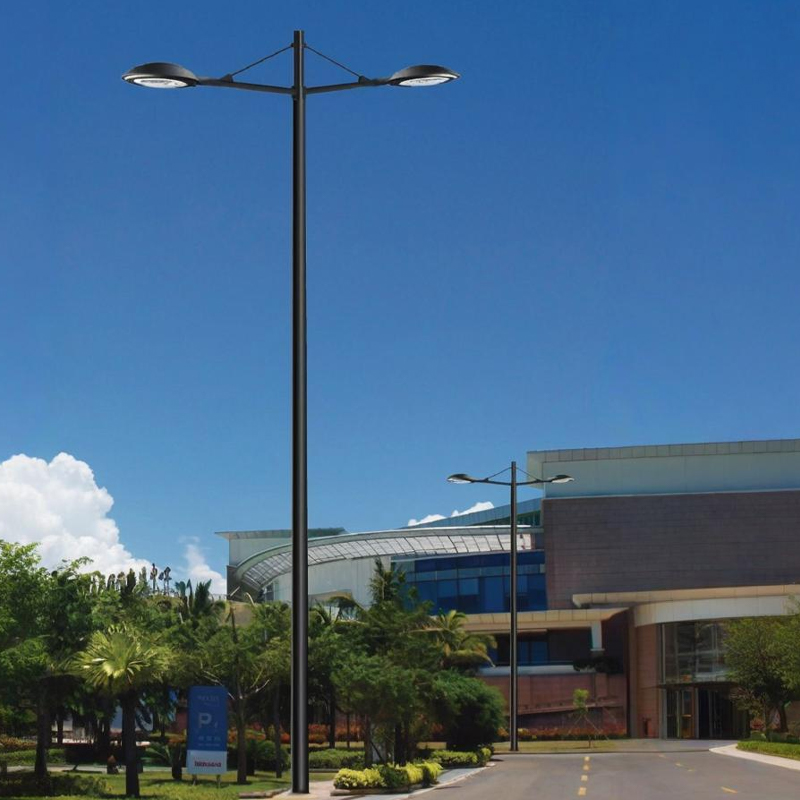
For a 20 to 40 ft American style layout, a base flange mounting conical aluminum pole is often a practical starting point because it works with anchor bolts set on a concrete foundation and can be surveyed before delivery. The pole schedule should state the mounting method, bolt circle, handhole orientation, arm reach, and finish before the foundation is poured.
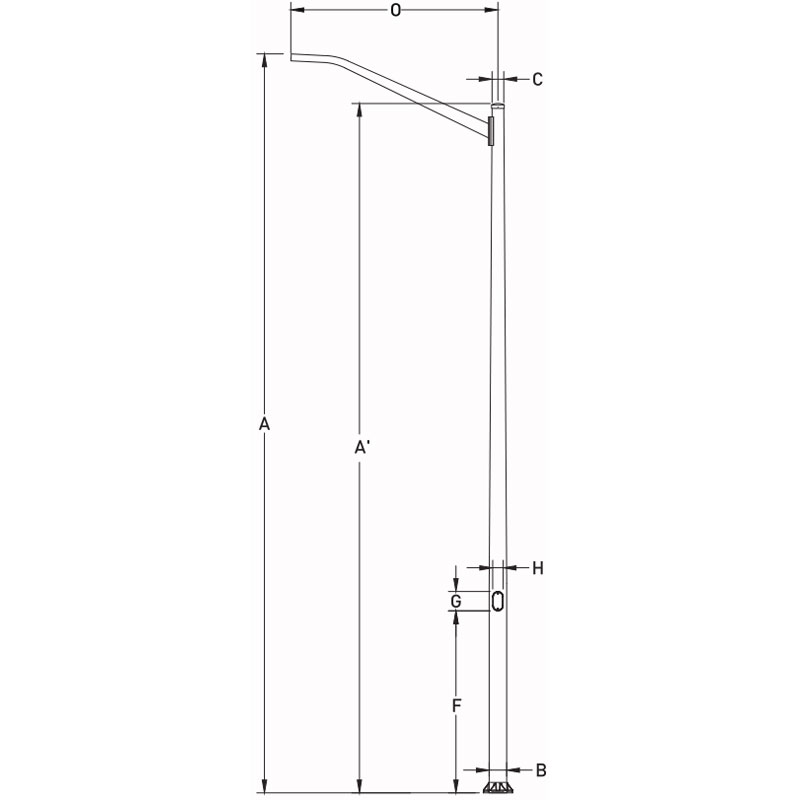 20–40 ft Aluminum Conical Light Pole with Base FlangeA base-flange aluminum pole for 20–40 ft layouts, with AL6063-T6 shaft and configurable heights, arm lengths, and bolt circles for foundation planning.View Product →
Choose the pole material and mounting method with the site in mind
Steel and aluminum poles both work for outdoor parking lights, but they solve different project constraints. Steel offers stiffness for tall poles, long arms, and heavy luminaire or camera loads. Aluminum is lighter, resists corrosion well when detailed correctly, and is fully recyclable, which supports projects with green building goals. Powder coating and anodizing improve appearance and durability, but the specification should state the finish system, color, and touch up method because parking lots are exposed to weather, road salt, and equipment contact.
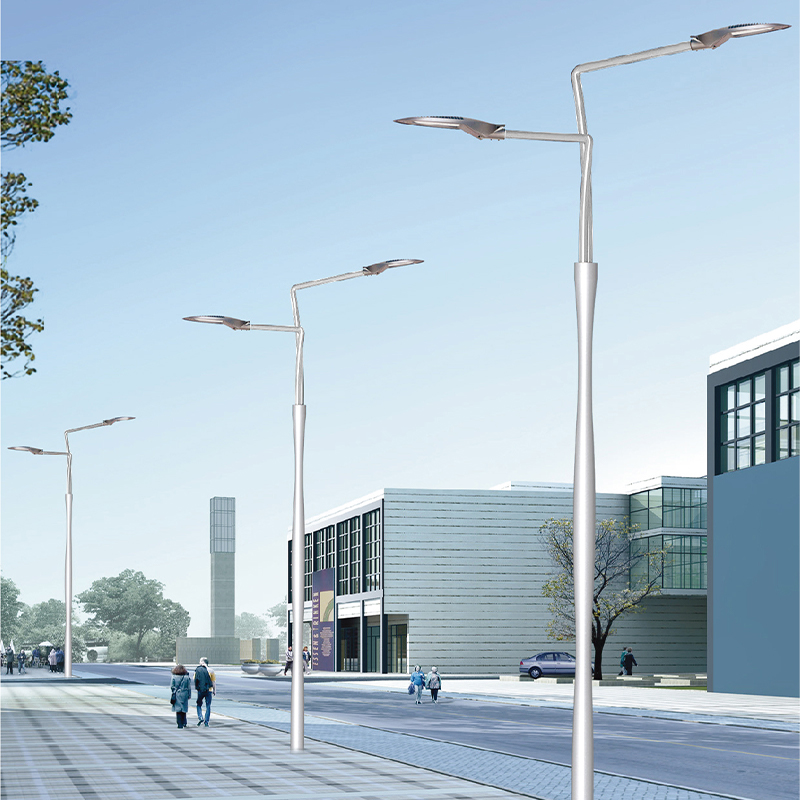
Mounting method is another decision that affects cost and schedule. Base flange mounting is common where anchor bolts and a concrete foundation are practical. Direct burial can suit certain layouts where a foundation is not preferred, but soil conditions, frost depth, and inspection requirements must be checked. In European and Middle Eastern layouts, a conical aluminum roadway pole can give a clean profile for medium height parking and access road lighting while keeping the pole schedule consistent across the site.
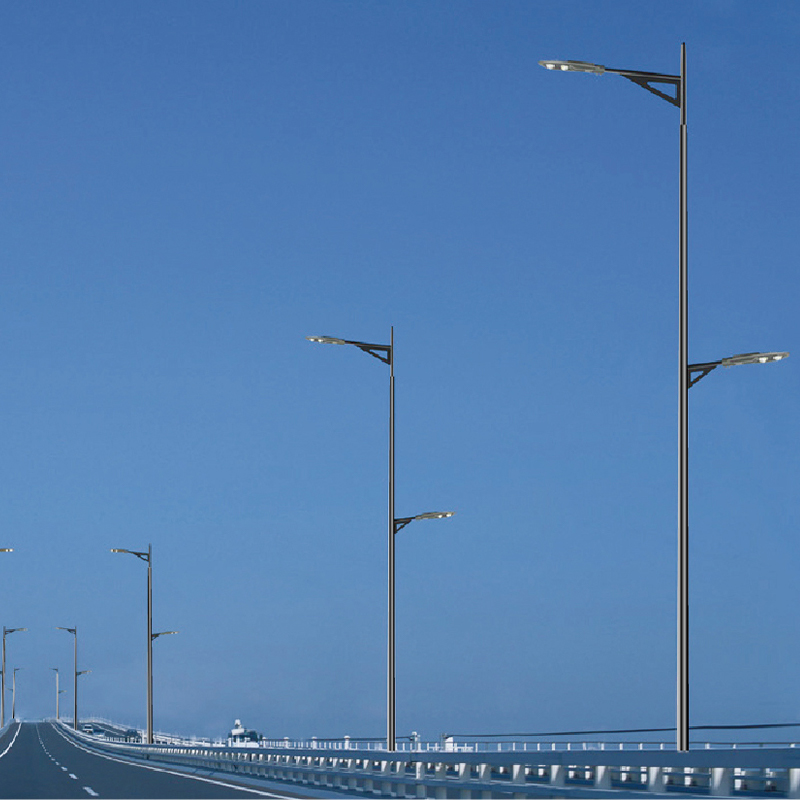 BERMUDA Conical Aluminum Roadway Light Pole, Flange MountA flange-mount 6063-T6 aluminum roadway pole in 6–10 m heights, suited to medium-height parking and access-road layouts with a consistent pole schedule.View Product →
Control glare and uniformity before adding wattage
A common procurement mistake is to chase wattage when the real issue is glare. A bright pole that shines into windshields or bedroom windows makes a parking lot feel less safe, not more. Specify a luminaire with controlled optics, confirm the bug rating if dark sky goals apply, and check the mounting height against the cutoff angle. For many parking areas, 3000 K to 4000 K color temperatures are easier to specify across a site, but the owner should confirm the preferred appearance and any local lighting rules.
Uniformity should be reviewed with the same care as average light level. Dark bands between poles can hide curbs, wheel stops, and pedestrians. Very high contrast can create glare pockets that reduce visibility. Ask the designer to show a grid of calculation points and to explain how pole spacing, arm length, and luminaire distribution work together. If the lot has mature trees, signs, or future electric vehicle stalls, include those obstructions and changes in the base plan.
Check wind, soil, corrosion, and service access
Pole failures often start at the base, so the foundation and anchor bolts deserve the same review as the luminaire. Confirm the design wind speed, exposure category, effective projected area of the luminaire and any camera or sign attachment, and the soil bearing capacity used for the foundation. Coastal sites need a finish and fastener package that accounts for salt air. Sites with truck traffic need protection from impact, and sites with landscape irrigation need drainage details that keep water away from the base.
Service access is a practical procurement issue. A 40 ft pole may reduce the pole count, but it also requires a lift for lamp or driver replacement. Ask who will maintain the lot, how often, and whether the owner prefers hinged or accessible designs for particular locations. Handhole covers, fuse access, and wiring compartment size should be reviewed before the order is released. A slightly larger pole with better access can cost less over ten years than a smaller pole that is difficult to service.
Plan solar and connected parking lots with care
Solar outdoor parking lights can be viable where trenching is expensive, power is unavailable, or a remote overflow lot needs independent lighting. The design must account for local sun hours, panel orientation, battery capacity, winter performance, and maintenance access. Solar poles are not a simple swap for grid connected poles because the panel, battery, controller, and luminaire all affect the pole load and foundation. Review the solar pole design considerations before fixing the layout.
A cost effective flexible HJT aluminum solar pole can suit a remote lot when the energy budget and maintenance plan are realistic. The owner should receive a clear calculation for daily energy use and days of autonomy, not only a panel wattage. For connected lots, smart poles can combine lighting with cameras, communications, or environmental sensors, but those features should be specified only when there is a clear operating plan and data owner.
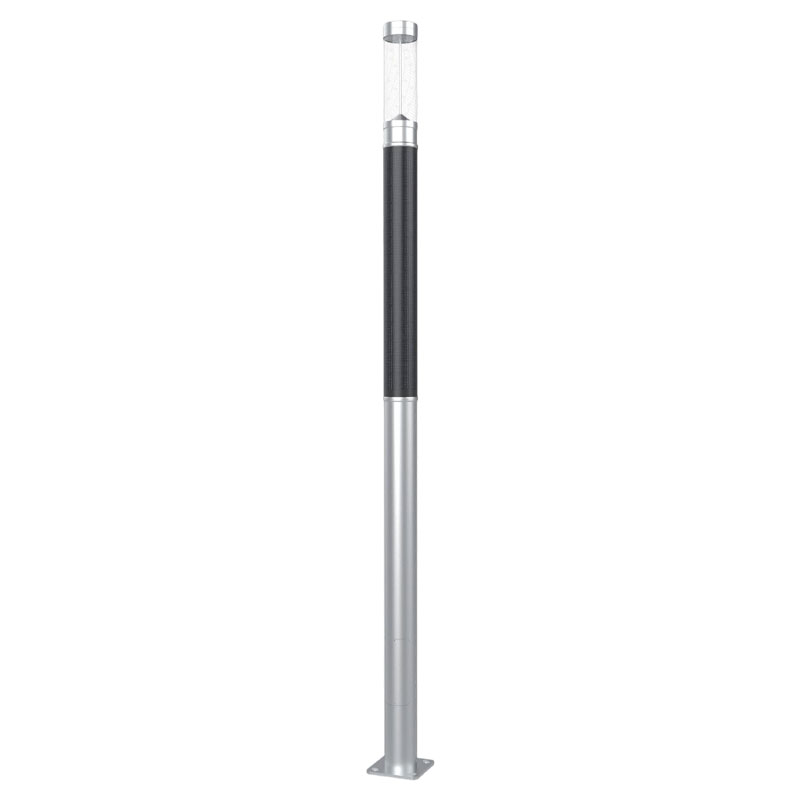 ABISKO Flexible HJT Aluminum Solar Light PoleA 4 m solar lighting pole with flexible HJT panel, LiFePO4 battery, and 20 W LED, suited to remote lots when energy and autonomy calculations are clear.View Product →
Procurement checklist for outdoor parking lights
Use a short checklist to keep the pole and luminaire packages aligned. The goal is to catch interface problems before the foundation is poured and before the luminaire order is released.
- Confirm the parking layout, lane widths, future phases, and any electric vehicle or camera locations.
- Review the photometric plan for average light level, uniformity, glare, and light spill at property lines.
- Fix pole height, spacing, arm reach, and luminaire distribution as one coordinated set.
- State the material, finish, color, and corrosion package, especially for coastal or high humidity sites.
- Confirm the mounting method, anchor bolt pattern, foundation drawing, and handhole orientation.
- Check wind load, luminaire effective projected area, and any attachments such as signs or cameras.
- Ask for spare parts, touch up paint, and a maintenance plan before delivery.
- Send the lot layout, pole schedule, and finish requirements through the contact page so the supplier can review the full package.
Clear documentation saves more money than a small unit price difference. A supplier who can review the pole schedule, foundation interface, and finish requirements together is better placed to prevent site delays than one who quotes only a pole height and wall thickness.
Share your project details and drawings through the contact page when you are ready for a coordinated review.
On most parking lot projects, the best result comes from a simple sequence. Define the lighting task, test pole height and spacing with a photometric plan, choose the material and mounting method, then confirm wind, finish, and service access. Outdoor parking lights are visible infrastructure, so the layout should be judged at night from a driver seat and from a walking path, not only on a product data sheet. When the pole and luminaire are selected as one system, the owner gets more even light, fewer glare complaints, and a site that is easier to maintain.