English
 Español
 Français
 عربى
عربى italiano
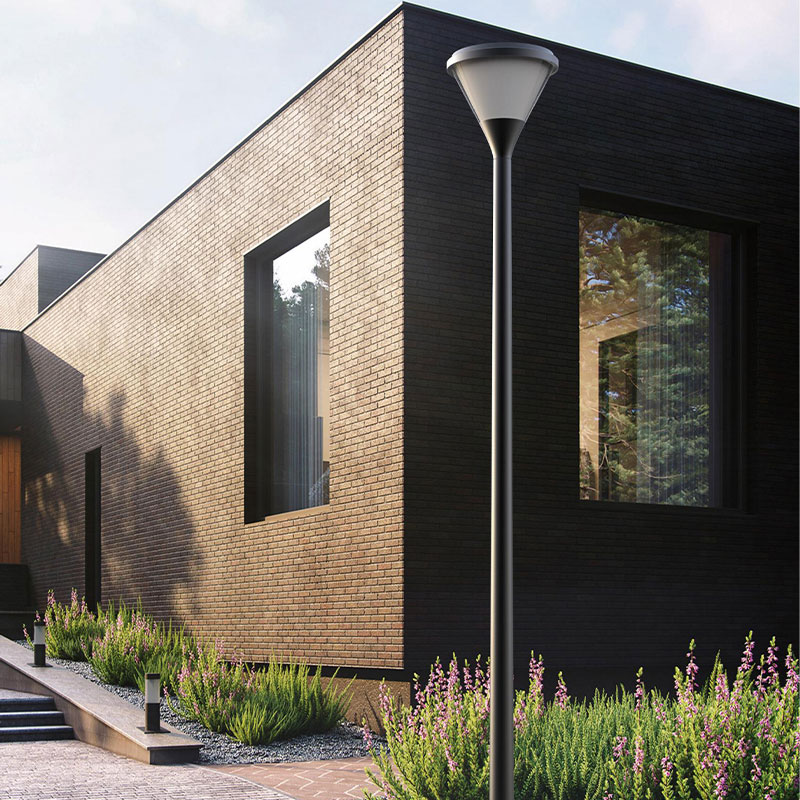
A solar light pole has a structural lifespan of 15 to 25 years under normal outdoor installation conditions, depending on the pole material, surface treatment, and environment. The pole's structural lifespan significantly exceeds the lifespan of the solar system's battery (5–10 years) and often outlasts the first replacement cycle of the LED luminaire as well. The two most common pole materials — hot-dip galvanized steel and anodized aluminum alloy — each achieve 20+ years of structural life with appropriate specification and installation. This makes the pole the most durable single component in the solar lighting system, functioning as the long-term investment that supports multiple generations of electronics and batteries over its service life.
Content
Lifespan by Pole Material
The material and surface treatment of the pole are the primary determinants of its service life. Each option offers a different combination of strength, weight, corrosion resistance, and maintenance requirement:
Hot-Dip Galvanized Steel Poles
Galvanized steel is the most widely used material for solar light poles globally, offering a structural lifespan of 20–30 years in typical urban environments. The hot-dip galvanizing process deposits a zinc coating of 85–100 microns that provides sacrificial cathodic protection — the zinc corrodes preferentially to protect the steel substrate. In inland urban and suburban environments, this zinc coating provides approximately 20–25 years of protection before the underlying steel begins to corrode.
In coastal environments with salt air exposure, galvanized steel pole life is reduced to approximately 10–15 years without additional surface treatment such as epoxy undercoat and polyurethane topcoat, which extend protection significantly.
Aluminum Alloy Poles
Aluminum poles achieve structural lifespans of 25–50 years — significantly exceeding steel in corrosive environments because aluminum forms a self-healing oxide layer that provides permanent corrosion protection without applied coatings. Anodized aluminum poles are particularly durable in coastal, industrial, and humid environments where salt fog and chemical pollution would degrade galvanized steel in a decade.
At approximately one-third the weight of steel for equivalent structural performance, aluminum poles also reduce foundation requirements and installation labor costs — a practical advantage for solar light installations in remote locations where heavy equipment access is limited.
Stainless Steel Poles
Stainless steel (typically 304 or 316 grade) poles offer the longest lifespan in severely corrosive environments — 40 years or more in marine conditions where standard materials would fail significantly earlier. Their higher cost is justified in extreme environments or architectural applications where both longevity and premium appearance are required.
Lifespan Comparison by Material and Environment
| Pole Material | Inland Urban | Coastal / Humid | Industrial / Chemical | Maintenance Requirement |
|---|---|---|---|---|
| Hot-dip galvanized steel | 20–30 years | 10–15 years | 8–12 years | Inspect and recoat every 10–15 years |
| Anodized aluminum alloy | 25–50 years | 25–40 years | 20–30 years | Minimal — occasional cleaning |
| Stainless steel (316) | 40+ years | 40+ years | 30–40 years | Minimal |
Foundation and Structural Integrity Over Time
The pole's structural lifespan depends not only on the shaft material but also on the foundation system. Solar light poles are typically installed in one of two ways:
- Direct burial with concrete backfill: the pole base is set directly into a concrete foundation to a depth of approximately 10–15% of total pole height. Corrosion at the ground line (the zone where the pole transitions from below-ground to above-ground) is the most critical structural risk for steel poles — this zone must be protected with additional coating or a sacrificial anode system
- Anchor bolt base plate: the pole is bolted to a pre-cast concrete foundation using a base plate and 3–4 anchor bolts. This system allows the pole to be removed and replaced independently of the foundation, and keeps the pole shaft clear of soil contact — eliminating ground-line corrosion risk entirely
For maximum structural longevity, the anchor bolt system is recommended — particularly for steel poles — as it eliminates the buried corrosion risk and allows the foundation to outlast multiple generations of pole replacement.
Smart Technology Integration and Its Effect on Pole Longevity
Modern solar light poles increasingly serve as mounting platforms for smart city technology — sensors, cameras, Wi-Fi access points, speakers, 5G small cells, and EV charging equipment — in addition to the solar lighting system. When specifying a solar light pole that will carry this additional equipment, the structural design must account for:
- Additional wind load: cameras, antennas, and display screens increase the total wind-facing area and therefore the overturning moment at the base — the pole cross-section, wall thickness, and foundation must be sized for the total equipment load, not just the luminaire alone
- Cable management and moisture sealing: additional equipment means more cable penetrations through the pole wall — each penetration must be properly sealed to prevent moisture ingress that would accelerate internal corrosion and damage electronics
- Thermal management of the enclosure: battery management electronics, charge controllers, and communications modules all generate heat — the pole must include adequate ventilation or thermal insulation to prevent heat accumulation that would reduce battery and electronics lifespan
When designed correctly, a solar light pole serving as a smart city platform integrates practicality, connectivity, and long-term structural durability — making it a lasting foundation for the intelligent urban infrastructure of the coming decades.