English
 Español
 Français
 عربى
عربى italiano
Steel light poles improve outdoor lighting performance by providing the structural rigidity needed to keep fixtures precisely positioned at their designed mounting height and angle, which directly affects light distribution consistency across a given area. Unlike weaker or more flexible pole materials, steel resists swaying and vibration from wind, ensuring fixtures maintain their intended aim rather than gradually drifting out of optimal position over years of outdoor exposure. Lighting design standards commonly used in outdoor illumination planning show that even small deviations in mounting angle can reduce effective light coverage by a measurable percentage, which is why structural stability plays a more significant role in lighting performance than many project planners initially recognize.
Content
- 1 Structural Rigidity and Consistent Fixture Positioning
- 2 Height Consistency Across Large Lighting Installations
- 3 Supporting Heavier, More Advanced Fixture Types
- 4 Corrosion Resistance and Long-Term Optical Performance
- 5 Reducing Vibration-Related Fixture Wear
- 6 Wind Load Performance in Varying Climate Conditions
- 7 Impact on Photometric Design Accuracy
- 8 Who Benefits Most From Steel Light Pole Performance Advantages
Structural Rigidity and Consistent Fixture Positioning
The relationship between pole material and lighting performance often gets overlooked, but a steel pole's rigidity directly determines whether a fixture maintains its designed light distribution pattern over time or gradually shifts due to wind load and vibration.
Why Rigidity Affects Light Performance
- Minimal pole sway keeps fixture beam angles consistent across varying wind conditions
- Reduced vibration protects internal fixture components from premature wear caused by constant micro-movement
- Stable mounting maintains uniform light overlap between adjacent poles in a lighting layout
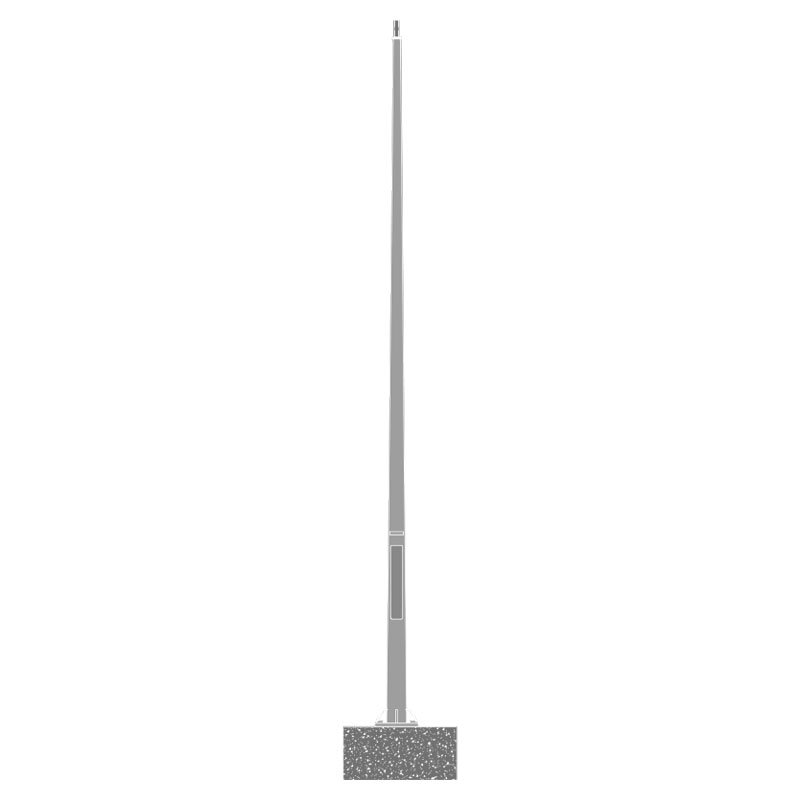
A properly engineered Steel Light Pole maintains its structural profile even under sustained wind pressure, which helps preserve the calculated light distribution pattern that lighting designers rely on when planning coverage across parking lots, roadways, or public spaces.
Height Consistency Across Large Lighting Installations
In multi-pole lighting projects, consistent mounting height across every pole in the layout is essential for achieving even illumination without noticeable bright or dim zones between fixtures.
Why Height Precision Matters
| Height Variation | Effect on Light Distribution |
| Consistent height across poles | Uniform overlap and even illumination |
| Inconsistent height due to material sagging or settling | Uneven light pooling and visible dark zones |
Steel's dimensional stability across temperature swings and structural load helps maintain the precise height calculations used during the initial lighting design phase, supporting the even coverage that photometric planning software calculates for a given installation.
Supporting Heavier, More Advanced Fixture Types
Modern outdoor lighting increasingly relies on larger LED fixture arrays, integrated sensors, and multi-directional mounting arms, all of which add weight and require a pole capable of supporting this load without compromising stability.
Load Capacity Advantages
Steel's high strength-to-weight ratio allows poles to support heavier fixture assemblies without requiring an oversized base diameter, which matters both for structural performance and for maintaining a visually proportionate pole design in commercial and municipal projects.
Accommodating Multiple Fixture Arms
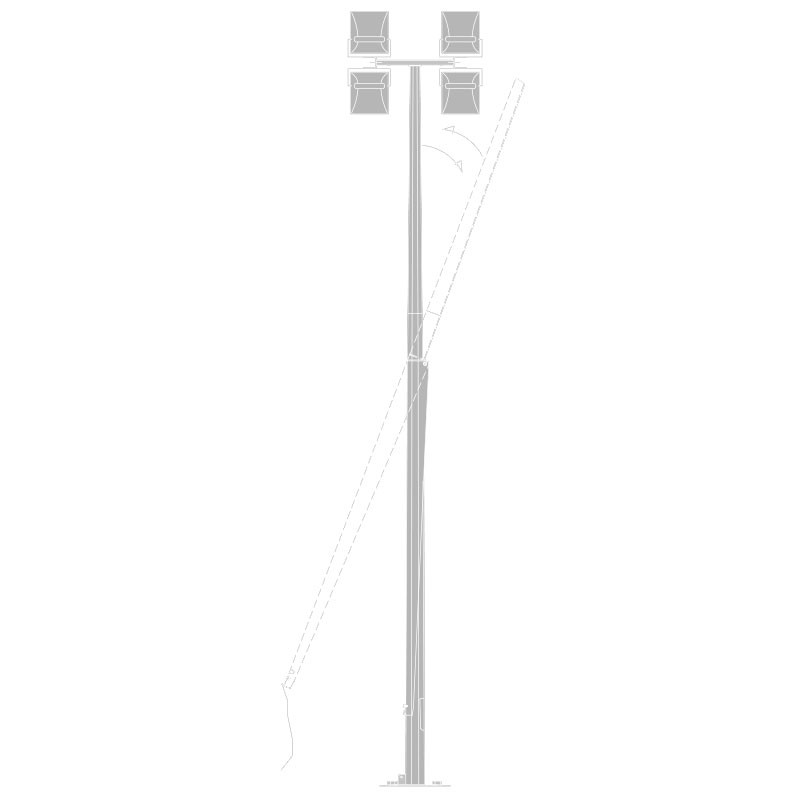
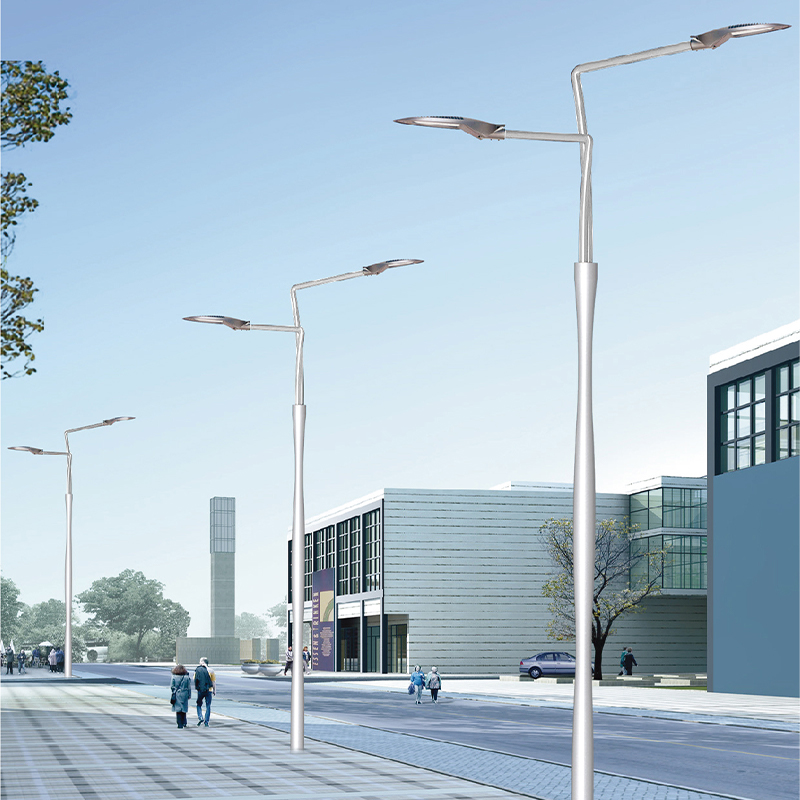
Steel poles are commonly used in intersections or plazas requiring multiple light fixtures mounted at different angles on a single pole, since the material's rigidity supports these more complex, asymmetrical load configurations without excessive flex or leaning.
Corrosion Resistance and Long-Term Optical Performance
Outdoor lighting performance depends not just on initial installation quality but on how well the pole and fixture mounting connection holds up over years of weather exposure, where corrosion can gradually loosen fixture positioning.
How Corrosion Impacts Lighting Performance
- Rust buildup at mounting points can cause gradual fixture angle drift over time
- Corroded internal wiring channels can affect electrical connection reliability to the fixture
- Weakened base connections from corrosion can lead to pole lean, altering the entire light distribution pattern
Hot-dip galvanized steel poles significantly slow this degradation process, helping maintain both structural integrity and consistent lighting performance across the pole's full service life, which commonly extends 20 years or more with proper protective coating.
Reducing Vibration-Related Fixture Wear
Beyond visible sway, steel poles also help minimize the smaller, continuous vibration that fixtures experience from wind gusts and passing traffic near roadway installations, which can accelerate internal component wear over time.
Why Vibration Damping Matters for LED Fixtures
LED driver components and internal wiring connections are sensitive to prolonged vibration exposure, and a stable steel pole reduces the cumulative stress placed on these components compared to less rigid pole materials that transmit more movement to the mounted fixture.
Extending Fixture Service Life
By minimizing this vibration transfer, steel poles indirectly contribute to longer fixture lifespan, reducing the frequency of maintenance visits needed to address connection issues or premature component failure caused by constant micro-movement.
Wind Load Performance in Varying Climate Conditions
Steel's strength characteristics allow poles to be engineered for a wide range of wind zones, ensuring lighting performance remains consistent even in regions prone to strong or gusty wind conditions.
Engineering for Regional Wind Requirements
- Wall thickness can be adjusted based on regional wind speed requirements without significantly increasing pole diameter
- Base plate and foundation specifications are calculated together with pole material strength to resist overturning forces
- Taper design helps distribute wind load along the shaft while maintaining fixture position at the top
This engineering flexibility allows a Steel Light Pole to be specified precisely for the wind conditions of a given project location, supporting consistent lighting performance across coastal, inland, or high-altitude installation environments.
Impact on Photometric Design Accuracy
Lighting designers rely on precise photometric calculations to plan coverage, spacing, and fixture aiming across a project site, and these calculations assume the pole will maintain its specified height and orientation over time.
Why This Assumption Matters
When a pole material fails to maintain its designed position due to sagging, leaning, or excessive sway, the actual light distribution on the ground begins to deviate from the calculated photometric plan, potentially creating safety concerns in areas where consistent illumination is required, such as roadway intersections or pedestrian walkways.
Who Benefits Most From Steel Light Pole Performance Advantages
Municipal infrastructure planners, commercial property developers, and roadway lighting designers benefit most from steel light poles when project requirements include heavier fixture loads, high wind zones, or strict photometric performance standards that depend on long-term structural consistency. Projects prioritizing decades of reliable, consistent outdoor illumination without frequent realignment or maintenance intervention are particularly well suited to steel pole installations, given the material's combination of strength, corrosion resistance, and dimensional stability over time.