English
 Español
 Français
 عربى
عربى italiano
A familiar call arrives every November. The solar lights that ran until midnight in August now fade after two or three hours, and the owner assumes the batteries have failed. Usually they have not. The panel has simply stopped collecting enough energy during the day, because the sun sits lower, the days are shorter, and a hedge or a lamp arm now throws shade across the panel for part of the afternoon.
So, do solar lights need to be in direct sunlight? No, not every hour of the day. A solar light needs enough light energy across the day to replace the energy its battery gave away the night before. Direct sunlight delivers that energy fastest and most reliably, and diffuse light delivers it slowly.
The practical question is therefore not whether direct sun is required, but whether a given mounting position collects enough charge in the worst week of the year rather than the best one. Answer that question and most solar lighting failures stop being mysterious.
Content
- 1 What a Panel Sees in Full Sun, Cloud and Shade
- 2 How Much Sun a Solar Light Really Needs
- 3 Placement Decisions That Matter More Than the Weather
- 4 When a Site Never Sees Full Sun
- 5 Winter, Cloudy Weeks and the Battery Behind the Panel
- 6 A Practical Checklist Before You Buy or Specify
- 7 Frequently Asked Questions
What a Panel Sees in Full Sun, Cloud and Shade
Solar panels respond to light intensity, not to heat. On a clear midday in summer, a panel facing the sun can receive roughly 1000 watts per square meter. Under a bright but fully overcast sky, that figure often drops to around 100 to 200 watts per square meter, and deep shade under dense foliage can fall below 50.
A panel rated at 100 watts will therefore produce close to its rating in direct sun, perhaps 50 to 70 percent of it in bright haze, and roughly 10 to 25 percent under heavy cloud. The panel still works in all three cases. What changes is how many hours of light are needed to refill the battery, and that is where under sized systems fail.
How Much Sun a Solar Light Really Needs
Charge time depends on panel size, battery capacity and the load the lamp draws. The table below shows the general pattern for a well matched fixture in a temperate climate.
| Light condition | Share of rated panel output | Typical charging outcome |
|---|---|---|
| Full direct sun, unshaded, around midday | 100 percent reference | Full charge in about 4 to 6 hours |
| Bright haze or thin cloud | 50 to 70 percent | Full charge in about 6 to 8 hours in summer |
| Heavy overcast or steady rain | 10 to 25 percent | Partial charge, dimmer output, shorter runtime |
| Deep shade all day under a tree or canopy | Under 10 percent | Battery drains gradually, light fails within days |
| Behind a window indoors | 5 to 20 percent depending on the glass | Unreliable, glazing blocks much of the useful light |
Placement Decisions That Matter More Than the Weather
In underperforming installations, orientation and shade usually explain more failures than cloud cover does. Once a mounting position is fixed, no amount of panel quality can recover the lost hours.
- Face the panel toward the equator, due south in the northern hemisphere and due north in the southern hemisphere.
- Tilt the panel to match local latitude, and add 10 to 15 degrees in winter if the fixture runs all year.
- Audit shade at 9 am, noon and 3 pm in December, not in June. A tree that is clear in summer can shade a panel for two hours in winter.
- Keep the panel clear of the luminaire arm and the pole head. A short shadow across a panel can cut output far more than its size suggests.
- Allow for snow, dust and leaf litter. A dirty panel can lose 10 to 20 percent of its output, and a snow covered panel loses all of it.
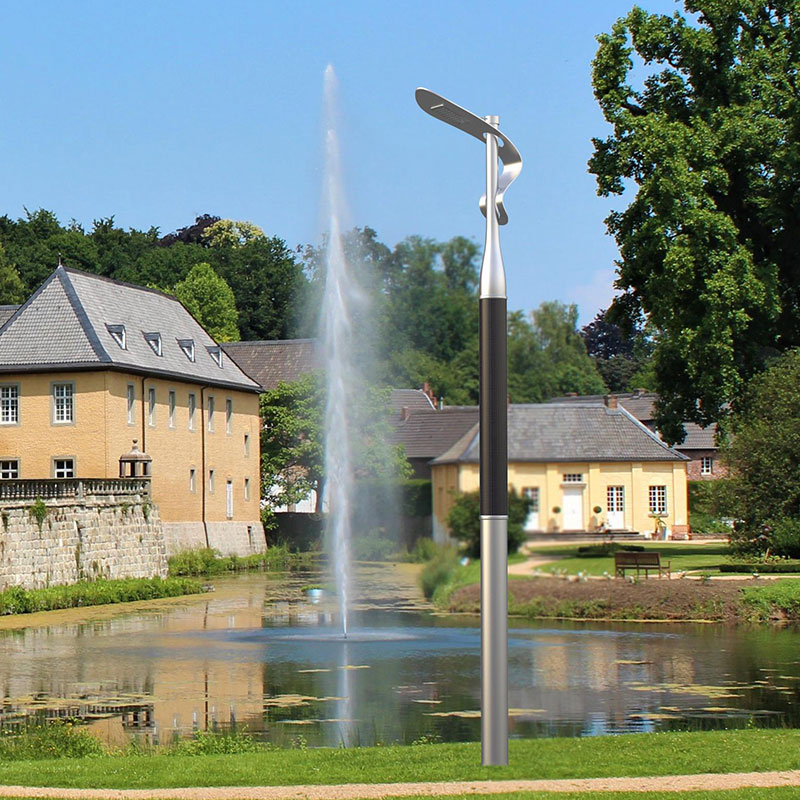
On pole mounted installations, height and arm geometry decide the shading pattern for the life of the asset. A solar pole with an integrated panel top and a clear equatorial exposure will hold its charge through most winters, while a panel bolted to the shaded side of the same pole will not.
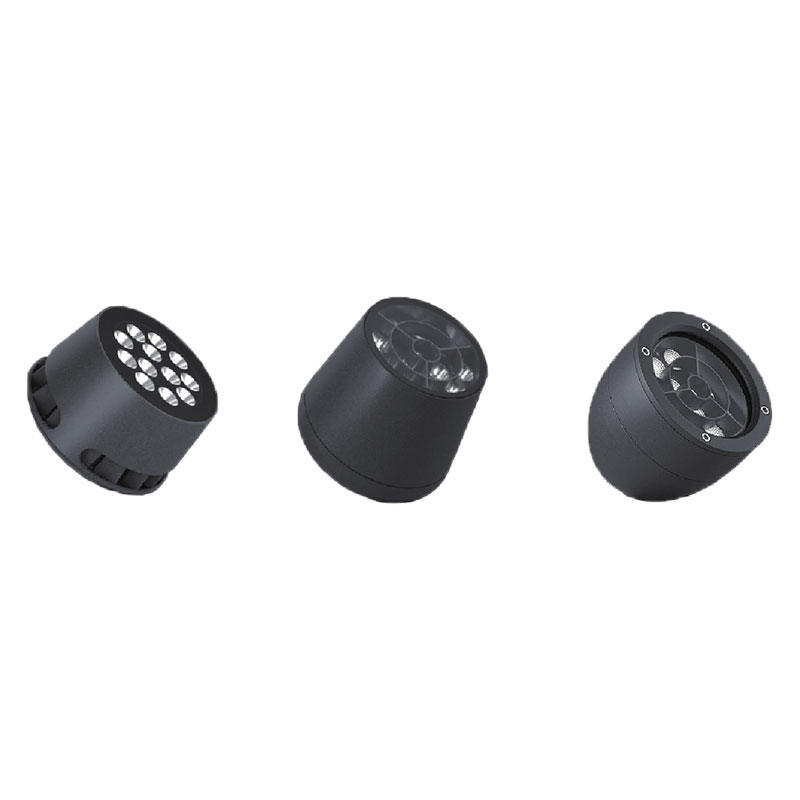 ESCH Aluminum Solar Light PoleThe Aluminum ESCH Solar Pole is a modern outdoor lighting system that integrates efficient photovoltaic power generation, intelligent energy storage, and LED lighting....View Product →
When a Site Never Sees Full Sun
Some locations offer no unshaded window of daylight at all: a courtyard between tall buildings, a north facing wall, a car park under mature trees, or a walkway beneath a canopy. These sites can still be lit with solar, but the design has to be more generous.
Three approaches work in practice:
- Oversize the array. Increase panel wattage by 50 to 100 percent compared with a sunny site and accept a longer charge time.
- Oversize the battery and cut the nightly load. A lower wattage LED with a motion sensor can reduce consumption by more than half.
- Move the mounting point. Shifting a pole two meters, or rotating an arm by 30 degrees, is often cheaper than upgrading the equipment.
Where the panel and the pole are supplied as one unit, that design work happens at the factory: array angle, pole height and battery compartment are matched before delivery. Retrofit kits take the opposite route and add a separate panel and battery to an existing pole, which suits sites where the pole itself is sound but the lighting has become unreliable. Our overview of solar pole design covers how these systems are matched for streets and public spaces.
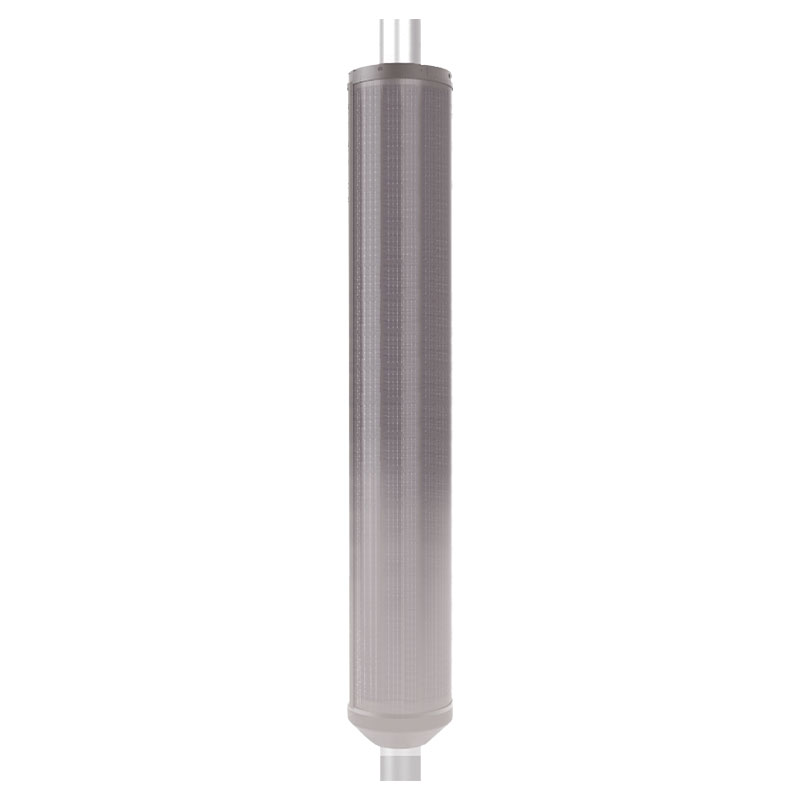 Flexible HJT Solar Panel Kits For Solar Light PoleFlexible solar panels, like traditional rooftop solar panels, utilize photovoltaic cells to produce electricity. The key distinction lies in the construction of their ...View Product →
Winter, Cloudy Weeks and the Battery Behind the Panel
Users often blame the panel when a light fails, but the battery sets a hard limit on how many grey days a fixture can survive. A 12 volt, 20 amp hour battery running a 10 watt lamp for six hours will be close to empty after one night, so it needs a near full charge every day. Autumn and winter rarely provide that in northern Europe or the northern United States.
Two numbers decide whether a solar light keeps working through a cloudy week:
- Autonomy, the number of nights the battery can run the lamp with no charging at all. Three nights is a reasonable target for a street or pathway light in a temperate climate.
- Depth of discharge, how far the battery is drained each night. Keeping it above 50 percent extends service life considerably.
Lithium iron phosphate cells tolerate partial charging and cold better than older lead acid types, and they recover from a cloudy week without permanent capacity loss. Cold still matters: usable capacity at minus 10 degrees Celsius can be roughly 70 to 80 percent of the rated figure, and charging below freezing should be avoided or controlled.
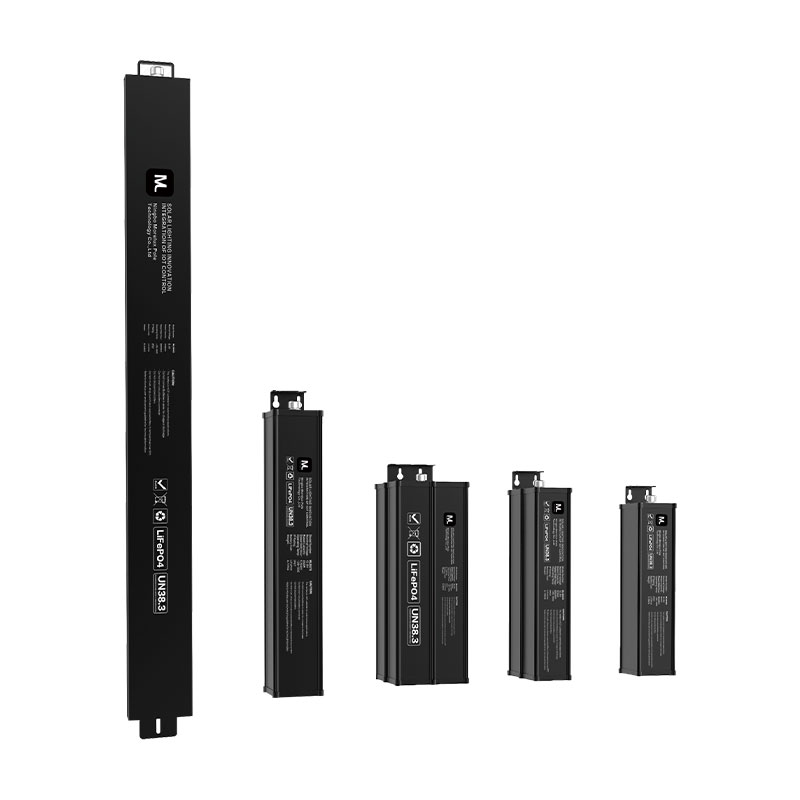 New Compact Battery pack Series For Solar Light PoleStable chemical structure and a low operating voltage, which makes it less prone to thermal runaway, fire, or explosion. Lasts for more than 2ooo cycles, has a low deg...View Product →
A Practical Checklist Before You Buy or Specify
- Measure the worst case sun window in winter, not the summer average. Count only the hours when the panel face would be unshaded.
- Match panel, battery and lamp load as one system. A larger panel cannot rescue a battery that is too small.
- Decide the required autonomy in nights and write that number into the specification.
- Check the ingress protection rating of the panel, driver and battery compartment, because condensation is a common failure point.
- Confirm the wind load and mounting interface of the pole, especially where a larger panel adds sail area.
- Ask for a winter performance calculation, not just a peak summer figure.
- Plan maintenance. Cleaning a panel twice a year recovers more output than most hardware upgrades.
Frequently Asked Questions
Do solar lights charge on a cloudy day?
Yes, but slowly. Expect roughly 10 to 25 percent of rated output under heavy cloud. A light that is correctly sized for local winter conditions will still run, though it may dim earlier in the night.
Will a solar light charge through a window?
Only weakly. Glass reflects and filters a large share of incoming light, and an indoor panel usually faces a room rather than the sky. Output often falls to between 5 and 20 percent of what the same panel collects outdoors, so indoor use normally needs a mains charger.
Do solar lights need sun all day?
No. Most garden and pathway fixtures need about four to six hours of good direct sun to reach a full charge, and those hours can be spread across the morning and afternoon. What matters is that the total is not interrupted by shade during the strongest part of the day.
Why do my solar lights get dimmer in winter?
Three effects combine: fewer daylight hours, a lower sun angle that increases the air mass the light passes through, and colder cells that store less usable energy. The lamp still switches on, but the battery rarely reaches full charge.
Does a hot panel charge better?
No. Output falls as cell temperature rises, so a panel sitting 25 degrees Celsius above ambient can lose several percent of its output. Ventilation behind the panel matters as much as sunshine hours alone.
The short answer bears repeating: solar lights do not need to be in direct sunlight every hour, but they do need enough collected energy each day to refill the battery. Direct sun is the quickest route to that target and diffuse light is a slower one. When the numbers for a site look marginal, the cheapest fix is usually a smaller nightly load, a bigger battery, or a better mounting position.
Morelux has manufactured aluminium and steel light poles, including solar and smart pole ranges, from its own facility in Ningbo since 1998, with cutting, spinning, welding, powder coating, anodising and inspection all carried out in house. If you are specifying solar lighting for a shaded or high latitude site, send the site details and load requirements through the contact page and the team can help match pole, panel and battery capacity.