English
 Español
 Français
 عربى
عربى italiano
A DarkSky Approved luminaire can still throw light above the horizontal once it is bolted to the wrong pole. That is the failure pattern behind most rejected night time inspections: the fixture schedule is correct, the pole schedule is treated as a commodity, and the installed result shows uplight at 15 to 20 degrees. The remedy is rarely a different fixture. It is a pole, arm and tenon package that preserves the photometric geometry the certification was issued against.
What follows is the practical version of the subject: what dark sky compliance actually tests, how mounting choices change the result, and what to write into a specification so that the installed system matches the submittal.
Content
- 1 What Dark Sky Compliance Really Tests
- 2 Why the Pole, Arm and Tenon Decide the Result
- 3 A Fixture to Pole Pairing Checklist
- 4 Matching Pole Families to Each Application
- 5 Materials and Finish Over a 20 Year Service Life
- 6 Solar and Smart Poles Under Dark Sky Rules
- 7 Where Projects Lose Compliance
- 8 Specification Language That Prevents Rework
What Dark Sky Compliance Really Tests
Compliance comes down to four measurable properties, and a fixture has to deliver all four at the same time.
- Full cut off. No light is emitted at or above the horizontal plane, which in BUG terms means an uplight rating of U0.
- Color temperature of 3000K or lower. Blue rich light scatters in the atmosphere and is the part of the spectrum most closely linked to sky glow and to disruption of insect, bird and bat behavior.
- Glare control. A shielded optic and a BUG glare rating of G1 or better keeps light on the task instead of in a driver's eyes.
- Physical shielding. The lamp is recessed or the housing carries a hood, so the source cannot be seen from the side.
The words approved and compliant are not interchangeable. An approved fixture is listed in a third party dark sky program database after testing against published criteria. A compliant fixture may only meet the wording of a local ordinance, and that wording varies from city to city. When an ordinance says full cut off and 3000K, a product with a U1 rating and a 4000K lamp fails, however good it looks in a catalog photo.
Why the Pole, Arm and Tenon Decide the Result
Photometric files are measured at a fixed tilt, normally zero degrees, and within a stated mounting height range. Change either and you change the distribution that was measured. A fixture that reads U0 in the laboratory can produce visible uplight when a short arm is swapped for a longer one that lifts the head and adds a few degrees of upward aim.
| Mounting variable | Common specification | What happens when it drifts |
|---|---|---|
| Mounting height | 3 to 5 m for paths, 8 to 12 m for roadway | Raising the head narrows the footprint, forcing wider spacing and more glare between poles |
| Tenon diameter | 60 mm (2-3/8 inch) standard, 100 mm and 127 mm for heavy heads | A mismatch forces a bushing or adapter that adds play and lets the head settle off aim |
| Arm rise and reach | 0.6 to 2.0 m rise, matched to the optic's backlight control | Too short pushes light onto facades, too long swings the beam off the target |
| Tilt at installation | Zero degrees, confirmed at handover | One degree of upward tilt on a 9 m pole is enough to break full cut off performance |
Tenon diameter is the detail that causes the most rework. A 60 mm tenon fits the majority of decorative and roadway heads, but larger fixtures and multi head assemblies often need 100 mm or 127 mm. If the adapter is chosen after the poles arrive, the installer will make it fit rather than make it level.
A Fixture to Pole Pairing Checklist
Work through these six points before the purchase order is signed, not after the foundations are poured.
- Request the photometric file and confirm the BUG rating at the intended mounting height, not at the height quoted in the marketing sheet.
- Match tenon diameter to the fixture mount, including wall mount brackets and adapters where a pole is not practical.
- Confirm arm rise and reach against the backlight control of the optic so light is not thrown onto nearby facades.
- State zero degrees of tilt in the installation notes, not only on the layout drawing.
- Check the spacing to mounting height ratio. Around 4 to 1 keeps uniformity without adding height that increases glare.
- Fix the control strategy early. Curfew dimming, part night operation and adaptive sensors all change the driver and the pole wiring.
Matching Pole Families to Each Application
The pole family drives height, arm geometry and finish, so it is worth choosing it before the fixture, or at least at the same time.
Garden and Residential Paths
Paths and courtyards usually call for 3 to 4 m poles with small heads and a wide, low intensity distribution. Stepped or tapered aluminum garden poles keep the head close to the ground, which limits spill onto neighboring properties.
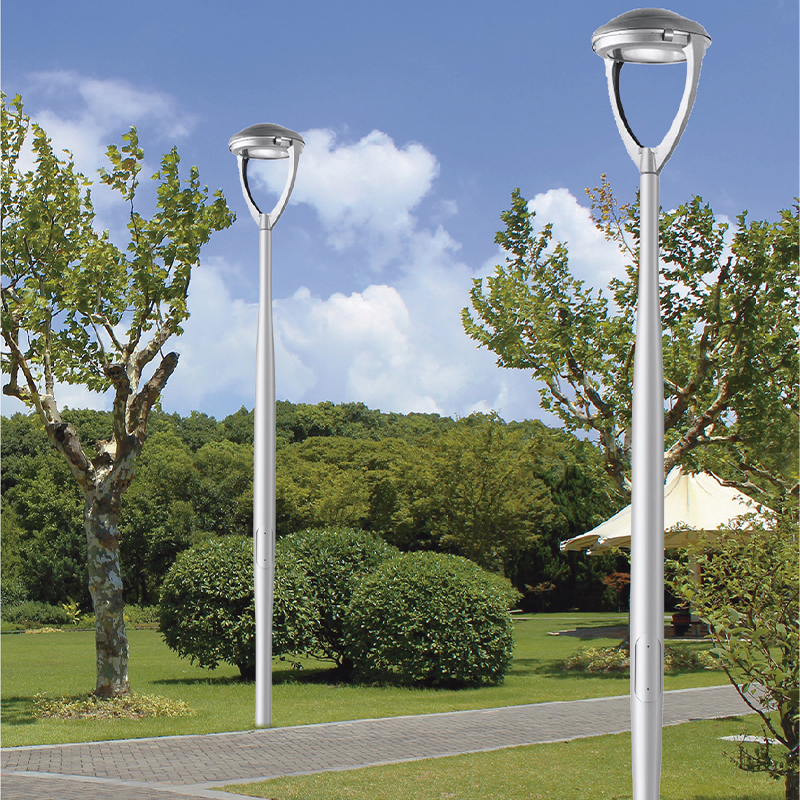 DUBLIN Aluminum Garden Light PoleBottom Diameter: φ89mm Spigot Diameter: φ60/76mm Materials: Aluminum 6063-T6 Wall Thickness: 3mm Surface Finish: Satin Brushed, Anodizing, Powder CoatingView Product →
Roadways and Parking Areas
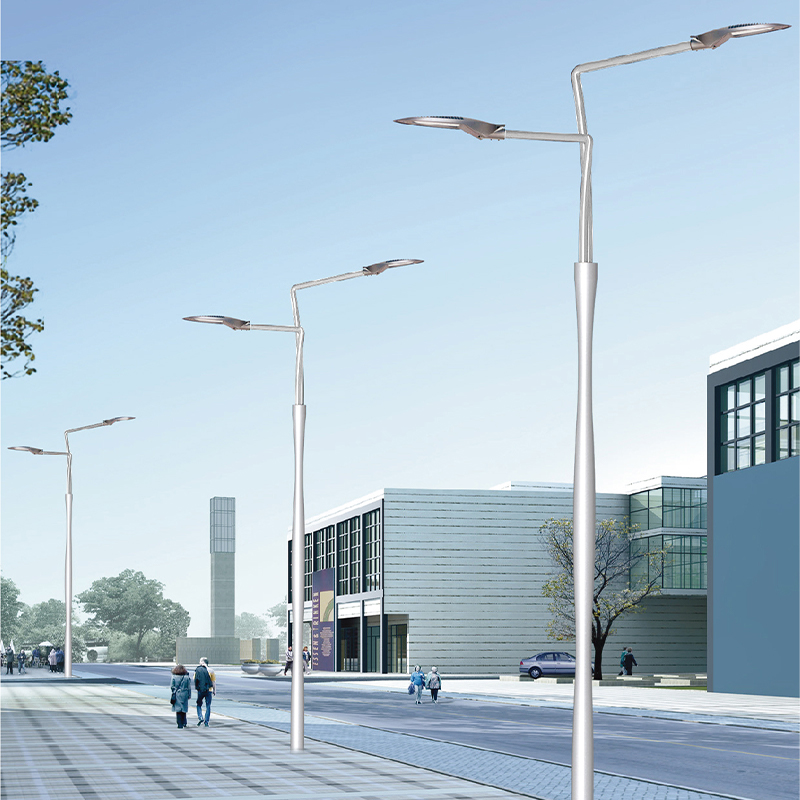
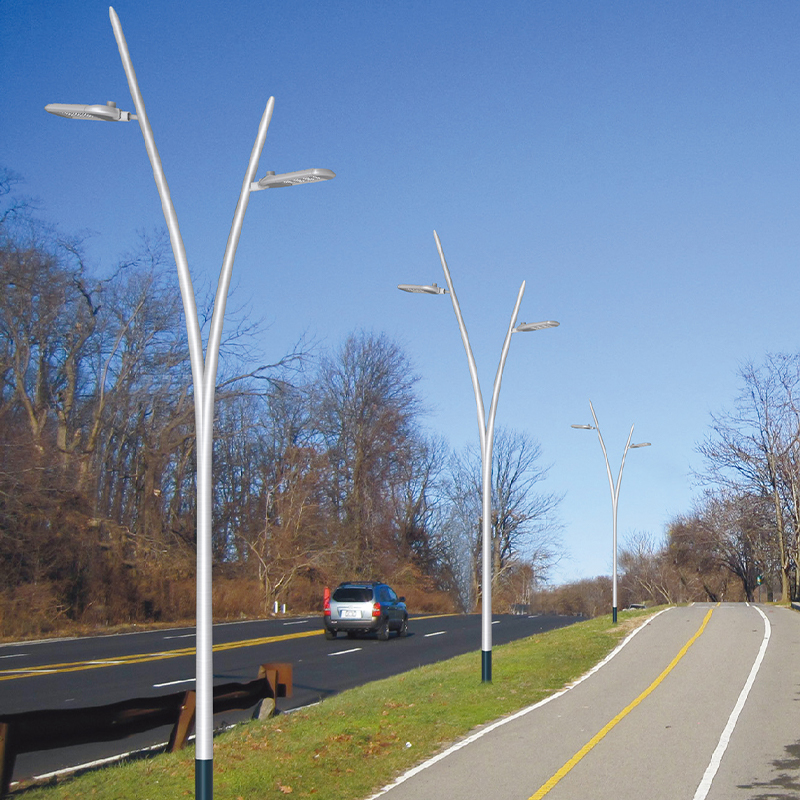
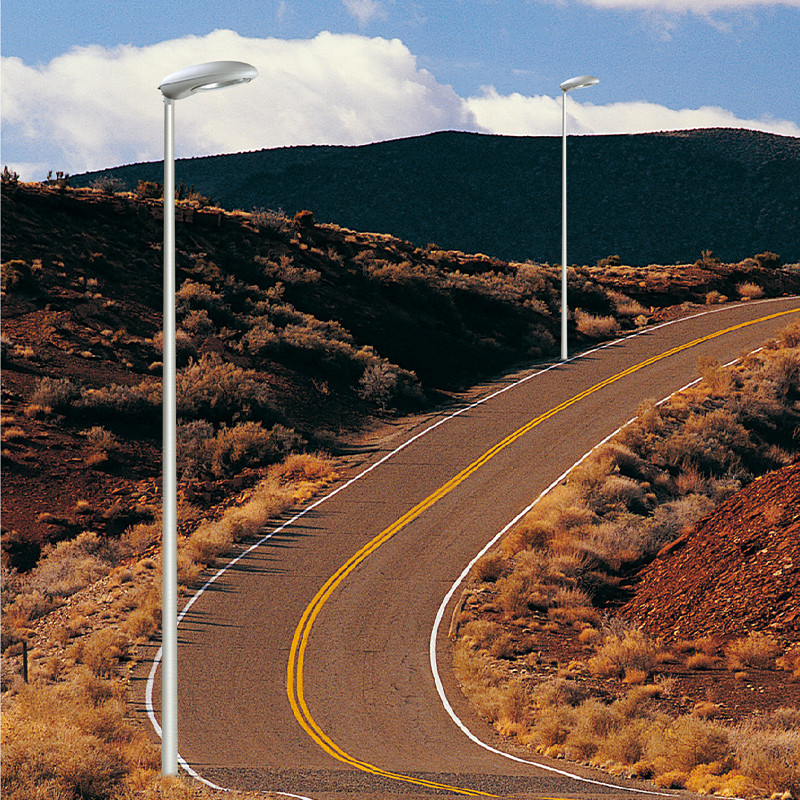
Roadway lighting runs from 6 to 12 m, with single or double arm configurations. Conical aluminum roadway poles with a fixed, level arm keep a certified optic in the position it was tested in, and they handle the wind loading of a long outreach without a visible sag.
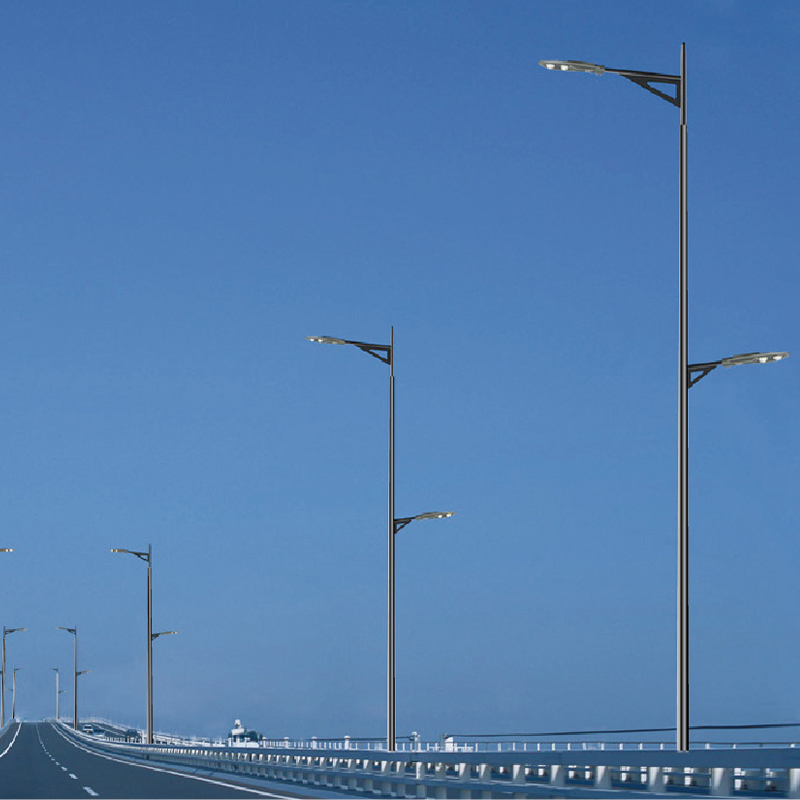 BERMUDA Conical Aluminum Roadway Light PoleBottom Diameter: φ152-178mm Materials: Aluminum 6063-T6 Wall Thickness: 3.2-4.0mm Surface Finish: Satin Brushed, Anodizing, Powder CoatingView Product →
Plazas, Promenades and Landscape Zones
Decorative columns in public space are the hardest case, because the fixture is often a heritage style head with a visible lamp. Waterproof aluminum light columns with recessed optics reach the same cut off performance without the lamp being visible from the side.
Materials and Finish Over a 20 Year Service Life
Dark sky performance is a lifetime property, not an installation property. A pole that corrodes, sags or loses its coating finish will eventually take the aiming with it, and re aiming a few hundred heads is an expensive way to recover compliance.
| Factor | Aluminum | Steel |
|---|---|---|
| Weight | Roughly one third of steel for the same section | Heavier handling and larger foundations |
| Corrosion | Natural oxide layer, good in coastal air | Requires hot dip galvanizing or a coating system |
| Recyclability | Fully recyclable at end of life | Recyclable, but coating must be stripped |
| Stiffness | Lower modulus, so sections are larger | Higher stiffness, preferred for very tall masts |
| Surface finish | Powder coating or anodizing, both applied in house | Galvanizing plus topcoat for color matching |
Both materials have a place. Aluminum suits urban streets, parks and coastal sites where weight and corrosion matter. Steel remains the sensible choice for high mast and heavy camera or floodlight structures where stiffness and cost per meter dominate.
Solar and Smart Poles Under Dark Sky Rules
Off grid solar poles fit the dark sky agenda well, because a limited power budget forces designers to dim rather than to over light. A typical profile runs at full output from dusk until roughly 23:00 and then drops to 30 or 40 percent, with motion sensors bringing individual poles back up when someone walks through. That schedule cuts energy use and reduces the hours of sky glow at the same time.
Two practical points matter. First, keep the light source at 3000K or lower, since a higher color temperature defeats the purpose regardless of the shielding. Second, choose photovoltaic and battery components as a matched set, because a panel that under performs will push the operator to raise output or extend run time, and both tend to undo the light pollution benefit.
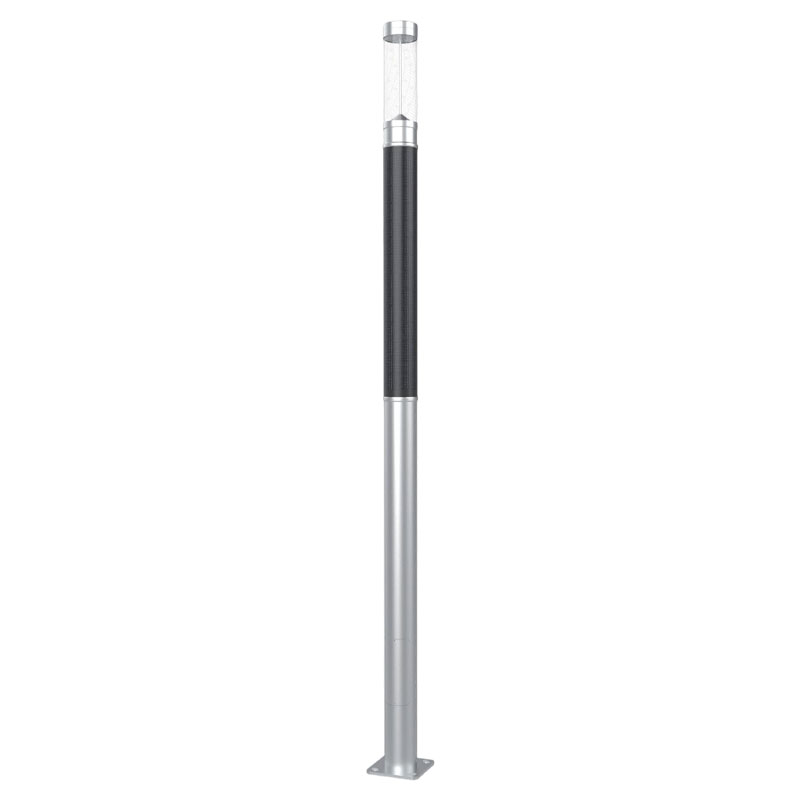 ABISKO Flexible HJT Aluminum Cost-effective Solar Light PoleThe total height of the Flexible HJT Aluminum Cost-effective ABISKO Solar Pole is 4000 mm, equipped with a φ178x1330mm ultra-large flexible HJT solar panel and a 12.8V...View Product →
Smart poles add controls, sensors and communications in a single structure, which means fewer poles overall and less clutter on the street. If you are weighing off grid options, our note on how solar poles are being used in off grid lighting covers the configurations and the retrofit kits that reuse existing foundations.
Where Projects Lose Compliance
- Buying fixtures first and treating the pole as a later detail, which makes the tenon and arm geometry fit the pole rather than the optic.
- Substituting a pole after the purchase order, usually for price, without rechecking arm rise or tilt.
- Switching to 4000K because it looks brighter on site, which is exactly the change the ordinance was written to prevent.
- Allowing field adjustment of aim with no measurement at handover, so a compliant design quietly becomes non compliant.
- Forgetting wall mount brackets, adapters and tenon hardware until the last delivery, then improvising on site.
Specification Language That Prevents Rework
A few clear clauses remove most of the ambiguity that leads to rework.
- The luminaire shall be fully shielded with an uplight rating of U0 and a correlated color temperature not exceeding 3000K.
- The pole, arm and tenon shall be supplied as a matched assembly, with arm rise and reach shown on the shop drawing.
- Installed tilt shall be zero degrees in the operative position, verified by the contractor before handover.
- The contractor shall supply a photometric file for the delivered luminaire at the delivered mounting height.
We manufacture both aluminum and steel poles, along with solar and smart pole assemblies, so the tenon, arm and fixture interface can be confirmed before production rather than on site. If you would like a check on your schedule, send us the pole list and mounting heights and we will confirm what fits.
Dark sky compliance is a system result. The fixture supplies the optics, the pole supplies the geometry, and the installation supplies the final check. Get those three aligned at the specification stage and the night sky above the project stays where it belongs.