English
 Español
 Français
 عربى
عربى italiano
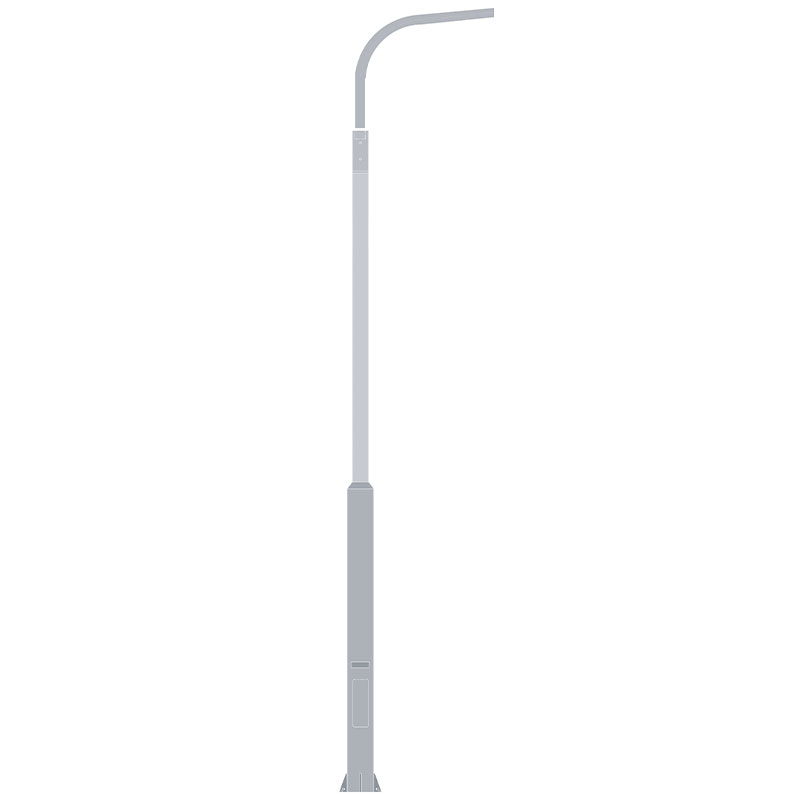
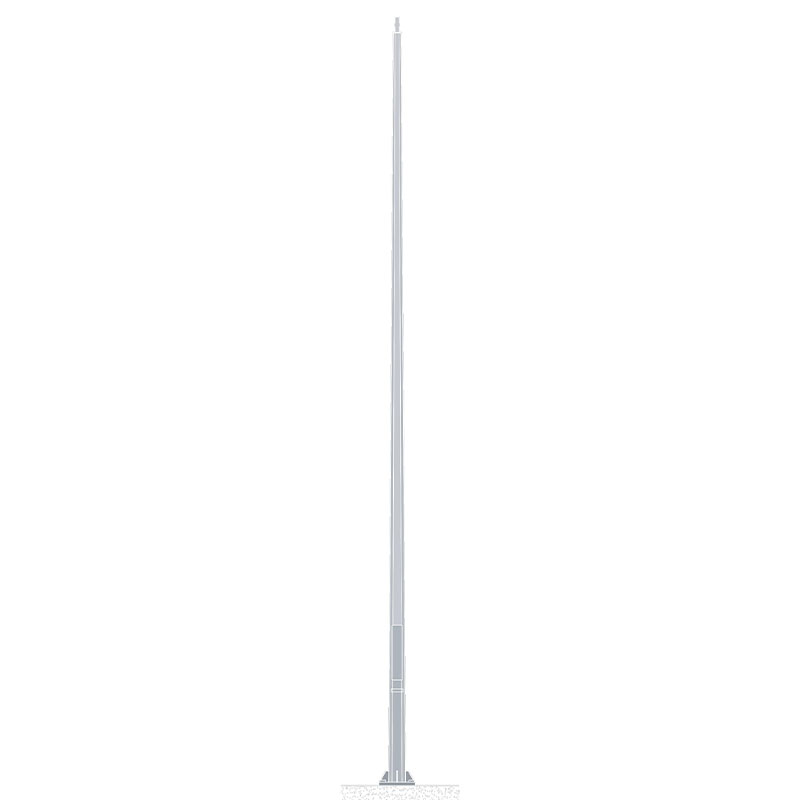
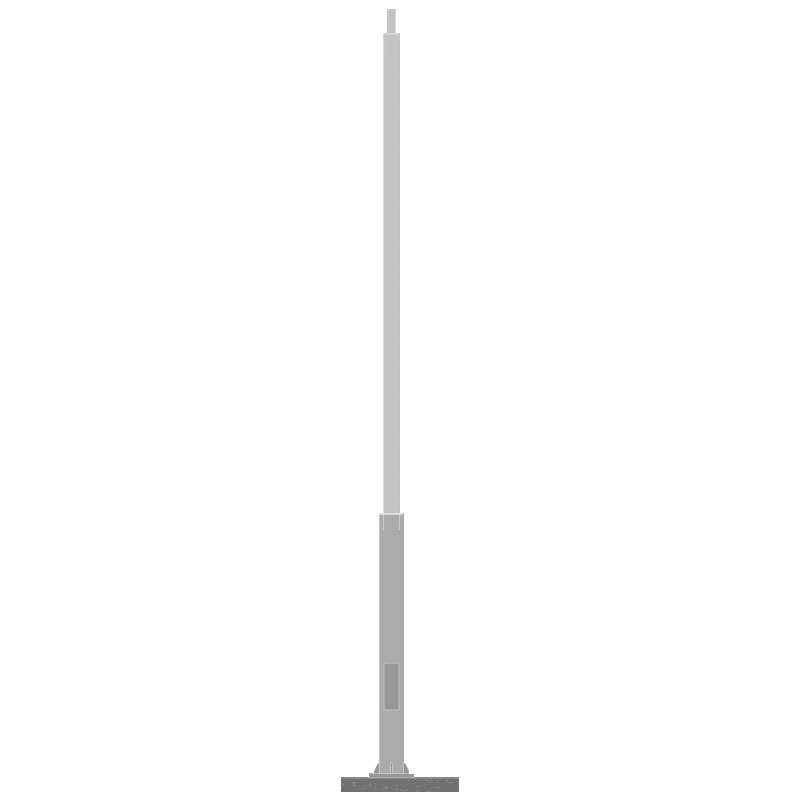
Steel light poles are the dominant choice for urban and highway lighting worldwide because they deliver an unmatched combination of structural strength, design flexibility, long service life, field repairability, and competitive lifecycle cost that no other pole material consistently matches across all application types. From quiet residential streets to major expressways, from decorative heritage districts to industrial high-mast installations, steel poles have proven their reliability across more than a century of continuous deployment in demanding outdoor environments.
The case for steel is not simply about tradition. Modern steel light poles benefit from advances in corrosion protection, precision fabrication, and high-strength alloy grades that have significantly extended their service life, reduced maintenance requirements, and expanded the range of applications they serve — including integration into smart city infrastructure as multi-functional urban platforms. The sections below explain each of the key reasons why steel remains the material of choice for light pole procurement globally.
Content
- 1 Superior Structural Strength Across a Wide Range of Heights
- 2 Field Repairability Significantly Reduces Lifecycle Costs
- 3 Long Service Life Backed by Modern Corrosion Protection
- 4 Versatile Design Options From Utilitarian to Ornamental
- 5 Cost-Effectiveness Over the Full Lifecycle
- 6 Steel vs. Competing Materials: A Comprehensive Comparison
- 7 Excellent Compatibility With Smart City Infrastructure
- 8 Full Recyclability Supports Sustainability Goals
- 9 Broad Application Range From Decorative to Industrial
- 10 Proven Global Track Record and Supply Chain Maturity
Superior Structural Strength Across a Wide Range of Heights
Steel's mechanical properties are the foundation of its dominance in light pole applications. With a tensile strength of 400 to 550 MPa for standard structural grades and yield strengths of 235 to 355 MPa depending on the alloy, steel provides the load-bearing capacity needed to safely support luminaires, brackets, cameras, and communication equipment at heights ranging from 3 meters to 45 meters or more — all in a relatively slender, visually unobtrusive profile.
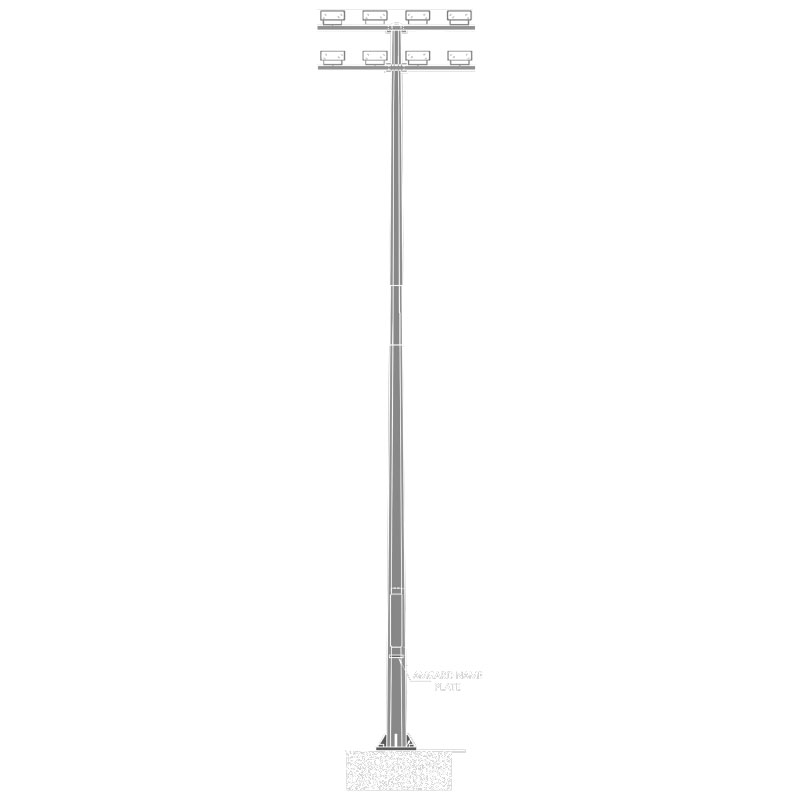
This strength-to-weight ratio advantage becomes particularly significant at greater heights. High-mast steel poles carrying multiple floodlights at 20 to 45 meters must resist enormous bending moments generated by wind loading on both the pole shaft and the luminaire ring. Steel accomplishes this with wall thicknesses of 6 to 12 mm — physically feasible and cost-effective structures that would be prohibitively heavy or expensive to achieve in alternative materials at the same height.
Performance Under Wind and Dynamic Loading
Steel poles are engineered to resist not only static loads but also the cyclic fatigue stresses caused by wind-induced vibration over decades of service. Properly designed steel poles with tapered profiles distribute bending stress efficiently along their length, avoiding the stress concentration points that cause premature cracking in concrete poles or delamination in composite structures. In typhoon-prone and hurricane-risk regions where design wind speeds of 45 to 55 m/s are standard, steel is the material of choice for road lighting infrastructure precisely because of this dynamic performance reliability.
Field Repairability Significantly Reduces Lifecycle Costs
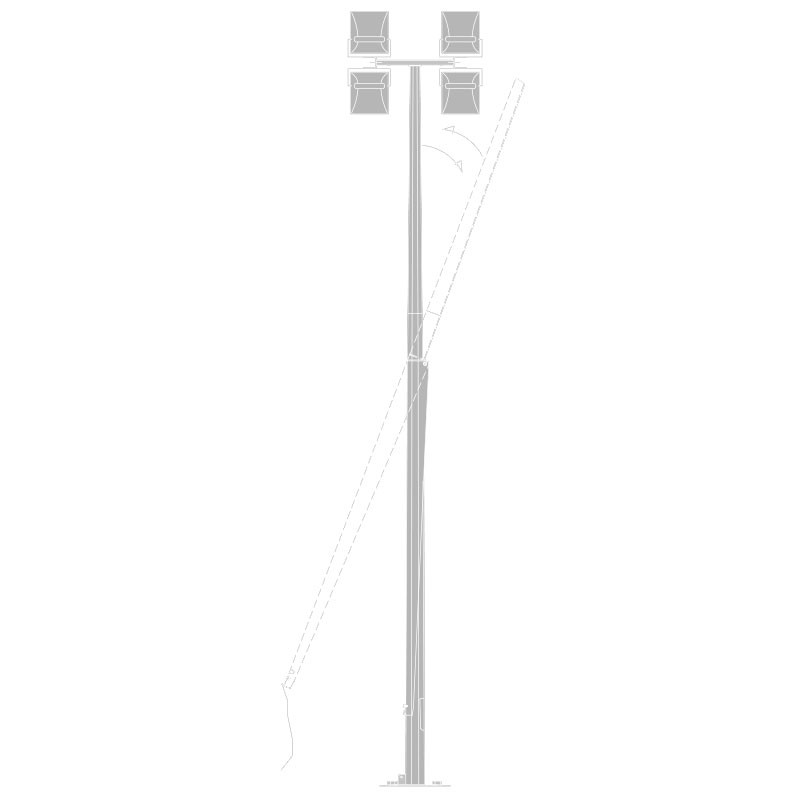
One of the most practically important — and frequently underestimated — advantages of steel light poles over concrete, fiberglass composite, or aluminum alternatives is their repairability after damage. A steel pole damaged by a vehicle collision, construction accident, or severe weather event can in many cases be repaired on-site by welding, straightening, or replacing only the damaged section, rather than requiring complete pole replacement from foundation to top.
In contrast, a concrete pole that fractures under impact must be entirely demolished and replaced — a process involving heavy lifting equipment, foundation demolition, and days of road closure. A fiberglass composite pole that cracks or delaminates similarly requires full replacement, as composite structures cannot be welded or field-repaired in a structurally reliable way.
Cost Comparison: Repair vs. Full Replacement
The economic advantage of steel repairability compounds across a large pole network over time. Consider a typical scenario involving a vehicle impact on an urban road pole:
| Pole Material | Repair Possibility | Typical Repair/Replacement Cost | Road Closure Duration |
|---|---|---|---|
| Steel (weld repair) | Yes — partial section or weld | $200–$800 | 2–4 hours |
| Steel (full section replace) | Yes — section replacement | $500–$1,500 | 4–8 hours |
| Fiberglass composite | No — full replacement required | $1,800–$4,500 | 1–2 days |
| Concrete | No — full demolition and replacement | $2,500–$6,000+ | 2–5 days |
For a city managing a network of thousands of road poles, the cumulative saving from steel repairability over a 20-year period can amount to hundreds of thousands of dollars — a compelling financial argument that often receives insufficient weight in initial procurement decisions focused solely on unit purchase price.
Long Service Life Backed by Modern Corrosion Protection
The most common concern raised about steel light poles — susceptibility to corrosion — has been comprehensively addressed by modern anti-corrosion technology. A steel pole protected by hot-dip galvanizing to ISO 1461 standards will resist structural corrosion for 20 to 30 years in inland urban environments without any maintenance intervention, and 15 to 25 years in more aggressive coastal or industrial conditions when combined with a powder coat or polyurethane topcoat in a duplex system.
Hot-dip galvanizing immerses the fabricated steel pole in molten zinc at approximately 450°C, creating a metallurgically bonded zinc-iron alloy coating that covers every surface — external, internal, welds, cut edges, and bolt holes — with a minimum thickness of 85 μm for sections above 6 mm wall thickness. This uniform coverage is impossible to achieve with paint or spray systems, and the zinc coating provides sacrificial cathodic protection at any point where the surface is scratched or damaged, self-healing without touch-up.
Duplex Protection for Demanding Environments
In coastal zones, tropical climates, or industrial areas with chemical exposure, a duplex system combining hot-dip galvanizing with a 60 to 80 μm powder coat topcoat extends corrosion protection life by a factor of 1.5 to 2.5 compared to galvanizing alone. A duplex-protected steel pole in a moderate coastal environment can realistically achieve a 25-year maintenance-free structural life, matching or exceeding the performance of aluminum or fiberglass composite alternatives while retaining all the strength and repairability advantages unique to steel.
Reduced Maintenance Frequency Compared to Older Steel Poles
Legacy steel poles protected only by paint required recoating every 5 to 8 years to maintain corrosion protection — a significant ongoing cost that gave steel a poor maintenance reputation in some markets. Modern hot-dip galvanized poles have largely eliminated this burden. Cities that have transitioned from paint-finished to galvanized steel poles consistently report reductions in corrosion-related maintenance expenditure of 60 to 80% over the first 15 years of service, while achieving longer structural service lives before replacement is needed.
Versatile Design Options From Utilitarian to Ornamental
Steel is uniquely versatile as a pole material because it can be formed, welded, bent, cast, and machined into virtually any shape — from the simplest straight round tube to elaborate ornamental designs with decorative collars, scroll arms, fluted shafts, and cast base ornaments. No other structural material for light poles offers a comparable range of form options across the full spectrum from purely utilitarian to highly decorative.
This design flexibility makes steel the only practical single-material choice for a city or developer seeking consistent pole aesthetics across multiple application types — using the same material family in industrial areas (plain tapered poles), arterial roads (standard round poles with single arms), pedestrian plazas (decorative fluted poles with scroll arms), and heritage districts (ornamental poles with cast iron details) — while maintaining consistent structural and maintenance specifications throughout.
Color and Finish Customization
Powder coat finishing over hot-dip galvanizing allows steel poles to be specified in any RAL or custom color, enabling precise matching with building facades, urban design palettes, or corporate brand colors. Common urban choices include RAL 7016 anthracite grey for contemporary streetscapes, RAL 9005 jet black for high-end commercial districts, RAL 6009 fir green for parks and heritage areas, and custom earth tones for landscape-sensitive installations. Color consistency across large pole orders is reliably achievable with powder coat technology in a way that is difficult to replicate with other materials.
Classic Aesthetic That Ages Well
Steel light poles have been an element of the urban streetscape for over a century, and their classic proportions and profiles have proven enduring across successive waves of architectural fashion. Unlike some contemporary materials that can appear dated as design trends shift, well-proportioned steel poles — particularly decorative styles — age gracefully and complement both historic and contemporary urban contexts. This longevity of aesthetic appeal is a practical benefit for public authorities and developers who want infrastructure that will remain visually appropriate across a 20 to 30-year service life without looking like a product of a specific design era.
Cost-Effectiveness Over the Full Lifecycle
Steel light poles are not always the cheapest option at the point of purchase — aluminum poles may have a similar or slightly lower unit price for small sizes, and concrete poles can be less expensive per unit in markets where precast concrete production is highly industrialized. However, when the full lifecycle cost is considered across 20 to 25 years of service, steel consistently delivers superior value per year of reliable service in the majority of applications.
| Cost Component | Steel (HDG) | Aluminum | Fiberglass Composite | Concrete |
|---|---|---|---|---|
| Initial pole purchase | 100 | 110–130 | 120–160 | 70–90 |
| Installation and foundation | 100 | 95–105 | 95–105 | 130–180 |
| 20-year maintenance | 100 | 90–100 | 85–95 | 85–100 |
| Impact repair (avg. incidents) | 100 | 200–350 | 250–400 | 350–600 |
| End-of-life disposal / scrap value | Net credit | Net credit | Net cost | Net cost |
The impact repair cost differential is the most significant lifecycle cost driver in high-traffic urban environments where vehicle collisions are a recurring reality. Steel's weldability and partial replaceability translate directly into lower incident response costs that compound significantly across a large pole fleet over two decades. Concrete poles deliver the lowest purchase price but impose the highest total cost when installation complexity, impact replacement, and end-of-life demolition costs are included.
Steel vs. Competing Materials: A Comprehensive Comparison
Understanding why steel is often preferred requires a direct comparison with the main alternative pole materials across the dimensions that matter most to specifiers and infrastructure managers.
| Criterion | Steel | Aluminum | Fiberglass (FRP) | Concrete |
|---|---|---|---|---|
| Tensile strength | Excellent | Good | Moderate | Poor in tension |
| Impact resistance | Excellent — bends before fracture | Good — deforms, not repaired easily | Poor — shatters or delaminates | Poor — fractures and collapses |
| Field repairability | Excellent — weld and section repair | Limited — weldable but weaker weld zone | None — full replacement only | None — full demolition required |
| Corrosion resistance (treated) | Excellent with HDG | Very good (natural) | Excellent (inherent) | Moderate — rebar corrosion risk |
| Design versatility | Excellent — any shape achievable | Good — limited ornamental options | Moderate — limited profiles | Limited — mold-dependent |
| Available height range | 3–45 m+ | 3–15 m typically | 3–12 m typically | 6–15 m typically |
| Smart city integration | Excellent — modular attachment | Good | Moderate | Poor — rigid, heavy structure |
| End-of-life recyclability | 100% recyclable, net scrap credit | 100% recyclable, net scrap credit | Not recyclable, disposal cost | Partial — demolition cost |
Steel's combination of top-tier ratings across strength, repairability, design versatility, height range, and smart city integration capability explains why it remains the material of choice for the broadest range of lighting applications globally — from compact pedestrian-scale poles to giant high-mast installations that no other material can practically achieve.
Excellent Compatibility With Smart City Infrastructure
As cities around the world integrate digital infrastructure into their physical environments, the light pole has emerged as the ideal platform for smart city technology deployment — and steel poles are particularly well-suited to this role. The structural strength, weldability, and fabrication flexibility of steel make it easier to design and manufacture smart-ready poles with integrated cable management, technology cabinets, and standardized mounting interfaces than any competing pole material.
Steel smart poles can integrate a full range of urban intelligence systems within a single structure:
- 5G small cell antennas — structural load capacity of steel supports the additional wind loading from communication antenna arrays that can significantly stress lighter pole materials.
- HD surveillance cameras — welded camera bracket mounts and internal cable conduit routing provide a clean, tamper-resistant installation that cable trays on composite poles cannot match.
- Environmental sensor arrays — modular sensor brackets can be welded or bolted to the pole shaft at any height, with cable access through the internal duct without external conduit that detracts from appearance.
- Digital display screens — the structural stiffness of steel poles effectively resists the additional wind loading from large-format display panels in a way that more flexible composite poles cannot.
- EV charging equipment — heavy-duty cable routing and connection hardware for 7 to 22 kW charging outputs can be integrated into the pole base cabinet and structural body without compromise.
- Emergency call stations and broadcast speakers — surface-mounted hardware with IK10 vandal protection can be welded or bolted to the pole at appropriate heights with structural reliability.
The lockable base cabinet — a standard feature of smart steel poles — houses the control units, communication modules, power distribution boards, and network switches that manage all connected systems. Steel's fabrication precision ensures these cabinets are accurately dimensioned, properly sealed against water ingress, and structurally integrated with the pole rather than bolted on as an afterthought.
Full Recyclability Supports Sustainability Goals
Steel is one of the most recycled materials in the world, with global recycling rates consistently above 85%. Steel light poles are 100% recyclable at end of life, generating a scrap metal credit that partially offsets the cost of pole removal and replacement — unlike fiberglass composite poles, which have no recyclable value and generate landfill waste, or concrete poles, which require crushing and generate inert demolition waste with no recovery value.
For public authorities with sustainability reporting requirements or carbon reduction commitments, the full recyclability of steel poles at end of life contributes positively to material circularity metrics. Additionally, the high recycled content of modern structural steel production — electric arc furnace steel produced from scrap can contain 90% or more recycled steel content — means that new steel poles already have a significantly lower embodied carbon footprint than their virgin-material production figures suggest.
The combination of long in-service life (20 to 30 years structural), low maintenance requirements, full recyclability at end of life, and positive scrap value positions steel light poles as a materially responsible choice aligned with the principles of circular infrastructure management.
Broad Application Range From Decorative to Industrial
Few infrastructure materials serve as wide a spectrum of applications as steel in the light pole sector. Steel is the only practical material choice across the full range from small ornamental garden poles to 45-meter industrial high-mast structures — a versatility that allows procurement teams, urban designers, and engineers to work with a single material family from residential streetscaping to port and industrial floodlighting.
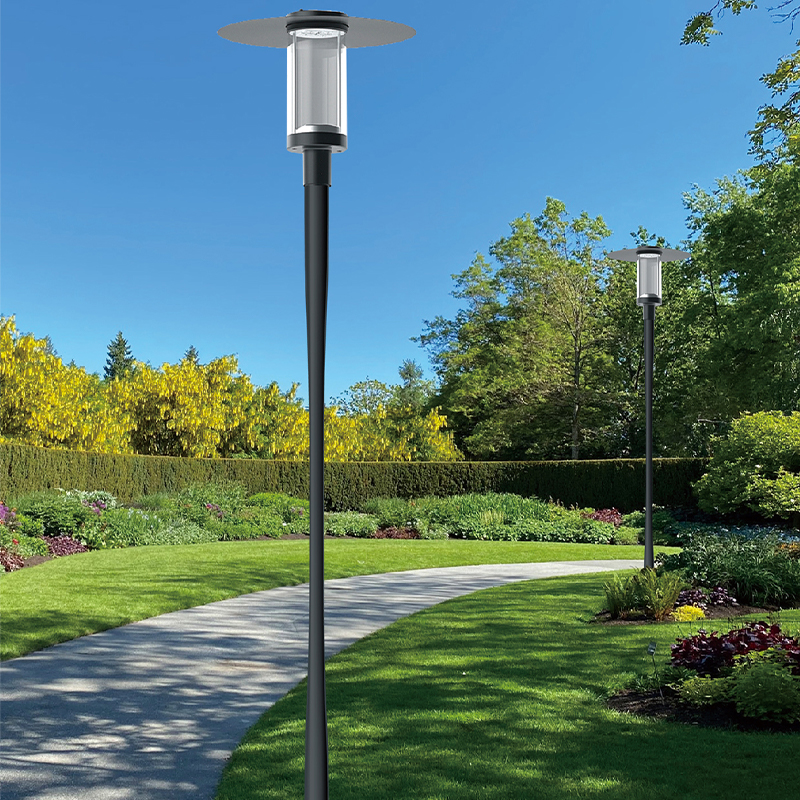
- Residential and pedestrian areas: 3 to 6 meter decorative steel bollard poles and scroll-arm designs bring character and scale to parks, plazas, and pedestrian promenades.
- Urban arterial roads: 8 to 12 meter round tapered or octagonal poles with single or double outreach arms deliver efficient road illumination at the spacing and uniformity levels required by road lighting standards.
- Highways and expressways: 10 to 14 meter high-specification poles designed to withstand wind speeds of 40 to 55 m/s with heavy luminaire and sign loads in open terrain exposure conditions.
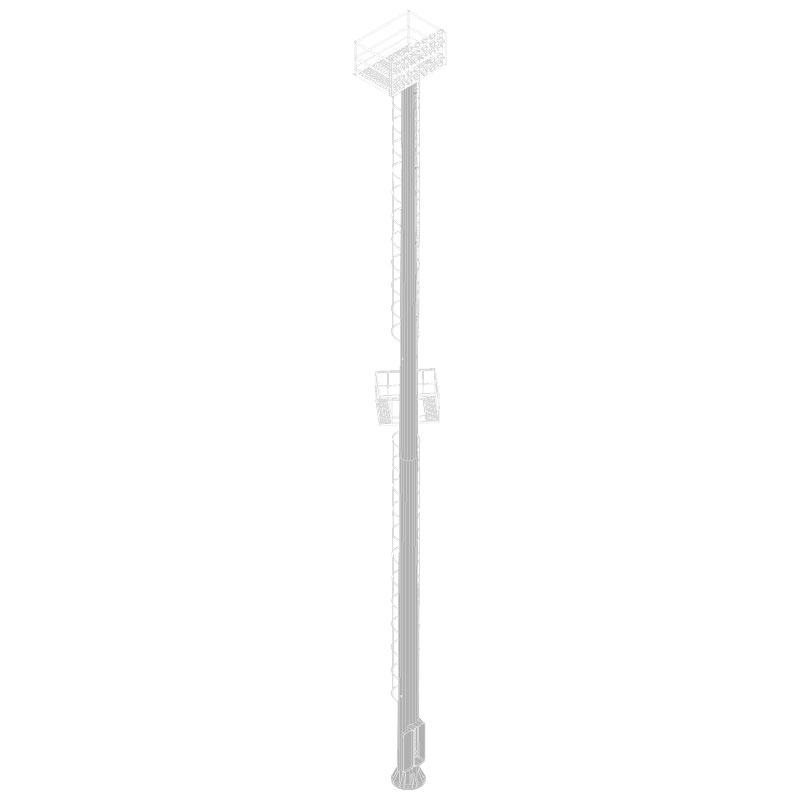
- Sports and stadium facilities: 20 to 40 meter high-mast steel poles with lowering ring mechanisms carrying 4 to 12 high-power LED floodlights for broadcast-quality sports lighting.
- Ports, airports, and industrial facilities: 25 to 45 meter industrial high-mast poles providing wide-area floodlighting coverage for large operational areas where ground-level lighting access is impractical.
- Smart city corridors: Purpose-designed smart steel poles integrating lighting, connectivity, surveillance, environmental monitoring, EV charging, and public information systems into a single urban platform structure.
This breadth of application means that infrastructure managers, city planners, and developers can standardize on steel as a single pole material policy across an entire urban network — simplifying procurement, maintenance contracting, spare parts management, and supplier relationships in a way that a mixed-material approach cannot deliver.
Proven Global Track Record and Supply Chain Maturity
Steel light poles have been manufactured, installed, and maintained at scale in virtually every country in the world for more than a century. This global track record has produced a mature, competitive supply chain with established quality standards, fabrication expertise, and readily available spare parts that emerging materials simply cannot yet match.
International standards for steel light pole design, fabrication, and testing are well-developed — including EN 40 (European standard for lighting columns), ASTM A595 (USA standard for tapered steel poles), and equivalent national standards in China, Japan, Australia, and other major markets. These standards provide specifiers with clear quality benchmarks and give procurement authorities confidence that independently verified performance guarantees are available from multiple competing suppliers.
The depth of the global steel pole supply chain also means that delivery lead times, pricing competition, and technical support are consistently available in ways that more specialized materials cannot guarantee — particularly important for large-scale infrastructure projects where supply chain reliability is as important as product performance.
In summary, steel light poles earn their dominant position in global lighting infrastructure through a combination of structural performance, design flexibility, repairability, corrosion protection longevity, smart city compatibility, full recyclability, and supply chain maturity that collectively delivers the best total value proposition available across the widest range of urban lighting applications today.