English
 Español
 Français
 عربى
عربى italiano
A project engineer in Aberdeen recently asked a question that appears on almost every lighting tender: what actually makes a galvanised light pole reliable for decades? A galvanised light pole is a steel lighting column dipped into molten zinc at roughly 450 degrees Celsius, creating a bonded zinc-iron alloy layer that protects the steel from corrosion. That single process, done to the right thickness, separates a column that survives a coastal winter from one that shows rust within two seasons. This guide covers how galvanised light poles are made, the standards that control their quality, how they compare with aluminium columns, and what to check before ordering. It is written for specifiers, contractors and distributors who need practical answers without marketing noise.
Content
- 1 What Is a Galvanised Light Pole?
- 2 Why Galvanising Matters for Steel Lighting Columns
- 3 Galvanised Steel or Aluminium: Which Pole Should You Specify?
- 4 Types of Galvanised Light Poles
- 5 What to Check Before You Buy a Galvanised Light Pole
- 6 Buying Galvanised Light Poles from a Manufacturer That Controls the Process
- 7 Conclusion
What Is a Galvanised Light Pole?
Hot-dip galvanising is the default protection system for steel lighting columns, and it is the reason the word galvanised appears in most tender documents for street lighting. The pole is cleaned, fluxed and immersed in a bath of molten zinc, producing a coating that bonds metallurgically to the steel rather than simply sitting on the surface. In Europe, BS EN ISO 1461 sets the minimum average coating thickness for a given steel section thickness. A street lighting column manufactured from 3 to 5 mm steel normally requires an average zinc layer of 70 to 85 micrometres, and thicker plates require more. The zinc layer is sacrificial and self-healing: when the coating is scratched down to the steel, the surrounding zinc corrodes first, keeping the steel sound.
Why Galvanising Matters for Steel Lighting Columns
Steel is strong, stiff and economical, but unprotected steel corrodes quickly in humid air, road salt and coastal spray. Galvanising converts a steel pole into a low-maintenance asset with a predictable service life, which is why the specification of the zinc layer deserves as much attention as the pole geometry.
Zinc Coating Service Life by Thickness and Corrosivity Class
The line chart above relates zinc coating thickness to service life across the four atmospheric corrosivity classes defined in ISO 9223. C2 stands for a rural environment, C3 for an urban atmosphere, C4 for an industrial or coastal area, and C5 for severe coastal sites with high salinity. Two conclusions matter for buyers. A 70 micrometre coating works for rural and urban projects but may deliver only 12 to 20 years in C4 or C5 locations. Specifying 110 to 150 micrometres can push service life past 50 years in moderate environments and to 25 to 45 years on exposed coastlines. The coating thickness should therefore be written into the specification, and a zinc thickness certificate should be requested with every batch of poles.
Galvanised Steel or Aluminium: Which Pole Should You Specify?
Most projects need both materials, but the decision usually comes down to structural loads, environment and total cost of ownership. The radar comparison below shows the strengths of each option across six criteria that matter over the full lifecycle of a lighting column.
Galvanised Steel vs Aluminium for Lighting Columns
The radar chart compares galvanised steel and aluminium on six criteria that affect a lighting project from installation to end of life. Galvanised steel scores higher on structural strength and impact resistance, which matters when poles carry heavy twin arms or face vehicle impact. Aluminium wins on maintenance convenience and recyclability, and its lower weight simplifies hand installation and transport. The two materials are close on corrosion resistance, provided the steel carries a zinc coating of the correct thickness. The practical conclusion is not that one material is always superior. Galvanised steel offers more strength and impact capacity per euro, while aluminium suits weight-sensitive and landscape-focused applications.
| Criterion | Galvanised steel | Aluminium |
|---|---|---|
| Corrosion protection | Zinc coating, self-healing | Oxide layer, naturally stable |
| Structural strength | Higher, good for large arms | Moderate, needs larger sections |
| Impact resistance | Strong, deforms rather than cracks | Lighter, can dent on impact |
| Typical service life | 40 to 50 years with correct zinc | 30 to 40 years typical |
| Recyclability | Fully recyclable steel | 100 percent recyclable |
| Maintenance | Touch-up zinc paint after damage | Minimal, no re-coating needed |
As a rule, main roads, highways and industrial sites favour galvanised steel, while garden schemes and architectural areas often choose aluminium for appearance and lighter handling.
Types of Galvanised Light Poles
Steel light poles are formed as conical, cylindrical, octagonal, step or mid-hinged sections, and the best shape depends on wind loading, the luminaire arrangement and the site conditions. Whatever the geometry, the pole is fabricated first and galvanised after welding, so the zinc coating also protects the welds and cut edges.
Conical Steel Poles
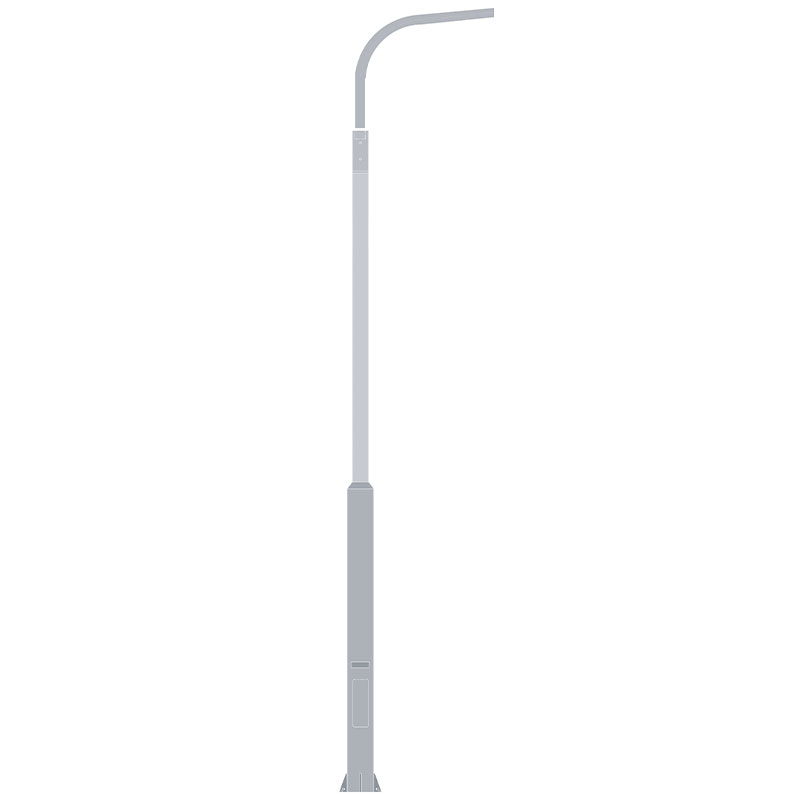
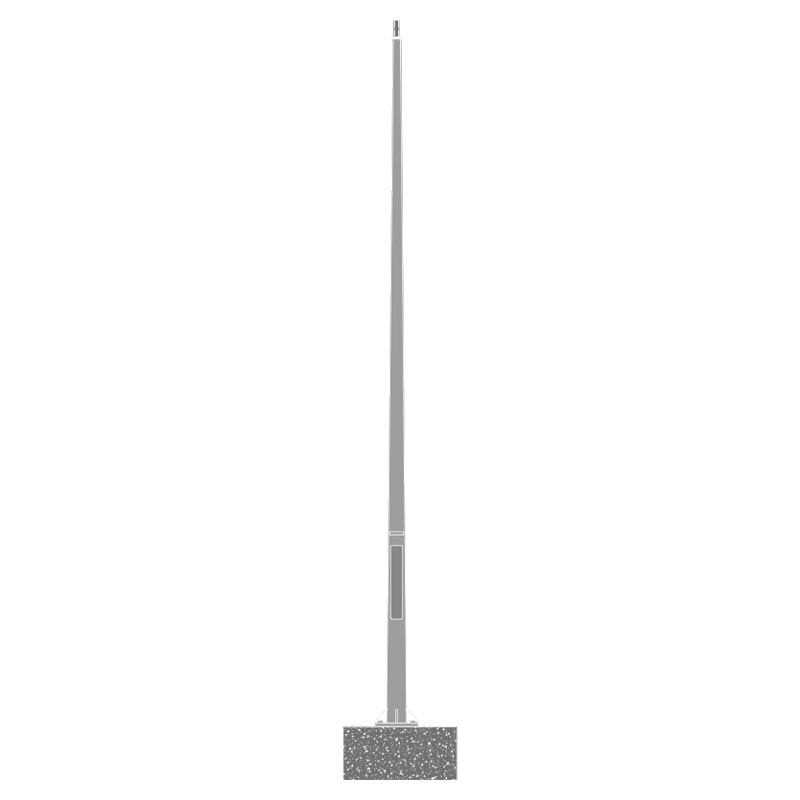
The tapered profile of a conical column matches the bending moment of a cantilevered luminaire, which is why it is the most common choice for road and street lighting. Morelux produces the conical galvanised steel light pole with in-house cutting, bending, welding and inspection, which keeps wall thickness tolerances tight and prepares the steel surface for a clean zinc coating.
 Custom Conical steel light pole Supplier, Factory - Ningbo Morelux Pole TechnoloNingbo Morelux Pole Technology Limited is China Conical steel light pole supplier and factory, professional custom Conical steel light po...View Product →
Octagonal Steel Poles
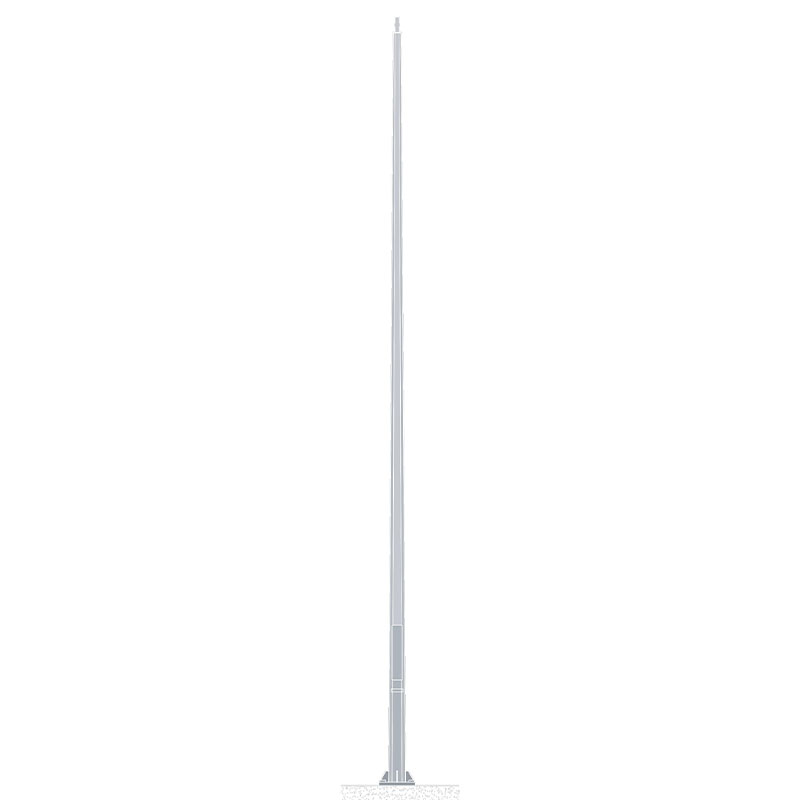
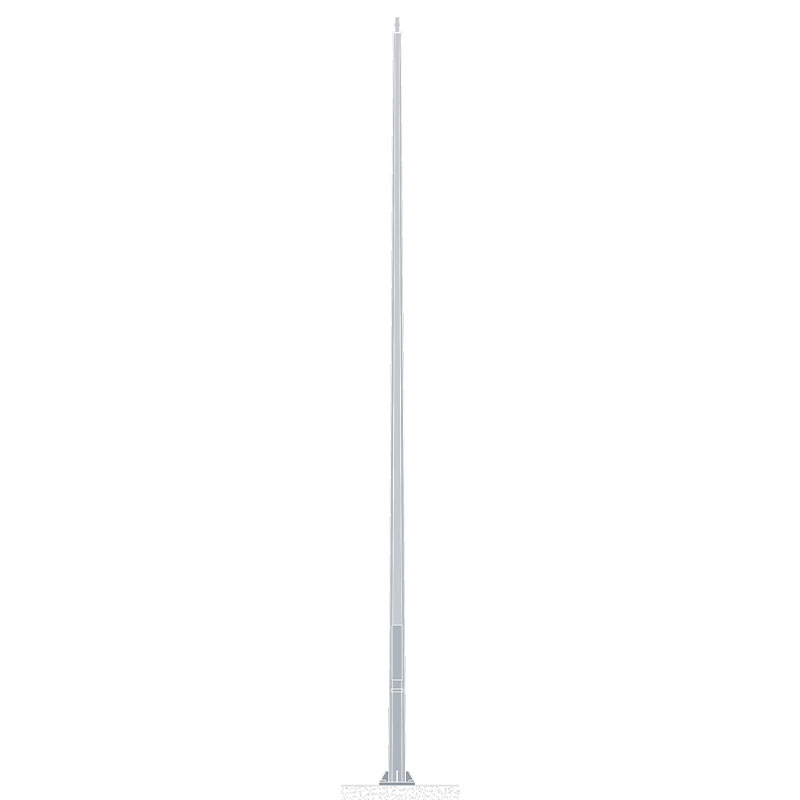
An octagonal section adds stiffness without extra weight, making it a proven option for high wind zones and for poles with multiple attachments. The octagonal galvanised steel light pole is supplied in a range of heights, flanges and door sizes, and it accepts single, twin or multi-arm configurations.
 Custom Steel octagonal light pole Supplier, Factory - Ningbo Morelux Pole TechnoNingbo Morelux Pole Technology Limited is China Steel octagonal light pole supplier and factory, professional custom Steel octagonal ligh...View Product →
High Mast Poles
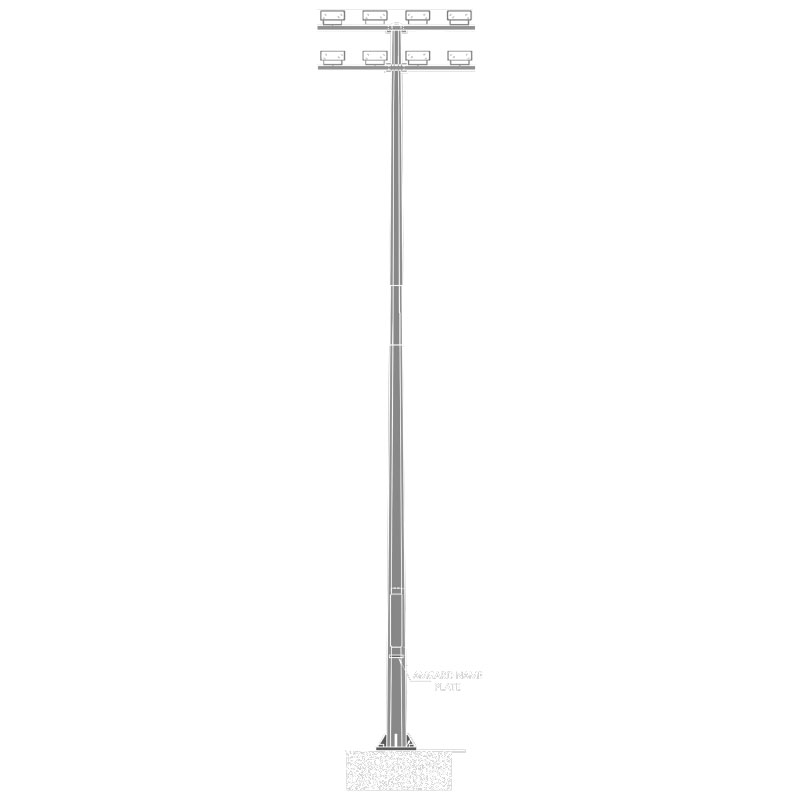
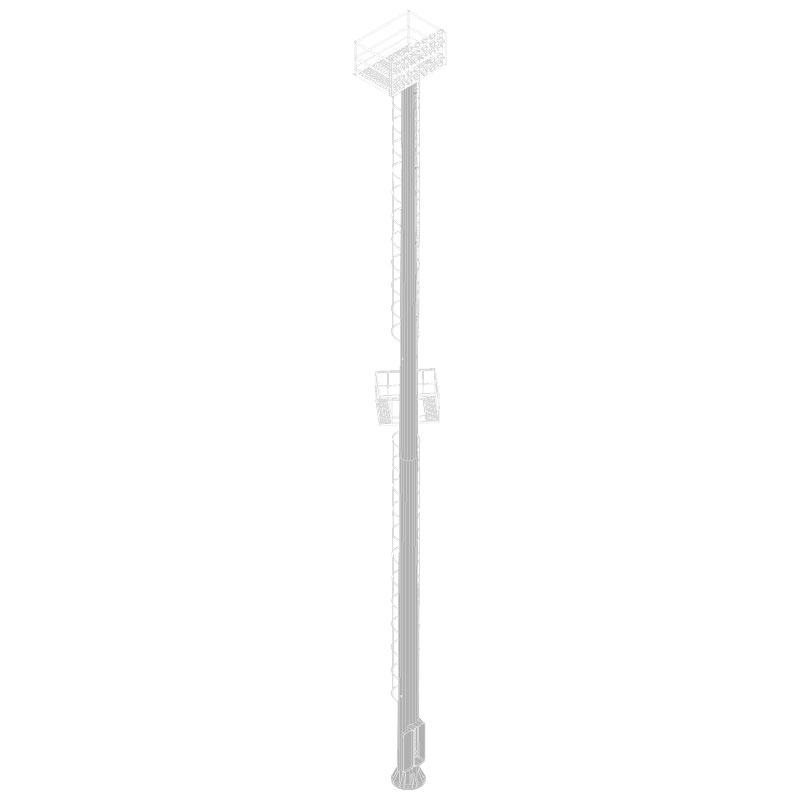
For ports, sports grounds and highway interchanges, a high mast installation lifts a ring of luminaires to cover a wide area from one foundation. The galvanised steel high mast light pole is designed around a raising-lowering system so that maintenance crews can lower the ring without a crane.
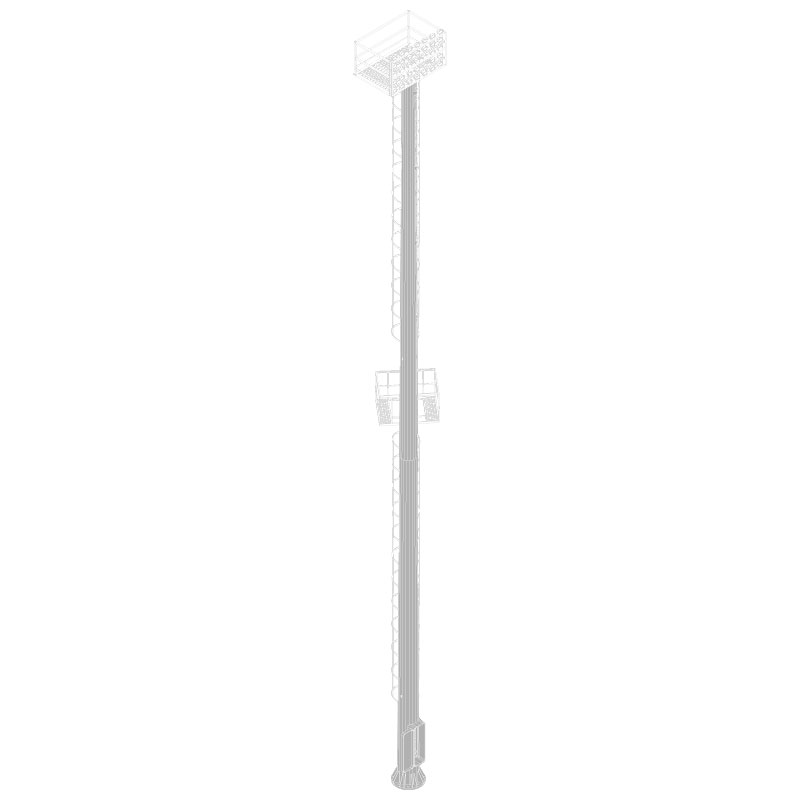 Custom Steel high mast light pole Supplier, Factory - Ningbo Morelux Pole TechnoNingbo Morelux Pole Technology Limited is China Steel high mast light pole supplier and factory, professional custom Steel high mast ligh...View Product →
Cylindrical, step-tapered, mid-hinged and floodlight poles are also available in galvanised steel, and the same production line handles camera poles and special brackets when a project needs a bespoke solution.
What to Check Before You Buy a Galvanised Light Pole
The service life chart below compares typical outcomes for four material and finish combinations, and it explains why a galvanised pole is so often specified for highway and municipal projects.
Expected Service Life by Material and Finish
This horizontal bar chart shows how the material and finish decide the practical service life of a typical lighting column. Painted mild steel without zinc protection rarely exceeds ten years unless it is re-coated on a tight schedule. A correctly galvanised pole reaches about 45 years in a moderate climate, which is why highway authorities moved to galvanised columns decades ago. The duplex system, zinc plus powder coating, extends life beyond 55 years and is the strongest option for aggressive coastal zones. Aluminium sits near 35 years in the same conditions, still a solid result but with a different strength profile. Use these figures as a starting point, then adjust the specification when the site is close to the sea or industrial emissions.
What to verify in the quotation and on the production line:
- Minimum average zinc coating thickness per BS EN ISO 1461, with a test certificate.
- Steel grade, wall thickness and the wind load calculation behind the design.
- Weld quality, because welds are made before galvanising and must drain freely.
- Drainage and venting holes, which prevent trapped moisture from bursting the coating.
- Surface condition after dipping, including drips, spikes and zinc ash that need cleaning.
- A duplex finish when the pole must match a colour scheme or when the site is very severe.
Buying Galvanised Light Poles from a Manufacturer That Controls the Process
The maintenance chart below is the strongest argument for hot-dip galvanising in financial terms, because servicing a pole is far more expensive than buying one.
Planned Maintenance Operations over a 50-Year Design Life
The column chart compares how many times a lighting column needs planned maintenance operations over a 50-year design life. Painted mild steel demands re-coating every six to eight years, roughly eight operations, which quickly exceeds the original purchase price. A galvanised pole needs only periodic inspection and touch-up of the zinc coating where brackets have been welded. The duplex system and bare aluminium sit close to each other at about three operations, as aluminium needs cleaning in some environments and duplex needs a periodic topcoat. When the cost of closing a lane for each maintenance visit is added, the chart becomes a powerful reason to choose galvanised steel. Total cost of ownership, not unit price, is the comparison that buys the best pole.
Because galvanising defects are usually hidden until years after installation, the manufacturer matters as much as the specification. Morelux has operated its own factory since 1998 and performs cutting, bending, spinning, welding, polishing, powder coating, anodising and inspection in-house, which gives the engineering team direct control over every surface that enters the zinc bath. The European and Middle Eastern steel light pole range covers conical, cylindrical, octagonal, step, mid-hinged, floodlight and high mast columns, all manufactured with galvanising-ready steel. Products are exported to more than 30 countries, and each order is designed for the wind loads and environmental classes of its destination. If you have a project in mind, contact Morelux and ask for coating thickness calculations, galvanising certificates and load test data before placing an order.
Conclusion
Specify the standard, set a minimum zinc thickness, and choose a pole that is fabricated well enough to survive the galvanising process itself. A galvanised light pole is a structural component whose protection layer controls the maintenance budget for decades, not a commodity item. When the geometry, arm configuration and coating certificate all line up, a galvanised steel column remains one of the most cost-effective lighting supports a project can buy.