English
 Español
 Français
 عربى
عربى italiano
A contractor pricing 40 car park spaces on a site with no service panel nearby usually finds that the trench, the conduit, and the cable run cost more than the light fittings. That single cost line is why commercial LED solar area lights now appear in ordinary specifications for car parks, depot yards, park and ride lots, marinas, and rural junctions. The product, though, is not one item. It is a pole, a luminaire, a photovoltaic array, a battery bank, and a controller, and all five have to be balanced against one another and against the worst month of weather at the site. When those parts are matched, installation is quick, service is predictable, and there is no trench to repair. When they are not matched, the site dims in December and the projected savings turn into callout costs.
Content
- 1 The Short Answer: Balance Energy, Harvest, and Autonomy
- 2 How Bright Are Commercial LED Solar Area Lights in Practice
- 3 Pole Height, Mounting, and Spacing Decide the Rest
- 4 Sizing the Panel for the Worst Month, Not the Average
- 5 Runtime, Autonomy, and Battery Choices
- 6 Aluminum or Steel: What the Pole Material Changes
- 7 Procurement Checks and Common Cost Traps
- 8 Bringing the Numbers Together
The Short Answer: Balance Energy, Harvest, and Autonomy
Three numbers decide whether a solar area light performs: the nightly energy demand in watt hours, the worst month daily solar harvest, and the number of nights the battery must carry the site without useful sun. A 60 W luminaire running dusk to dawn for about ten and a half hours needs roughly 630 Wh per night, and rounding to 650 Wh covers controller and cable losses. Divide that figure by the worst month peak sun hours at the site and then by a system efficiency of about 0.75, and the array size appears. At 2.5 peak sun hours, 650 divided by 2.5 divided by 0.75 gives 347 W, so a 360 W panel is the sensible specification rather than a 300 W panel that only performs in summer. The battery follows the same arithmetic: three nights of autonomy at 24 V with an 80 percent depth of discharge needs about 100 Ah.
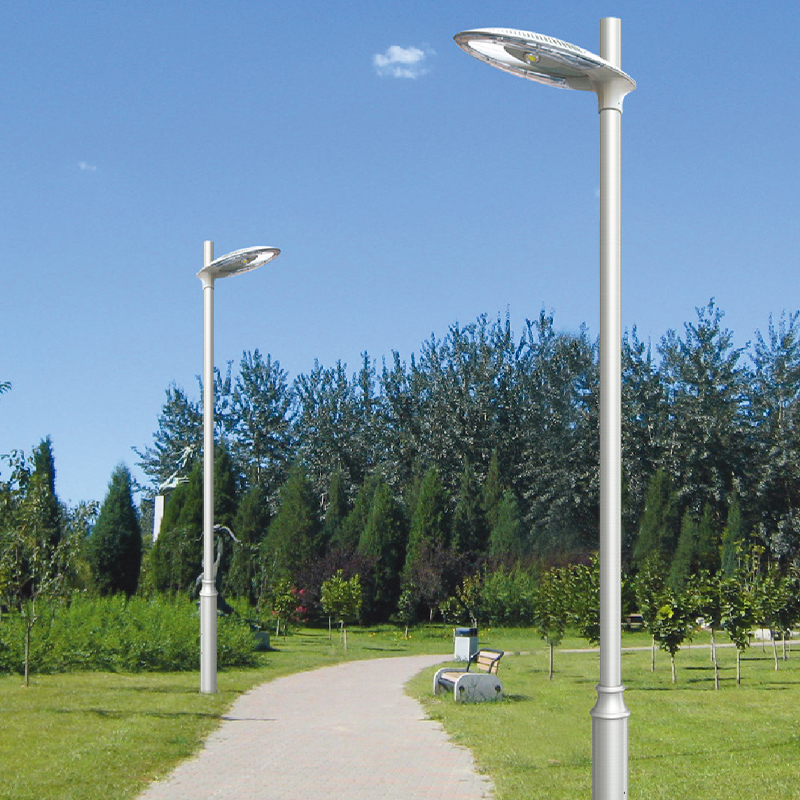
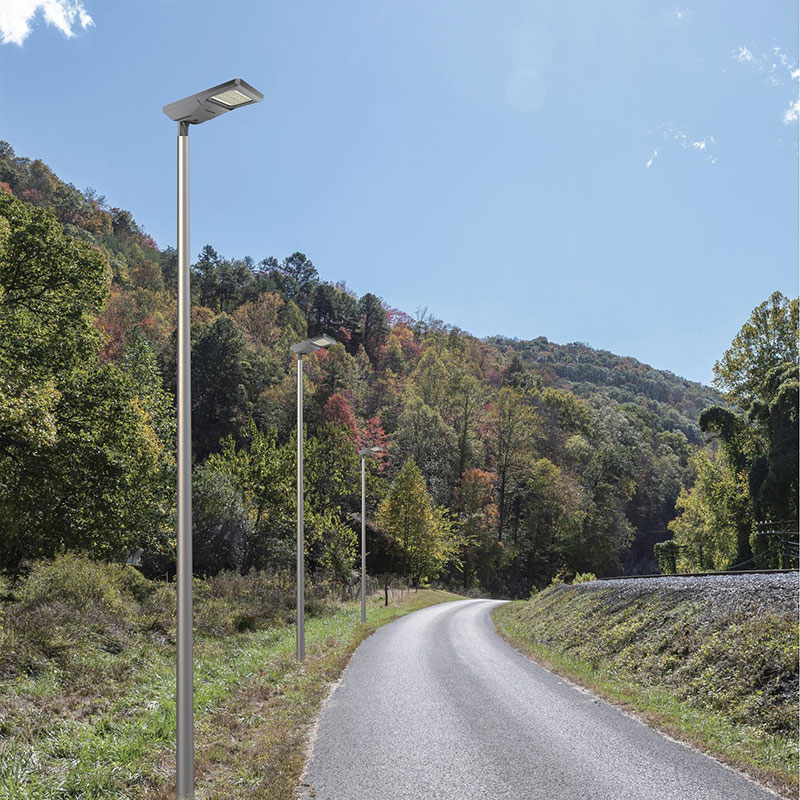
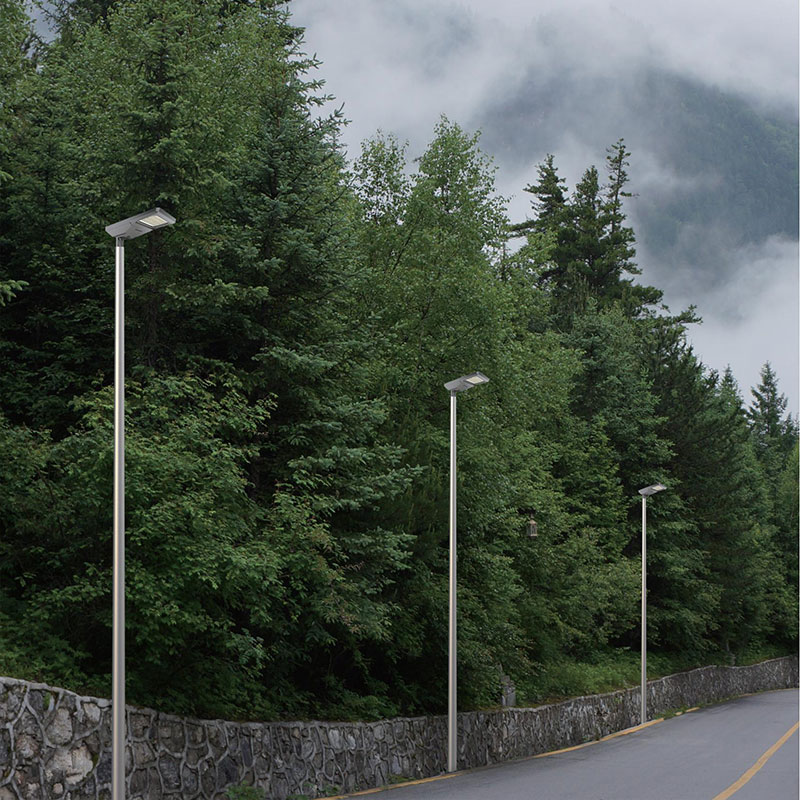
Those figures only hold if the pole can carry them. A 360 W panel on a 6 m column adds close to one square metre of sail area, so wall thickness and base plate must be checked against local wind speed rather than against a generic catalogue load. Buyers who start from the solar light pole range usually reach a workable layout faster than those who start with the luminaire and work backwards.
How Bright Are Commercial LED Solar Area Lights in Practice
Brightness is rarely the limiting factor. Current solar area luminaires run at roughly 140 to 185 lumens per watt, so the real constraint is the panel and battery that must refill that energy every day. The chart below shows nominal output for the wattage classes most often specified in solar area lighting.
Nominal output by solar area light wattage class
The chart sets out nominal lumen output for five solar area light wattages, from 20 W to 120 W. Output rises almost linearly because the same LED families are used across the range, so a 60 W head delivers about half the light of a 120 W head. A 40 W to 60 W head mounted at 6 m is normally enough for a car park bay when poles are spaced at 18 to 22 m. Uniformity matters more than raw output, because a car park with bright pools of light and dark gaps between them reads as unsafe even when the average illuminance meets the target. Solar output also falls at the end of a cloudy week, so specifying one wattage step above the calculated minimum is a practical buffer rather than an upsell.
Pole Height, Mounting, and Spacing Decide the Rest
Mounting method affects both cost and service access. A flange base pole needs a cast foundation and anchor bolts but can be unbolted and replaced in an afternoon. A planted or direct buried pole saves the foundation and suits soft ground and lower heights, but replacement means excavation. In North America, 10 ft to 40 ft conical poles with either flange or planted mounting are the common reference, while European and Middle Eastern projects more often specify 4 m to 12 m columns with a tenon or bracket interface for the luminaire.
| Pole height | Typical application | Fixture range | Typical spacing |
|---|---|---|---|
| 4 m to 5 m | Footpath, garden, campus walkway | 20 W to 40 W | 12 m to 15 m |
| 6 m | Car park perimeter, plaza | 40 W to 60 W | 18 m to 22 m |
| 8 m | Car park interior, depot yard | 60 W to 90 W | 22 m to 28 m |
| 10 m to 12 m | Arterial road, freight apron | 90 W to 150 W | 30 m to 40 m |
A complete unit designed around one column, such as a corrosion resistant aluminum solar pole with an integrated mounting interface, removes the compatibility risk that appears when the luminaire, panel, and battery are bought from three different suppliers.
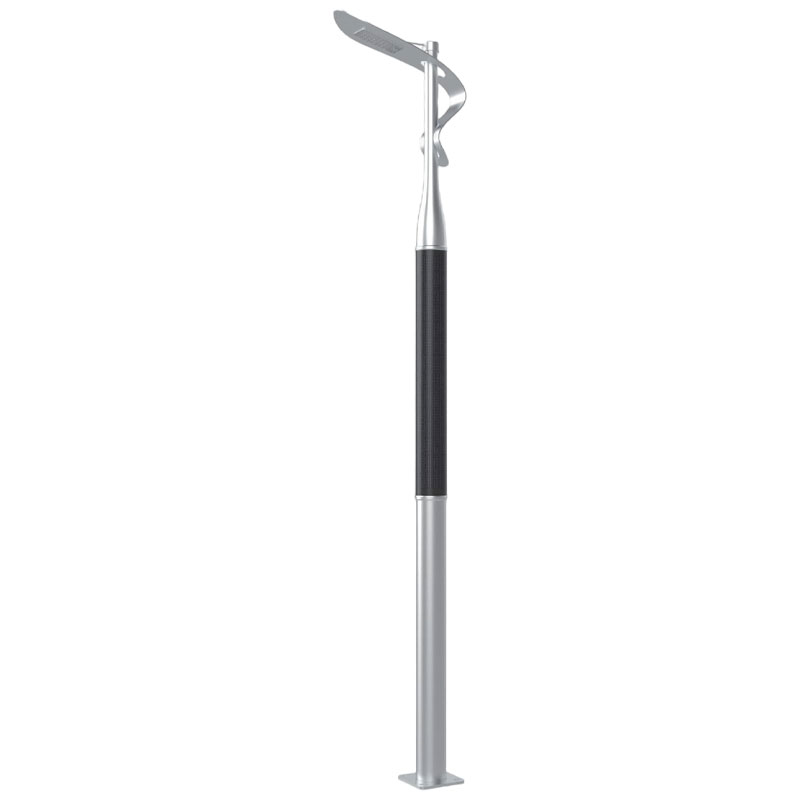 ELDA Flexible HJT Aluminum Solar Light PoleThe total height of the Flexible HJT Aluminum ELDA Solar Pole is 4000 mm, equipped with φ165x1330mm flexible heterojunction solar panels and 12.8V/30Ah lithium iron ph...View Product →
Sizing the Panel for the Worst Month, Not the Average
Peak sun hours swing widely through the year. Northern European sites can drop to 1.5 to 2.5 peak sun hours in December, southern European sites hold 3.5 to 4.5, and coastal sites with regular cloud behave worse than their latitude suggests. Sizing on an annual average is the most common and most expensive mistake in solar area lighting, because the average hides the two months when the site actually fails.
Daily solar harvest against a fixed 600 Wh nightly load
The line chart compares two array sizes against a fixed nightly load of 600 Wh across a full year. The 300 W array stays above the load line in every month, including December, which is normally the month that decides the specification. A 200 W array looks comfortable from April to September and then falls below the load in January, November, and December. When that happens the battery is not covering a cloudy day or two, it is covering a deficit that lasts for weeks, and the bank reaches deep discharge long before spring arrives. Designing on the worst month rather than the annual average is the simplest way to avoid that outcome.
Retrofit projects add one more variable. Where a column already exists and only the supply is missing, flexible modules and two piece mounting kits allow the array to be added without changing the pole or the foundation.
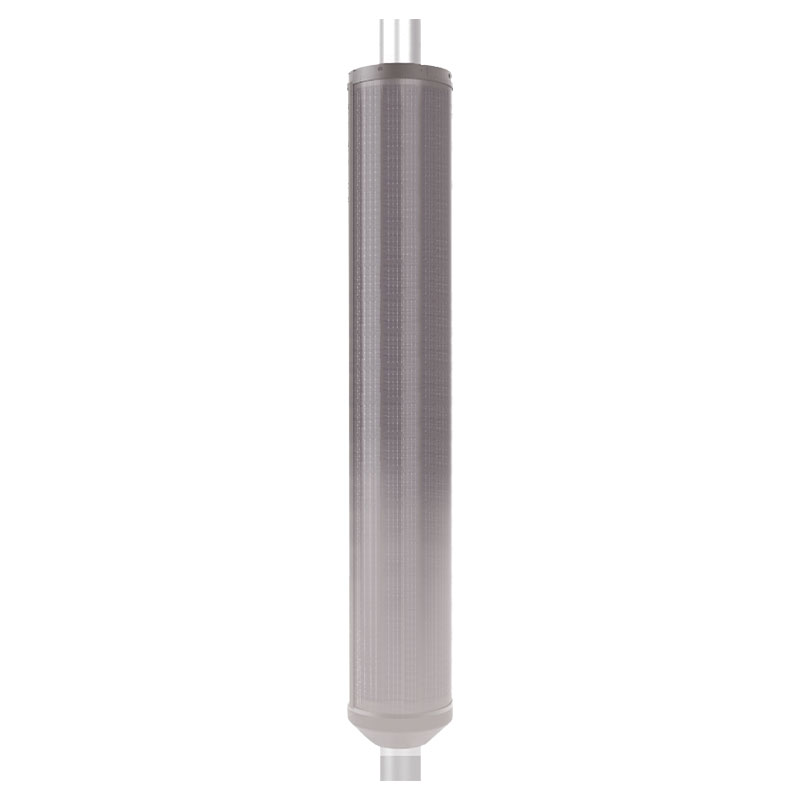 Flexible HJT Solar Panel Kits For Solar Light PoleFlexible solar panels, like traditional rooftop solar panels, utilize photovoltaic cells to produce electricity. The key distinction lies in the construction of their ...View Product →
Runtime, Autonomy, and Battery Choices
Autonomy is the number of consecutive nights the bank must carry the load without solar input. Two to three nights is normal for urban car parks, while four to five nights suits remote sites and coastal areas with long winter cloud. Temperature is the hidden variable, because lithium iron phosphate packs lose a meaningful share of usable capacity near freezing, so a bank sized on a mild autumn day can underperform in a frost.
Autonomy nights by battery capacity at a 600 Wh nightly load
The column chart converts battery capacity into autonomy for a 600 Wh nightly load on a 24 V system with an 80 percent usable depth of discharge. A 30 Ah pack covers about one night, which is only acceptable where the site is inspected daily and failures are immediately visible. A 100 Ah pack covers roughly three nights, which matches the usual two to three night specification with a margin for cold weather. A 200 Ah pack reaches beyond six nights but adds weight, cost, and a longer recharge time, so it is usually reserved for remote or high latitude sites. Reading autonomy in nights rather than in amp hours makes that trade off obvious during procurement.
Packs designed as modular units with their own enclosure also simplify the fifth or sixth year, when the original cells reach the end of their useful life and only the storage needs to be replaced.
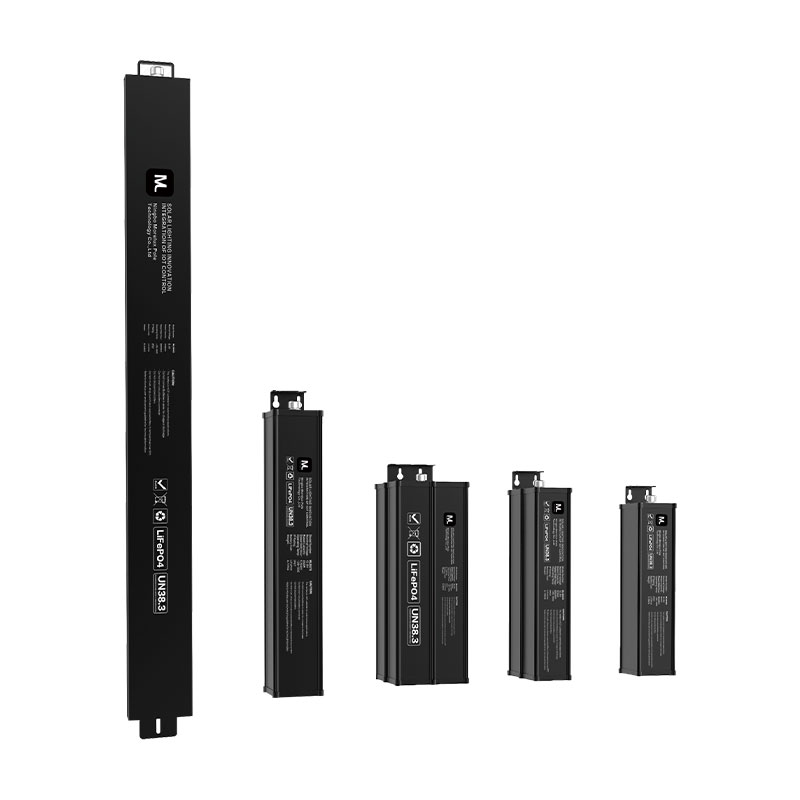 New Compact Battery pack Series For Solar Light PoleStable chemical structure and a low operating voltage, which makes it less prone to thermal runaway, fire, or explosion. Lasts for more than 2ooo cycles, has a low deg...View Product →
Aluminum or Steel: What the Pole Material Changes
Both materials work, and the choice usually follows the local supply chain. Aluminum is corrosion resistant without coating, weighs about one third as much as steel for the same section, and is fully recyclable, which fits projects with green building targets. Steel is stiffer, usually cheaper per kilogram, and familiar on long spans, but it depends on hot dip galvanizing or a coating system for outdoor life. For solar area lights the added panel load tilts the decision slightly toward steel in high wind zones and toward aluminum where handling, corrosion, and end of life matter more.
Aluminum and steel poles compared on six selection criteria
The radar compares the two pole materials on six criteria that matter for a solar area light. Aluminum scores highest on corrosion resistance, low weight, and recyclability, which reduces transport cost and end of life burden. Steel scores higher on stiffness and upfront cost, which matters when the panel area is large or the wind zone is severe. Installation speed sits close to the middle for both, because a flange base pole of either material is set in much the same way. Read together, the chart supports a practical rule: aluminum suits moderate wind, coastal, and heritage sites, while steel suits long spans and tight budgets.
Procurement Checks and Common Cost Traps
- Ask for a worst month energy balance that shows nightly watt hours, array output, and autonomy nights on a single page.
- Confirm the pole wind rating against the project basic wind speed and the real panel area, including brackets and fixtures.
- Check battery chemistry, usable depth of discharge, and cycle life, and confirm the pack can be replaced on site without dismantling the column.
- Confirm the mounting interface, whether flange base, planted mounting, or a tenon adapter, and check that luminaire, panel, and battery share one column.
- Require IP and IK ratings for the luminaire, the panel, and the controller enclosure, since water ingress is the most common field failure.
- Compare total delivered cost per pole against the fully trenched alternative, including excavation, cable, conduit, surface restoration, and ten years of energy.
- Request a photometric layout with uniformity and backlight figures rather than a single average lux value.
Bringing the Numbers Together
The sequence is straightforward once the parts are separated: fix the nightly load, size the array on the worst month, choose autonomy in nights rather than in amp hours, then select a pole that can carry the sail area and the wind load. Projects that follow that order rarely return for a second site visit, and they avoid the awkward conversation that follows a dark February. Morelux has manufactured poles in Ningbo since 1998 with more than 200 staff and in house cutting, bending, spinning, welding, polishing, powder coating, anodizing, and inspection, and ships to more than thirty countries, which means the mechanical and electrical sides of a solar area light can be resolved by one supplier rather than three. For a closer look at how solar columns are configured in practice, these solar pole design notes walk through the configuration choices in more detail.