English
 Español
 Français
 عربى
عربى italiano
When a logistics company expanded its distribution yard, the lighting specification began with one question: aluminum or steel poles? That decision shaped the foundation design, the installation schedule, and the maintenance budget for two decades. The same choice appears in parking lot upgrades, business park developments, ports, and municipal roadways. Field evidence is consistent: aluminum poles deliver the best life-cycle value for most commercial and industrial outdoor lighting applications, while steel remains the right answer for very tall poles and extreme wind zones. This article compares the two materials with measurable criteria and reviews the solar and smart pole options that now appear in industrial specifications.
Commercial and industrial outdoor lighting covers parking lots, access roads, loading bays, perimeter security, pedestrian routes, landscape accents, sports areas, and high-mast locations. Each zone places different demands on the pole. Wind load, luminaire weight, height, finish durability, and vehicle impact all influence the final choice. Understanding the application first makes the material decision easier.
Content
- 1 What Commercial Industrial Outdoor Lighting Covers
- 2 Aluminum versus Steel: What Changes for the Specifier
- 3 Life-Cycle Cost Decides the Real Price
- 4 Solar Poles and Smart Poles Expand the Options
- 5 A Five-Step Specification Checklist
- 6 Standard Pole Families That Cover Most Projects
- 7 Choose the Pole That Serves the Longest
What Commercial Industrial Outdoor Lighting Covers
The category is broad, but pole requirements fall into a small number of patterns. A parking lot pole carries a heavy LED luminaire at 20 to 30 feet. A roadway pole adds a long arm and may need a structural rating for sign brackets. A landscape column prioritizes finish quality because it sits close to pedestrians. A high-mast pole for a port or rail yard must survive much higher wind loads and support a ring of fixtures.
| Application area | Typical height | Common material | Primary load concern |
|---|---|---|---|
| Parking lots | 20-30 feet | Aluminum | Wind and luminaire weight |
| Roadways and access roads | 25-40 feet | Aluminum or steel | Wind, arm length, bracket load |
| Loading docks and yards | 20-30 feet | Aluminum | Vehicle impact and vibration |
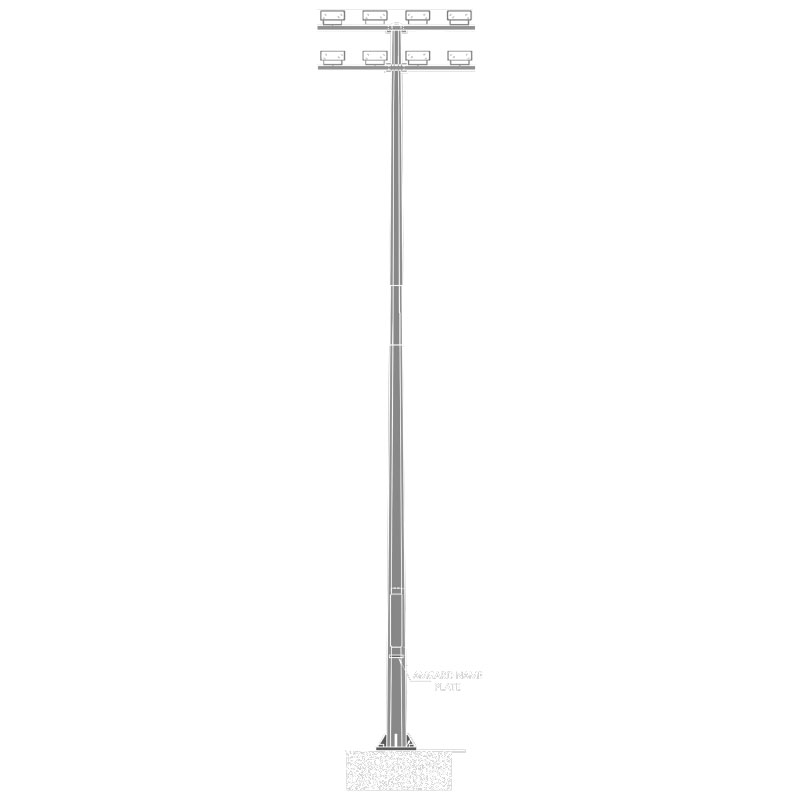
| High-mast, ports, railyards | 60-120 feet | Steel | Extreme wind and hoisting loads |
| Landscape and garden areas | 10-16 feet | Aluminum | Finish quality and aesthetics |
| Perimeter security | 15-25 feet | Steel or aluminum | Camera and equipment payload |
Once the application is clear, the next decision is the material and finish specification, which determines how long the installation performs before major maintenance is required.
Aluminum versus Steel: What Changes for the Specifier
Aluminum and steel poles are both structurally sound when engineered correctly. The difference is how they age, how much they cost to maintain, and how they handle specific site conditions. Aluminum sections are typically conical or stepped, rolled from marine-grade alloy sheet and welded longitudinally. Steel poles are usually hot-dip galvanized, with an optional powder coat or paint system on top.
Corrosion Resistance and Surface Finish
The finish system, not the raw material, determines how a pole looks after ten years. Aluminum can be anodized, converting the surface into a hard, corrosion-resistant oxide. Powder coating over proper pretreatment adds color choices. Steel depends on the zinc layer from galvanizing; once that layer is breached, corrosion spreads quickly. Coastal sites, de-icing salt, and industrial atmospheres punish steel far faster than aluminum.
Life-Cycle Cost Decides the Real Price
The purchase price is only the first layer of true cost. Installation, foundation work, periodic cleaning, touch-up painting, and early replacement all belong in the comparison. The chart below shows a relative 20-year cost index for an identical 30-foot, single-arm pole in three material configurations.
A small saving at the bidding stage can turn into a replacement project fifteen years sooner. For this reason, many engineering firms now specify aluminum for poles up to 40 feet and reserve steel for high-mast or special-strength applications.
Solar Poles and Smart Poles Expand the Options
Solar lighting has moved from a niche product to a standard option for commercial yards, pathways, and remote sites. A solar pole with integrated photovoltaic modules and battery storage removes trenching, cabling, and metered connections from the budget. Morelux builds solar poles with monocrystalline silicon and flexible HJT panels, in circular or hexagonal module arrangements, with one-piece or two-piece retrofit designs and compact battery packs.
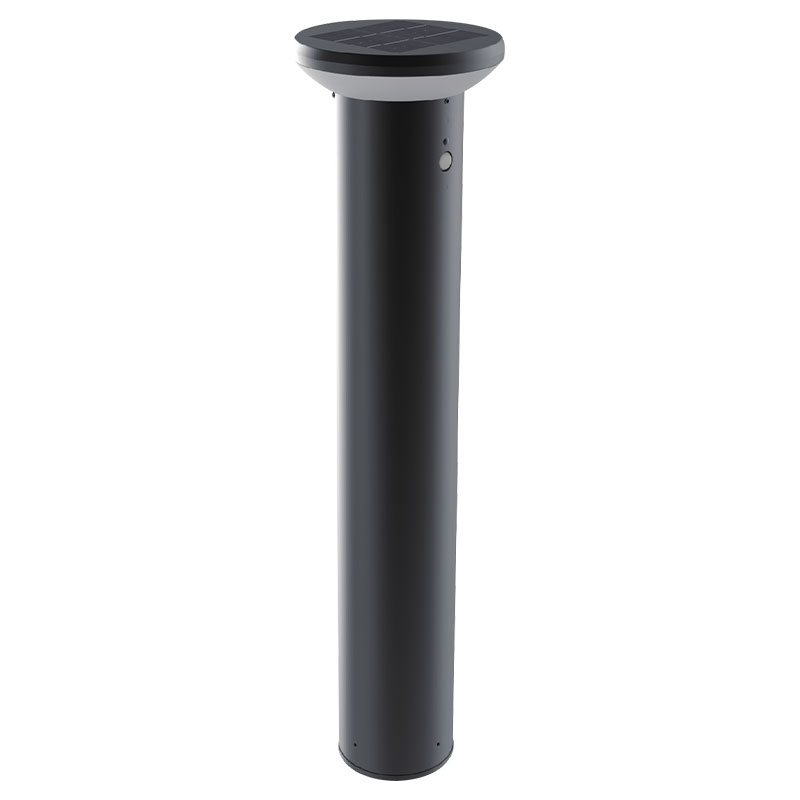 AGIOS Integrated Solar Light Pole with Monocrystalline PanelsThis compact 1000 mm solar pole uses aviation-grade aluminum and a 22% efficient monocrystalline module, making it a durable, cable-free lighting option for yards and pathways where trenching is costly.View Product →
Smart poles carry lighting, cameras, sensors, and communication equipment on one structure. They suit city streets, business campuses, and logistics yards where data collection is becoming routine. Because the pole is the most durable part of the system, a smart-ready pole with extra internal cable space protects the investment if the site later adds 5G equipment, environmental sensors, or charging stations.
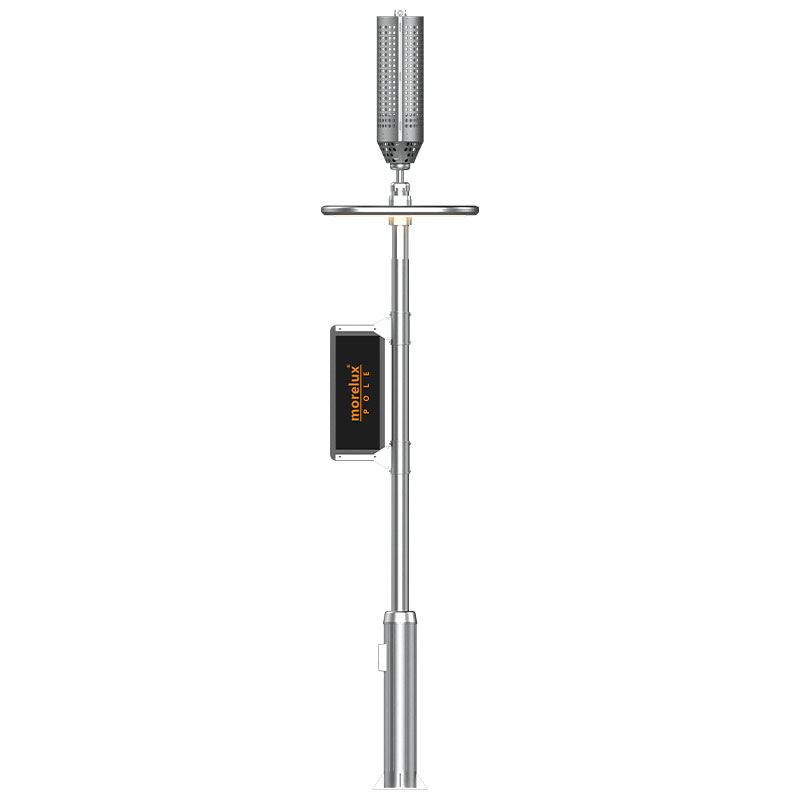 Aluminum Multifunctional Smart Light Pole with Remote ManagementA 4.5-6 meter smart pole designed for parks and streets, featuring one-click alarm, remote on/off and dimming, and support for cameras and 5G/Wi-Fi devices for connected urban infrastructure.View Product →
Even a project planned as standard grid-connected lighting may benefit from a solar pole where trenching is expensive. The trend line below shows how quickly these features have entered commercial orders.
A Five-Step Specification Checklist
The following checklist condenses the process into five decisions that produce a complete pole specification.
- Measure the mounting height needed to hit the required foot-candle level at ground level. Use a lighting layout instead of guessing the pole height.
- Confirm the wind zone and the effective projected area of the luminaire and arm. These two numbers decide the required pole taper and wall thickness.
- Choose the finish for the local environment. Coastal sites need a six-layer coating system or anodized aluminum; inland sites can use standard powder coating.
- Decide whether trenching and grid connection are physically possible. If not, a solar pole with battery backup becomes a practical option.
- Check future needs before ordering. A smart-ready pole with extra internal cable space costs little more now and avoids replacement later.
Standard Pole Families That Cover Most Projects
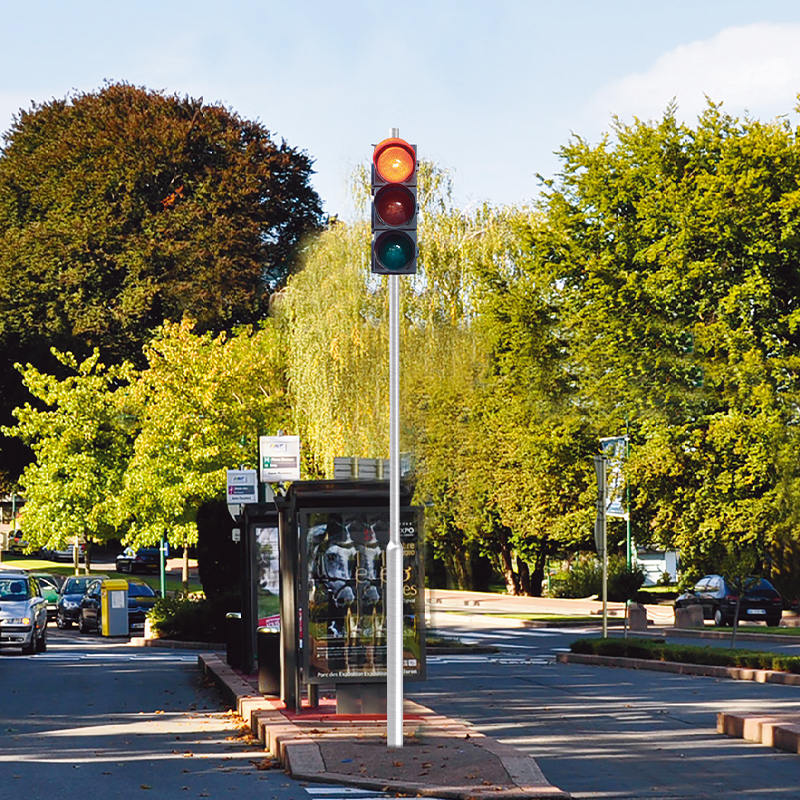
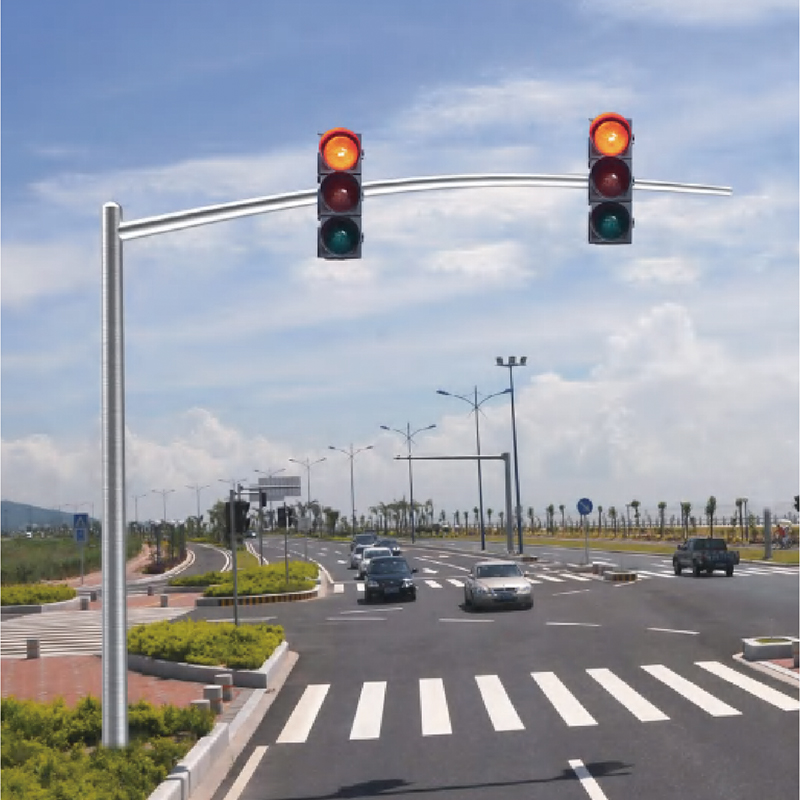
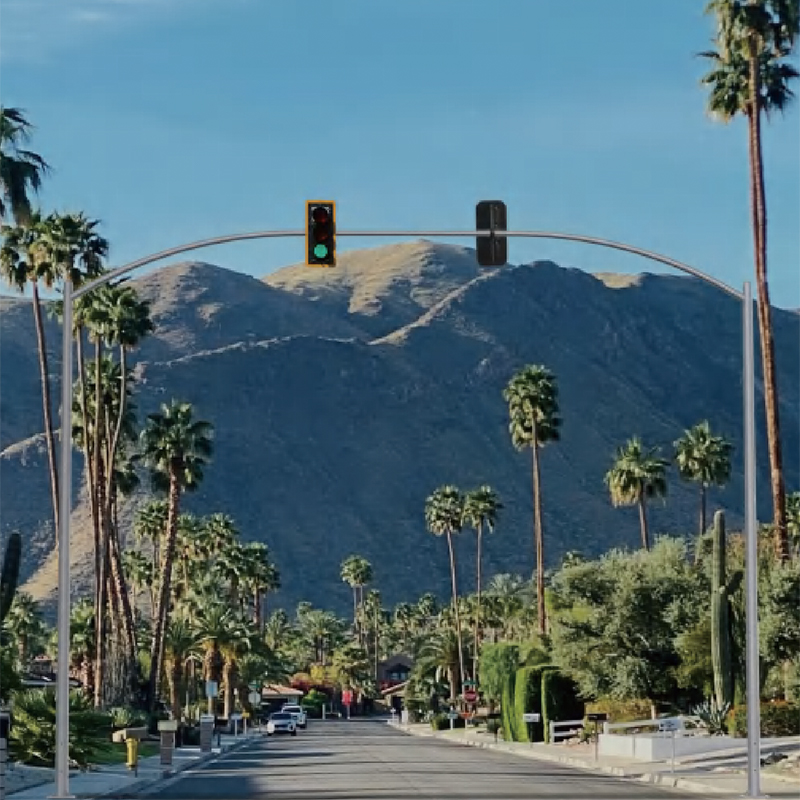
Most projects can be served by a small number of well-defined pole families. For roadway and parking applications, conical aluminum roadway poles with single or double arms provide clean lines and easy maintenance. For garden, landscape, and pedestrian zones, stepped and decorative columns add a lower, more visible aesthetic. Traffic signal poles and flagpoles complete the range for campus and civic sites.
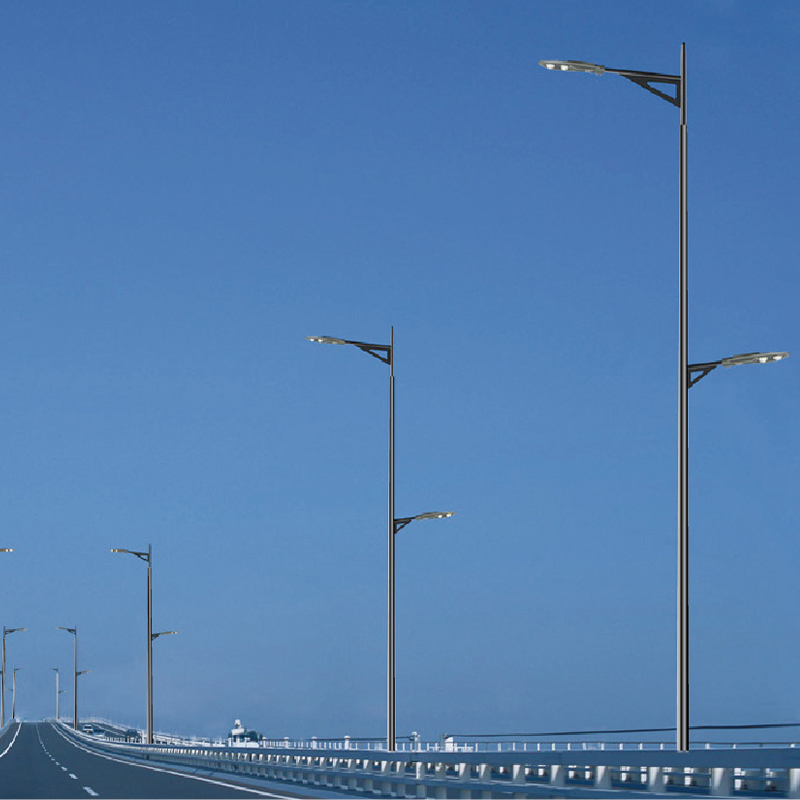 BERMUDA Conical Aluminum Roadway Light PoleA conical aluminum pole in 6063-T6 with brushed, anodized, or powder-coated finishes, suited for roadway and parking lighting where clean lines and low maintenance are priorities.View Product →
When the project calls for a standard aluminum pole, browse the aluminum light pole range and match the section height, arm configuration, and finish to the site conditions. For larger or unusual requirements, Morelux also manufactures steel step poles, octagonal sections, floodlight poles, and high-mast structures. Cutting, bending, welding, polishing, powder coating, anodizing, and inspection are all completed in-house, so quality is verified before shipping.
Many buyers also need tenon adapters and wall-mount brackets to attach fixtures. Once the pole family is chosen, specify the adapter size and orientation, and confirm the foundation detail with the structural calculation. If your project has unusual height, wind, or finish conditions, contact Morelux directly with the site data for a recommendation based on actual loading requirements.
Choose the Pole That Serves the Longest
A lighting pole carries the entire lighting investment for decades. Aluminum offers the best corrosion resistance, the lowest maintenance workload, and the highest recycled content, which supports green building certification. Steel offers the best strength-to-cost ratio for very tall structures. Solar and smart features are practical additions, but only when the pole is engineered for them from the start.
Start with the application, compare the charts with your site conditions, and confirm the wind load and finish requirements for your region. For most commercial and industrial outdoor lighting projects, a well-made aluminum pole is the right answer, and where the site demands steel, a properly galvanized steel pole remains a solid choice.