English
 Español
 Français
 عربى
عربى italiano
Yes — solar light poles are genuinely good, and in many situations they are the superior choice over traditional grid-powered street and area lighting. For locations with adequate sun exposure, solar light poles deliver reliable, autonomous illumination with no electricity bills, no trenching costs, and no dependency on utility infrastructure. Across parks, parking lots, rural roads, campuses, and remote sites worldwide, modern solar poles are outperforming older expectations and proving their value over multi-year operational periods.
That said, "good" is context-dependent. A solar light pole performs excellently in Phoenix, Arizona, and adequately in central Europe, but will struggle in consistently overcast or high-latitude climates without careful system sizing. Understanding the technology, its real-world performance data, and its limitations will help you determine whether solar poles are the right solution for your specific application.
Content
- 1 What Is a Solar Light Pole and How Does It Work?
- 2 The Real Advantages of Solar Light Poles
- 3 Honest Assessment: The Limitations of Solar Light Poles
- 4 Solar Light Pole vs. Grid-Powered Streetlight: A Direct Comparison
- 5 Smart Technology Integration: Solar Poles Beyond Just Lighting
- 6 Where Solar Light Poles Perform Best: Ideal Applications
- 7 Key Specifications to Evaluate When Choosing a Solar Light Pole
- 8 Battery Technology: Why LiFePO4 Changed the Game
- 9 How to Size a Solar Light Pole System for Your Specific Location
- 10 Lifecycle Cost Analysis: The True Financial Picture
- 11 Common Mistakes to Avoid When Buying or Specifying Solar Light Poles
- 12 The Verdict: Are Solar Light Poles Worth It?
What Is a Solar Light Pole and How Does It Work?
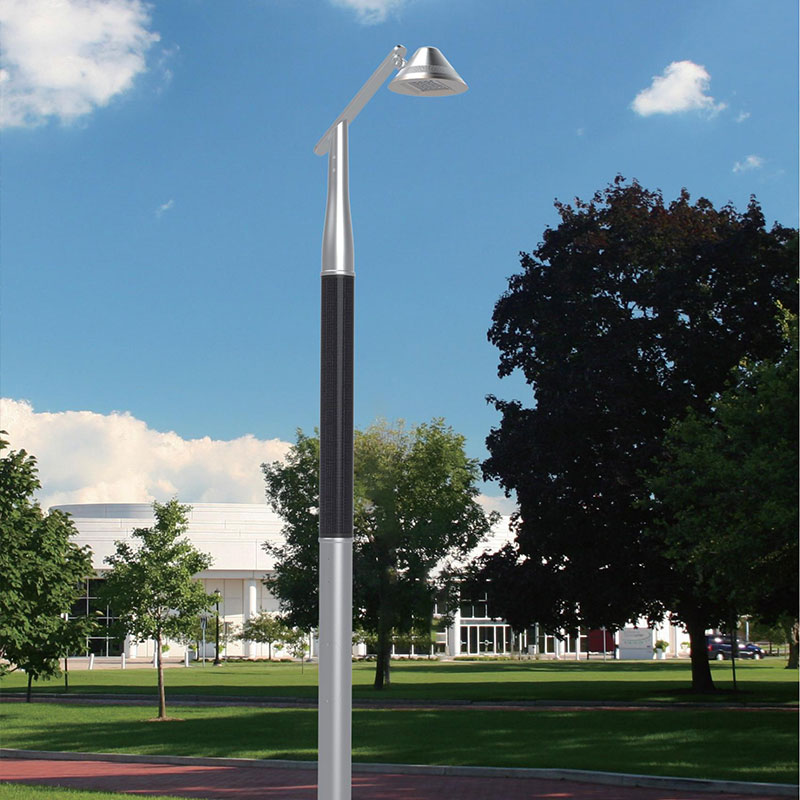
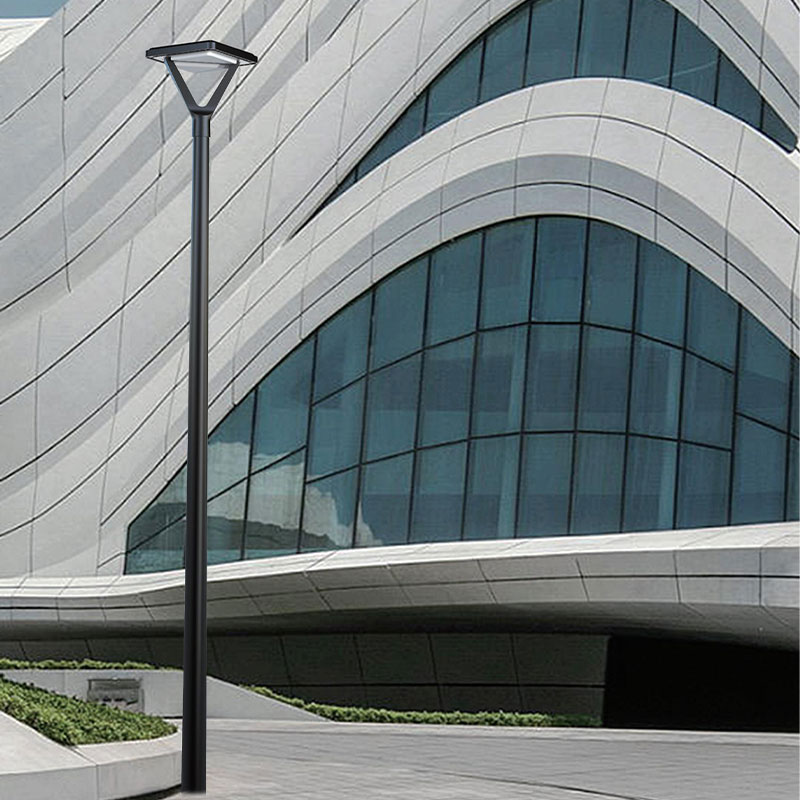
A solar light pole is a self-contained outdoor lighting system mounted on a single pole structure. Unlike conventional streetlights that draw power from the electrical grid through underground cables, a solar light pole generates, stores, and consumes its own electricity entirely on-site.
The core components of a solar light pole system include:
- Solar panel: Monocrystalline or polycrystalline photovoltaic panels mounted at the top of or alongside the pole, converting sunlight into DC electricity. Monocrystalline panels, with efficiency ratings of 20–23%, are now standard in quality installations due to their superior output per square meter.
- Battery storage: A battery bank — most commonly lithium iron phosphate (LiFePO4) today — stores the day's generated electricity for use during night hours and cloudy periods. Battery capacity is typically sized to provide 3 to 5 days of autonomy without solar input.
- Charge controller: An MPPT (Maximum Power Point Tracking) charge controller manages the energy flow between panel and battery, optimizing charging efficiency and preventing overcharge or deep discharge that would degrade battery life.
- LED luminaire: High-efficiency LED fixtures consume far less power than older lamp types, making it practical to run them from battery storage. Modern outdoor LED luminaires deliver 100–160 lumens per watt, dramatically extending run time per stored kilowatt-hour.
- Controller and dimming system: An intelligent controller manages lighting schedules, motion-triggered dimming, and fault reporting — often accessible remotely via cellular or wireless communication.
- Pole structure: Steel, aluminum, or galvanized poles engineered to withstand wind loads, typically rated for wind speeds of 100–160 km/h depending on specification and installation region.
The system operates automatically: the panel charges the battery during daylight hours, the controller activates the LED at dusk, and the light runs through the night on stored energy. On clear days in mid-latitude locations, a properly sized solar panel can fully recharge a depleted battery in 4 to 6 peak sun hours.

The Real Advantages of Solar Light Poles
Solar light poles have moved well beyond early-generation products that struggled with short battery life and unreliable performance. Today's systems offer a compelling set of advantages that make them the preferred choice in a wide range of applications.
No Grid Connection Required — Dramatic Cost Savings on Installation
The single biggest financial advantage of solar light poles is the elimination of grid connection costs. Installing grid-powered streetlights requires trenching, conduit laying, cable pulling, transformer connections, and utility approval — costs that routinely reach $500 to $2,000 per meter of trench in urban environments, and can be far higher in rocky or congested terrain. A solar pole requires only a foundation and pole installation, removing these costs entirely.
For a rural road project requiring 20 poles spaced 30 meters apart (600 meters of lighting), the grid connection alone can cost $300,000 to $1,200,000 before a single fixture is purchased. Solar poles eliminate this line item completely.
Zero Electricity Operating Costs
Once installed, solar light poles generate their own electricity at no ongoing cost. A conventional 100W streetlight operating 12 hours per night consumes approximately 438 kWh per year. At an average commercial electricity rate of $0.12/kWh, that is $52.56 per light per year — multiplied across hundreds of poles in a municipal network, the savings compound rapidly. A 200-pole solar lighting network avoids over $10,000 annually in electricity costs, delivering payback on the solar premium within a few years.
Energy Independence and Resilience
Solar light poles continue operating during grid power outages — a critical advantage for emergency access roads, hospital perimeters, evacuation routes, and security-sensitive sites. When grid-powered streetlights go dark during storms, hurricanes, or infrastructure failures, solar poles maintain illumination autonomously. Many systems are designed with 5-day battery autonomy, providing continuous lighting through extended bad weather without any intervention.
Environmental Benefits and Carbon Reduction
A solar light pole produces zero operational carbon emissions. Compared to a coal-grid-powered equivalent, a single solar streetlight prevents the emission of approximately 0.4 to 0.7 tonnes of CO2 per year, depending on the local grid's energy mix. Across a city deploying 10,000 solar poles, this equates to avoiding 4,000–7,000 tonnes of CO2 annually — comparable to taking 900–1,500 cars off the road each year.
Rapid and Flexible Deployment
Solar poles can be installed in days rather than the weeks or months required for grid-connected projects awaiting utility coordination, permits, and civil works. This makes them particularly valuable for temporary event lighting, disaster relief operations, construction site lighting, and phased infrastructure development where permanent grid extension is not yet economically justified.
Reduced Long-Term Maintenance
Modern solar light poles with LED luminaires and LiFePO4 batteries have dramatically lower maintenance requirements than earlier generations. LED luminaires carry rated lifespans of 50,000 to 100,000 hours, meaning no lamp replacements for 10–20 years under normal operation. LiFePO4 batteries are rated for 2,000 to 3,000 full charge cycles, giving a practical service life of 8–12 years before capacity falls below 80% of original. The primary ongoing maintenance task is periodic panel cleaning to remove dust and bird deposits that reduce output efficiency.
Honest Assessment: The Limitations of Solar Light Poles
An accurate evaluation of solar light poles must acknowledge their genuine constraints. Understanding these limitations allows for realistic expectations and appropriate application matching.
Performance Is Climate-Dependent
Solar light poles perform best in regions with high annual solar irradiance — generally areas receiving more than 4.5 peak sun hours per day on average. In practice, this covers most of the Middle East, Africa, South and Southeast Asia, Australia, the southwestern United States, and large parts of Latin America. In northern Europe, Scandinavia, the Pacific Northwest, or other consistently overcast regions, solar poles require significantly larger panels and battery banks to maintain performance through winter months, which erodes the cost advantage.
At latitudes above 55°N, winter days can be as short as 6–7 hours and solar angles are extremely low, reducing effective panel output to a fraction of nameplate capacity. In these conditions, grid-connected LED lighting with smart controls may be more economical than heavily oversized solar systems.
Higher Upfront Capital Cost
The fixture cost of a quality solar light pole — including panel, battery, controller, luminaire, and pole — is typically 2 to 4 times higher than a comparable grid-powered LED streetlight fixture. The total installed cost advantage of solar comes from eliminating civil works, but in locations where grid infrastructure is already available and civil costs are low, the payback period extends.
Battery Replacement Is an Inevitable Cost
Even the best LiFePO4 batteries have a finite cycle life. After 8–12 years, battery capacity degrades to the point where the system can no longer provide a full night's illumination from a single day's charge. Battery replacement is a predictable but real cost that should be factored into lifecycle analysis. The good news is that battery costs have fallen by over 80% between 2010 and 2024, and this trend is expected to continue, making future replacements progressively less expensive.
Shading Severely Impacts Performance
A solar panel that is shaded for even a portion of the day loses a disproportionately large share of its output. Partial shading from trees, buildings, overhead signage, or other structures can reduce panel output by 30–70% even when only a small fraction of the panel surface is affected. Site assessment to identify and address shading issues is a non-negotiable step in any quality solar pole installation.
Theft and Vandalism Risk in Some Regions
The visible battery compartment and solar panel on a self-contained pole make it a target for theft in areas with poor security. Quality solar poles address this with tamper-resistant hardware, concealed or lockable battery enclosures, and anti-theft bolt systems. In high-risk locations, these protective features should be specified from the outset rather than added after an incident.
Solar Light Pole vs. Grid-Powered Streetlight: A Direct Comparison
The following table compares solar light poles and traditional grid-connected LED streetlights across the key factors most relevant to a purchasing or planning decision.
| Factor | Solar Light Pole | Grid-Connected LED Streetlight |
|---|---|---|
| Installation Cost (fixture only) | Higher (2–4× fixture cost) | Lower fixture cost |
| Civil / Grid Connection Cost | None required | $500–$2,000+ per meter trench |
| Electricity Operating Cost | Zero | Ongoing — varies by tariff |
| Grid Outage Resilience | Fully independent | Fails with grid |
| Carbon Emissions (operation) | Zero | Depends on grid energy mix |
| Performance in Low-Sun Climates | Requires careful oversizing | Unaffected by weather |
| Installation Speed | Days | Weeks to months |
| Maintenance Frequency | Low (panel cleaning, battery at 8–12 yr) | Low (LED lifespan 10–20 yr) |
| Smart Tech Integration | Full — sensors, cameras, IoT | Full — with network connection |
| Best Suited For | Remote, off-grid, sunny regions | Dense urban, cloudy climates |
Smart Technology Integration: Solar Poles Beyond Just Lighting
One of the most compelling developments in solar light pole technology is the integration of advanced digital systems that transform these poles from simple lighting fixtures into multipurpose smart infrastructure nodes. Because solar poles are self-powered and distributed across public spaces, they are ideally positioned to serve as the physical backbone of smart city deployments.
Surveillance and Security Cameras
Solar poles can mount HD or 4K security cameras with night vision capability, powered entirely by the pole's own energy system. Because the pole is self-contained, camera deployment requires no additional power infrastructure — a significant advantage when extending surveillance coverage to parks, parking areas, construction sites, or remote roads where running power and data cable would be prohibitively expensive. Modern solar pole cameras can transmit footage wirelessly via cellular (4G/5G) or mesh Wi-Fi networks in real time.
Environmental and Traffic Sensors
Solar poles can incorporate a range of environmental monitoring sensors including air quality monitors (measuring PM2.5, PM10, NO2, CO, and ozone levels), noise level sensors, temperature and humidity sensors, and rainfall gauges. Traffic applications include radar or infrared vehicle counters, pedestrian flow sensors, and license plate recognition cameras. This data feeds into municipal management platforms, enabling evidence-based decisions on traffic routing, pollution control, and urban planning — all powered by the sun with no grid dependency.
Public Wi-Fi Access Points
A solar pole equipped with a Wi-Fi access point and cellular backhaul can deliver public internet connectivity to parks, plazas, transit stops, and rural communities that lack broadband infrastructure. Each pole becomes a self-powered wireless hotspot with a typical coverage radius of 50 to 100 meters, and a network of poles can create continuous coverage across large outdoor areas without any grid power connection or cable infrastructure.
EV Charging Ports
High-capacity solar pole systems can integrate Level 1 or Level 2 electric vehicle charging stations, enabling EV charging in parking areas, nature reserves, and remote locations where grid connection for dedicated charging infrastructure would be impractical. While a single solar pole cannot match the output of a grid-connected fast charger, a bank of solar poles with shared battery storage can collectively provide meaningful charging capacity for light EVs and e-bikes in off-grid settings.
Emergency Communication Systems
Solar poles can be fitted with two-way intercom systems, emergency call buttons, and public address speakers — creating accessible emergency communication points along pathways, in parks, and on campuses without requiring any additional power infrastructure. Because the pole operates independently of the grid, these emergency systems remain functional even during power outages when they are needed most.
Integration with Smart City Platforms
Networked solar poles feed data to centralized urban management platforms via IoT protocols, enabling remote monitoring of lighting status, battery levels, sensor readings, and camera feeds across an entire city. Maintenance crews receive automatic alerts when a pole's battery falls below threshold or a luminaire reports a fault, enabling predictive rather than reactive maintenance scheduling. Cities that have deployed smart solar pole networks report maintenance cost reductions of 30–50% compared to traditional reactive maintenance models for conventional streetlights.
Where Solar Light Poles Perform Best: Ideal Applications
Solar light poles deliver the strongest value proposition in specific contexts. Understanding these applications helps decision-makers identify where the investment will generate the best return.
- Rural roads and highways: Where grid extension costs are prohibitive, solar poles provide reliable road lighting at a fraction of the civil infrastructure cost.
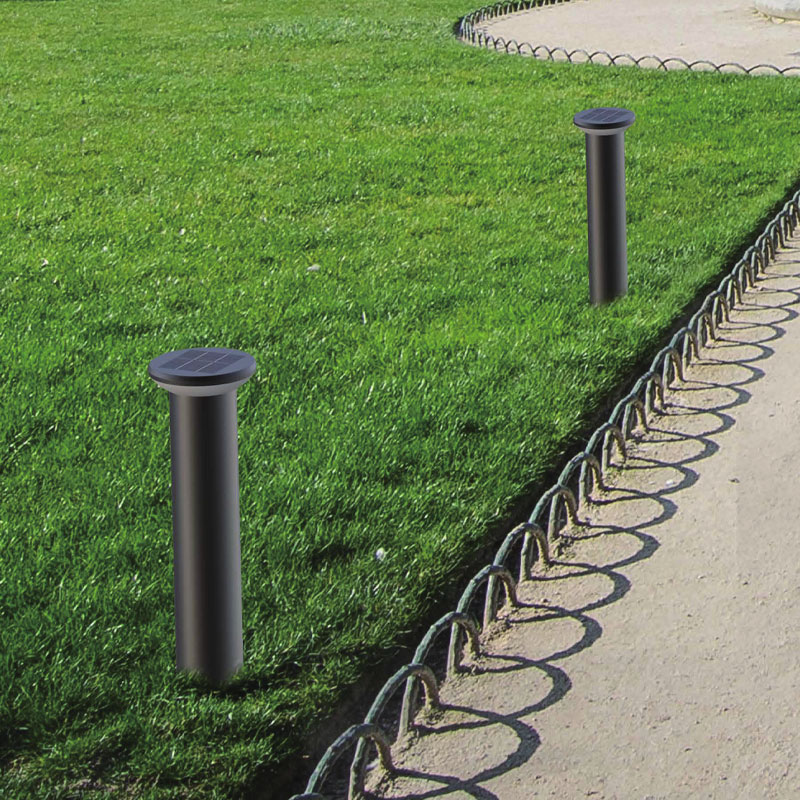
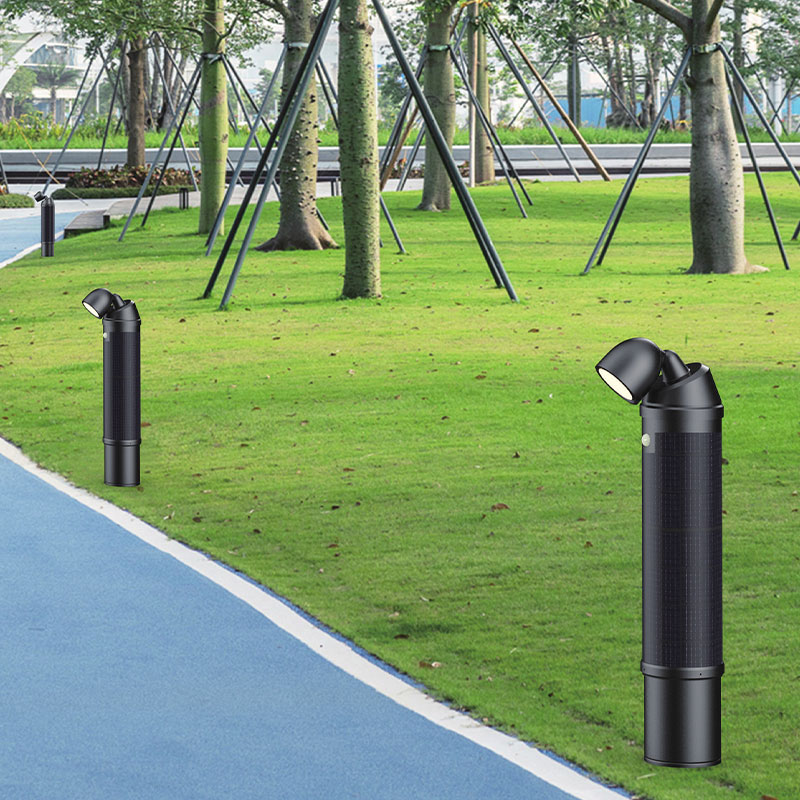
- Parks and recreational areas: Solar poles eliminate the need to trench power cables through established parkland, preserving landscaping and reducing disturbance to tree roots and existing utilities.
- Parking lots: Large open parking areas receive excellent sun exposure during the day, making them nearly ideal for solar charging. The open layout also minimizes shading risks.
- Developing regions and off-grid communities: In areas without reliable grid infrastructure, solar poles provide stable lighting that improves safety, extends productive hours, and supports economic activity at night.
- Construction sites: Temporary solar pole lighting avoids the need to establish temporary grid connections and can be relocated as site needs change.
- Coastal and marine environments: With appropriate housing materials (marine-grade stainless or heavily coated aluminum), solar poles eliminate the need for potentially hazardous high-voltage cable installation in waterfront environments.
- University and corporate campuses: Campuses value the combination of sustainability credentials, smart technology integration, and the ability to install lighting in landscaped areas without major civil disruption.
- Border areas, military installations, and critical infrastructure perimeters: The independence from grid power and the ability to integrate surveillance cameras and communication equipment make solar poles valuable for security-sensitive perimeter lighting.
Key Specifications to Evaluate When Choosing a Solar Light Pole
Not all solar light poles are built to the same standard. The market includes both well-engineered, long-life systems and low-quality products that underdeliver on performance claims. Knowing which specifications to examine — and what values to expect from quality products — protects against poor purchases.
| Specification | What to Look For | Red Flag |
|---|---|---|
| Battery Type | LiFePO4 (lithium iron phosphate) | Lead-acid or unspecified "lithium" |
| Battery Cycle Life | 2,000+ cycles at 80% depth of discharge | No cycle life data provided |
| Solar Panel Type | Monocrystalline, efficiency 20%+ | Polycrystalline or unspecified efficiency |
| Charge Controller | MPPT type | PWM only (less efficient) |
| LED Luminaire CRI | CRI 70+ (CRI 80+ preferred) | No CRI specification given |
| Autonomy Days | 3–5 days without solar input | 1 day or not specified |
| IP Rating (luminaire) | IP65 minimum, IP66 preferred | "Waterproof" label, no IP number |
| Wind Load Rating | 100 km/h minimum; 160 km/h for coastal | No wind rating specified |
| Warranty | 5 years system; 10 years panel | Less than 2 years system warranty |
Battery Technology: Why LiFePO4 Changed the Game
Battery quality is the single most important determinant of long-term solar pole performance. Early solar streetlights used lead-acid batteries, which suffered from heavy weight, sensitivity to temperature, shallow discharge limits, and short cycle life — often as few as 300–500 cycles before significant degradation. This translated to battery replacements every 2–3 years, driving up lifecycle costs and undermining the financial case for solar.
The widespread adoption of lithium iron phosphate (LiFePO4) chemistry has transformed the economics of solar light poles. LiFePO4 batteries offer:
- 2,000–3,000+ charge cycles at 80% depth of discharge, delivering 8–12 years of service life
- Stable performance from -20°C to +60°C, compared to lead-acid which loses 50% capacity at -10°C
- No thermal runaway risk — LiFePO4 is the safest lithium chemistry, critical for unattended outdoor installations
- Higher usable capacity — LiFePO4 can be safely discharged to 20% state of charge, while lead-acid should not be taken below 50% without damage
- 60–70% lighter than equivalent lead-acid capacity, reducing pole structural load
When evaluating solar pole systems, confirm that the battery is specifically LiFePO4 chemistry. Some products marketed as "lithium" use other chemistries (such as NMC or LCO) that offer higher energy density but carry greater thermal risk and shorter cycle life — important considerations for an unattended outdoor installation that may sit in direct sunlight and high ambient temperatures for years.
How to Size a Solar Light Pole System for Your Specific Location
System sizing — determining the correct panel wattage and battery capacity for a given location and lighting requirement — is where many solar pole installations succeed or fail. An undersized system will dim or shut off before dawn in winter; an oversized system wastes capital on unnecessary capacity.
Proper sizing follows these steps:
- Determine the nightly energy demand. Multiply the LED wattage by the required operating hours per night. A 40W luminaire running 11 hours consumes 440Wh per night.
- Add system losses. Account for battery charge/discharge efficiency (typically 90–95% for LiFePO4), controller losses, and wiring losses — commonly adding a factor of 1.15–1.20 to the raw energy demand. For the example above: 440Wh × 1.20 = 528Wh required from the battery each night.
- Determine required battery capacity. Size the battery to provide the required nightly energy plus the desired autonomy (number of consecutive cloudy days). For 3-day autonomy: 528Wh × 3 = 1,584Wh total battery capacity needed.
- Calculate panel wattage from local solar data. Look up the site's average peak sun hours (PSH) for the worst month (typically December in the northern hemisphere). If the site receives 3.5 PSH in December, the panel must generate 528Wh in 3.5 hours: 528 ÷ 3.5 = 151W panel minimum. Add a safety margin of 20–30% for dust, temperature derating, and aging: 151W × 1.25 = approximately 190W panel.
- Verify the complete system balance. Confirm that on a good solar day, the panel can fully recharge the battery after a night of operation, and that the battery can sustain the specified autonomy period at the minimum expected temperature.
Many reputable solar pole suppliers provide free system sizing tools or engineering consultation based on your GPS coordinates, lighting requirements, and autonomy specifications. Always insist on a formal energy balance calculation before approving a solar pole specification — a supplier who cannot provide one is a supplier to avoid.
Lifecycle Cost Analysis: The True Financial Picture
A complete financial comparison between solar and grid-powered street lighting must consider the full 20-year lifecycle, not just the upfront purchase price. When all costs are included, solar light poles consistently demonstrate superior economics in remote and medium-sun environments.
Consider a practical example: a rural road project requiring 30 lighting poles spaced 25 meters apart (750 meters total), in a location receiving 4.5 average peak sun hours per day.
| Cost Category | Solar Light Poles (30 units) | Grid-Connected LED (30 units) |
|---|---|---|
| Fixture + installation cost | $150,000 | $60,000 |
| Grid connection / trenching | $0 | $525,000 |
| Electricity cost (20 years) | $0 | $31,500 |
| Battery replacement (year 10) | $30,000 | $0 |
| Maintenance (20 years) | $15,000 | $18,000 |
| Total 20-Year Cost | $195,000 | $634,500 |
In this scenario, solar light poles deliver a saving of over $439,000 across the 20-year lifecycle — more than 3× lower total cost. Even in scenarios where grid infrastructure already exists nearby and trenching costs are lower, the ongoing elimination of electricity bills and the reduced maintenance burden contribute meaningfully to lifecycle savings over a 20-year horizon.
Common Mistakes to Avoid When Buying or Specifying Solar Light Poles
The solar light pole market includes a wide range of product quality. Avoiding these common errors will significantly improve the outcome of any solar pole project.
- Choosing by price alone. The cheapest solar poles typically use lead-acid batteries, low-efficiency panels, and basic PWM controllers — a combination that often means failure or severe performance degradation within 3–4 years. The cost savings at purchase are rapidly consumed by premature replacement.
- Accepting inflated wattage claims. Some products list "equivalent wattage" or "peak wattage" figures that significantly exceed actual operating output. Always request independently verified lumen output data, not just wattage numbers.
- Skipping a site assessment for shading. A solar pole installed under or near trees, buildings, or signage will chronically underperform. A pre-installation shading assessment using solar path analysis is essential for reliable performance.
- Using summer performance data to size a year-round system. A pole sized for June solar conditions in a temperate climate may produce only 40–50% of expected output in December. Always size based on the worst-month solar data for the installation location.
- Neglecting wind load specifications. A solar panel mounted on a pole significantly increases the wind load compared to a standard streetlight. In high-wind zones, coastal areas, or locations subject to tropical storms, the pole and foundation must be engineered for the additional aerodynamic load of the solar panel — this is a structural safety issue, not just a performance issue.
- Ignoring after-sales support and spare parts availability. A solar light pole that fails after three years and cannot be repaired due to unavailable spare parts or discontinued models is a poor investment regardless of initial performance. Confirm that the supplier has a local service network and can provide replacement components for the projected system lifespan.
The Verdict: Are Solar Light Poles Worth It?
Yes — for the right application and with proper specification, solar light poles are an excellent investment that outperforms grid-connected alternatives on total lifecycle cost, environmental impact, deployment speed, and operational resilience.
The technology has matured dramatically over the past decade. LiFePO4 batteries, high-efficiency monocrystalline panels, MPPT controllers, and long-life LED luminaires have together created solar pole systems that deliver consistent, reliable lighting with minimal maintenance for 10–20 years. The addition of smart technology capabilities — cameras, sensors, Wi-Fi, environmental monitoring — makes modern solar poles versatile infrastructure assets rather than simple lighting fixtures.
The cases where solar poles are not the ideal choice are narrowing: primarily dense urban environments with already-established grid infrastructure and very low electricity tariffs, or high-latitude locations with severe winter solar deficits. Even in these cases, careful engineering can produce viable solar solutions — they simply require larger systems and more thorough site analysis.
For anyone evaluating outdoor lighting for a new installation — particularly in sun-rich regions, remote locations, or areas where civil infrastructure costs are significant — solar light poles deserve serious consideration not as a compromise, but as the technically and economically superior option.