English
 Español
 Français
 عربى
عربى italiano
Choosing the best American aluminum light pole requires evaluating six core factors in sequence: pole height and mounting requirements, structural load rating for the local wind zone, alloy and wall thickness specifications, surface treatment for the installation environment, luminaire arm and base configuration, and compliance with applicable American standards. Getting these decisions right the first time avoids costly replacement, ensures safety, and maximises the 20 to 50-year service life that quality aluminum poles deliver.
The sections below address each decision point in practical detail, with specific numbers, standards references, and scenario-based guidance to help you specify or purchase the right aluminum light pole for your project—whether it is a residential driveway, a municipal streetscape, a commercial parking lot, or a coastal park installation.
Content
- 1 Step One: Determine the Required Pole Height for Your Application
- 2 Step Two: Match the Pole to the Local Wind Zone and Structural Requirements
- 3 Step Three: Specify the Right Alloy and Wall Thickness
- 4 Step Four: Select the Appropriate Surface Treatment for Your Environment
- 5 Step Five: Choose the Correct Pole Style and Configuration
- 6 Step Six: Verify Compliance with American Standards and Certifications
- 7 Application-Specific Selection Guide
- 8 Common Mistakes to Avoid When Buying Aluminum Light Poles
Step One: Determine the Required Pole Height for Your Application
Pole height is the first and most fundamental specification decision because it determines the luminaire's mounting height, which directly controls the area of illumination, the light distribution pattern, and the uniformity of the lit surface. The correct height depends on the application type, the width of the area to be lit, and the photometric performance of the selected luminaire.
Standard Height Ranges by Application
- 10 to 14 feet (3 to 4.3 m) — residential pathways, garden lighting, low-traffic pedestrian areas; provides intimate-scale lighting with minimal spill to adjacent properties
- 15 to 20 feet (4.6 to 6.1 m) — pedestrian plazas, park pathways, residential streets, commercial entrances; the most common height for decorative and architectural applications
- 25 to 35 feet (7.6 to 10.7 m) — arterial streets, parking lots, commercial properties; standard range for roadway lighting meeting IES RP-8 (Roadway Lighting) recommendations
- 40 to 80 feet (12.2 to 24.4 m) — high-mast lighting for highway interchanges, large parking facilities, sports fields, and industrial yards; requires engineered pole design and professional photometric calculation
The S/H Ratio Principle
A practical rule for preliminary height selection is the spacing-to-height (S/H) ratio. IES guidelines recommend an S/H ratio of 3:1 to 4:1 for most roadway and area lighting applications—meaning poles spaced 90 feet (27.4 m) apart should be approximately 22 to 30 feet (6.7 to 9.1 m) tall to provide adequate illumination uniformity between poles. Taller poles allow wider spacing but require more powerful luminaires; shorter poles require closer spacing but produce a more uniform light distribution at lower wattages.
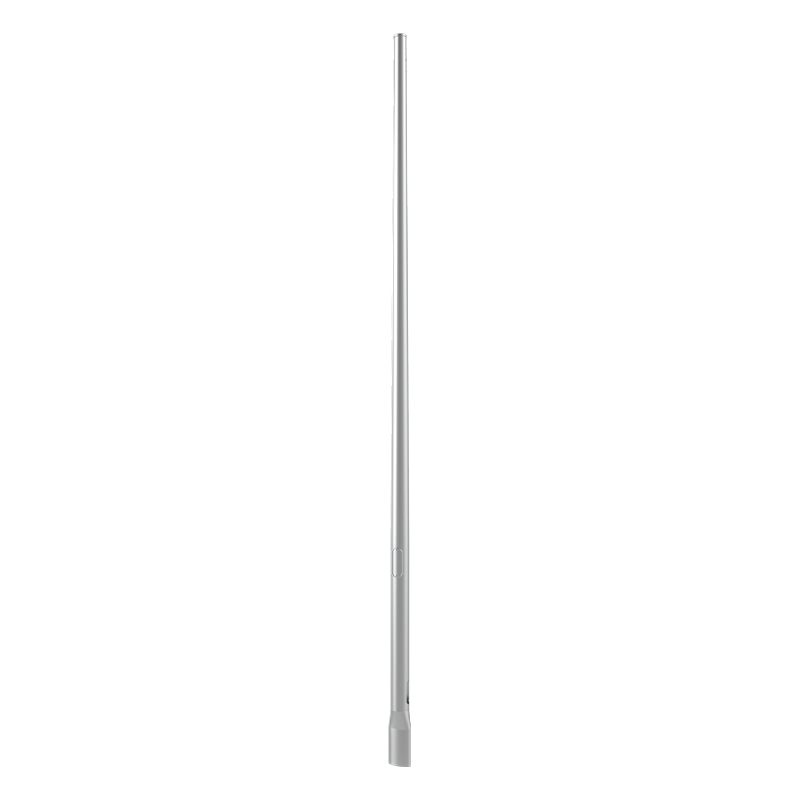
Step Two: Match the Pole to the Local Wind Zone and Structural Requirements
Structural adequacy is a safety requirement, not an optional upgrade. An under-specified pole can fail in a windstorm, creating a falling hazard for people and vehicles. Every aluminum light pole installation in the United States should be specified to meet the wind load requirements of the installation location under ASCE 7 (Minimum Design Loads and Associated Criteria for Buildings and Other Structures) and AASHTO LTS-6 (Standard Specifications for Structural Supports for Highway Signs, Luminaires, and Traffic Signals).
Wind Zone Designations Across the United States
ASCE 7's wind speed maps divide the continental United States into wind zones based on the 3-second gust wind speed at 33 feet (10 m) height with a 50-year return period. Key regional design wind speeds include:
- Interior regions (Midwest, Mountain West) — typically 90 to 110 mph (145 to 177 km/h) design wind speed; standard pole specifications generally adequate
- Gulf Coast and Atlantic Coast — typically 130 to 160 mph (209 to 258 km/h); requires enhanced wall thickness, heavier base plate, and deeper foundation
- Southern Florida and Florida Keys — up to 170 mph (274 km/h) under ASCE 7's highest wind zone; only engineered poles with third-party structural certification should be specified
- Hawaii and US territories — island-specific wind zones; consult local building department for applicable design speed
What to Request from the Supplier
When purchasing an aluminum light pole for any installation other than residential garden lighting, request the following structural documentation from the supplier:
- Structural calculations or a signed engineering letter confirming the pole meets the design wind speed for your location
- The EPA (Effective Projected Area) of the luminaire arm and any banners or attachments included in the structural calculation
- Foundation design recommendations (anchor bolt pattern, embedment depth, concrete strength) matched to the pole's base shear and moment reactions
Step Three: Specify the Right Alloy and Wall Thickness
Not all aluminum poles are made from the same material. Alloy selection and wall thickness are the two variables that determine whether a pole meets its rated structural capacity and how long it will last in service. Purchasing the cheapest pole without verifying these specifications is the most common cause of premature structural failure.
Recommended Alloys by Application
| Alloy / Temper | Tensile Strength | Yield Strength | Best For | ASTM Standard |
|---|---|---|---|---|
| 6061-T6 | 310 MPa (45 ksi) | 276 MPa (40 ksi) | High-wind zones, high-mast, structural poles | ASTM B221 |
| 6063-T6 | 241 MPa (35 ksi) | 214 MPa (31 ksi) | Decorative, architectural, standard street poles | ASTM B221 |
| 6063-T5 | 186 MPa (27 ksi) | 145 MPa (21 ksi) | Low-height landscape, garden, pedestrian poles | ASTM B221 |
Wall Thickness Guidelines
Wall thickness for extruded aluminum light pole shafts typically ranges from 0.125 inches (3.2 mm) to 0.375 inches (9.5 mm) depending on pole height, diameter, wind zone, and luminaire weight. As a practical guideline:
- Poles under 20 feet in standard wind zones: minimum 0.125 to 0.156 inch wall thickness is typically sufficient
- Poles 20 to 35 feet in standard wind zones: 0.188 to 0.250 inch wall thickness is the typical range; verify with structural calculation
- Poles in high-wind zones or with heavy luminaire arms: 0.250 to 0.375 inch wall or greater; engineered design required
Any supplier quoting an unusually thin wall for a given height and wind zone should be asked to provide supporting structural calculations. A pole that meets minimum structural requirements on paper but uses the thinnest possible wall to reduce manufacturing cost will have very little margin for real-world variability in wind loading, luminaire weight, and long-term material fatigue.
Step Four: Select the Appropriate Surface Treatment for Your Environment
While aluminum's natural oxide layer provides baseline corrosion protection in most environments, the surface treatment you specify determines the pole's long-term appearance, additional corrosion protection in aggressive environments, and the maintenance schedule required over the pole's service life.
Anodising: Best for Coastal and High-Humidity Environments
Anodising thickens the natural aluminum oxide layer electrochemically to a controlled depth of 10 to 25 micrometres. The anodised layer is integral to the metal surface—it cannot peel, chip, or flake because it is not a coating applied on top. For coastal and high-humidity installations, specify Class I anodising per AAMA 611 with a minimum film thickness of 0.7 mils (18 micrometres). This provides corrosion resistance rated for 20 to 40 years in appropriate environments and is available in natural (silver), bronze, black, and champagne colours through dye addition during the anodising process.
Anodising is the most durable surface treatment for architectural applications in aggressive environments—but it offers a limited colour range compared to powder coating, and the surface cannot be touched up in the field if damaged.
Powder Coating: Best for Decorative and Colour-Critical Applications
Powder coating applies a thermosetting polymer film in virtually any colour, providing a smooth or textured finish that meets architectural requirements. For outdoor aluminum poles, specify powder coating over a chromate or zirconate conversion pretreatment to ensure adhesion and corrosion resistance at the metal-coating interface. Quality specifications to reference:
- AAMA 2604 — high-performance organic coating; minimum 10-year gloss and chalk resistance; suitable for most inland and moderate-exposure applications
- AAMA 2605 — superior-performing organic coating (typically fluoropolymer-based); minimum 10-year South Florida exposure testing; recommended for coastal and high-UV environments
Powder coating provides the widest colour selection and is suitable for matching site-specific colour palettes for urban streetscape, park, and campus projects. It can be field-repaired with touch-up paint if damaged, which is an advantage over anodising in installations where physical damage is more likely.
Mill Finish: Acceptable Only for Utility and Industrial Use
Mill finish poles—supplied in the natural, untreated aluminum surface—are structurally durable but will develop a dull grey weathered appearance within 2 to 5 years. This finish is appropriate for industrial yards, utility installations, and secondary infrastructure where appearance is not a specification requirement. It should not be specified for public-facing, residential, or architectural applications.
Step Five: Choose the Correct Pole Style and Configuration
Aluminum's processability allows light poles to be manufactured in a range of profiles and configurations that balance structural performance with aesthetic requirements. The pole style choice affects both appearance and function.
Straight vs. Tapered Shafts
Straight-shaft poles have a uniform outer diameter from base to top. They are simpler to manufacture and lower in cost, but have a utilitarian appearance suited to roadway and parking lot lighting rather than architectural applications. Tapered poles—wider at the base and narrowing toward the top—are structurally more efficient (more material where bending stress is highest, near the base), more visually elegant, and are the standard configuration for decorative street lighting, park lighting, and commercial landscape installations. Tapered poles are available in round, square, hexagonal, and fluted profiles, each offering different aesthetic character.
Luminaire Arm Configurations
The luminaire arm (tenon, bracket arm, or davit arm) extends the luminaire horizontally from the pole to position the light source over the area to be illuminated. Common configurations include:
- Single arm — extends one luminaire to one side; used on roadways where the pole is set back from the road edge and the arm reaches over the travel lanes
- Dual opposing arms — two arms extending in opposite directions; used in median installations or where lighting is required on both sides of a wide roadway
- Tenon top (slip fitter) — a simple vertical tenon at the top of the pole that accepts a luminaire with a slip fitter mount; the cleanest, most minimal appearance; used widely for contemporary and architectural installations
- Multi-arm configurations (2 to 6 arms) — used on high-mast poles in parking lots, sports facilities, and large open areas to position multiple luminaires from a single pole
Base Types: Direct Burial vs. Anchor Base
Two base installation methods are used for aluminum light poles:
- Direct burial — the pole shaft is buried directly in concrete without a separate base plate; simpler and lower-cost installation, but the buried section of aluminum must be protected against soil corrosion and electrolytic attack; recommended burial depth is typically 10% of pole height plus 2 feet (e.g., a 20-foot pole requires 4 feet of burial)
- Anchor base (bolt circle) — the pole is attached to a pre-installed concrete foundation via a bolt circle base plate; allows replacement without disturbing the foundation, facilitates breakaway base designs for roadside safety, and allows precise pole plumbing after installation; the standard specification for municipal and commercial installations
Step Six: Verify Compliance with American Standards and Certifications
Specifying a pole that meets recognised American standards protects the owner against liability, simplifies permit approval, and provides assurance that the product has been manufactured to a defined quality baseline. The following standards are the most relevant for American aluminum light pole procurement:
- AASHTO LTS-6 — structural design standard for highway luminaire supports; the primary structural reference for roadway and highway lighting poles in the United States
- ASTM B221 — standard specification for aluminum alloy extruded bars, rods, wire, profiles, and tubes; confirms alloy and temper of the pole shaft material
- ASCE 7 — minimum design loads including wind, ice, and seismic; defines the environmental load inputs for structural pole design
- AAMA 611 — voluntary specification for anodised architectural aluminum; confirms anodising quality for architectural pole finishes
- AAMA 2604 / 2605 — performance specifications for high-performance powder coating on architectural aluminum; confirms coating durability for outdoor applications
- UL 1598 / UL 773A — for luminaire and photocell compatibility; ensures the luminaire and control components mounted on the pole meet safety listing requirements
For municipal and public agency procurement, requiring suppliers to certify compliance with AASHTO LTS-6 and to provide mill test reports (MTRs) confirming ASTM B221 material compliance is standard practice. For private commercial installations, at minimum request confirmation of the alloy and temper and a structural calculation or engineering letter for the design wind speed.
Application-Specific Selection Guide
The table below consolidates the key specification choices for the most common aluminum light pole applications encountered in American projects:
| Application | Recommended Height | Alloy | Surface Treatment | Style Priority |
|---|---|---|---|---|
| Residential driveway / garden | 10–14 ft (3–4.3 m) | 6063-T5 | Powder coat (AAMA 2604) | Decorative / traditional |
| Park pedestrian pathway | 12–20 ft (3.7–6.1 m) | 6063-T6 | Anodised or powder coat | Architectural / tapered |
| Urban streetscape / plaza | 16–25 ft (4.9–7.6 m) | 6063-T6 | Powder coat (AAMA 2605) | Contemporary / fluted |
| Commercial parking lot | 25–35 ft (7.6–10.7 m) | 6061-T6 | Powder coat or mill finish | Straight or tapered round |
| Municipal arterial street | 30–40 ft (9.1–12.2 m) | 6061-T6 | Powder coat (AAMA 2604+) | Tapered round, anchor base |
| Coastal installation (any type) | Per application above | 6061-T6 | Class I anodise (AAMA 611) | Stainless hardware throughout |
| Highway / high-mast | 60–100 ft (18.3–30.5 m) | 6061-T6 | Mill finish or powder coat | Engineered design required |
Common Mistakes to Avoid When Buying Aluminum Light Poles
The following errors account for the majority of premature pole failures, costly replacements, and permit rejections encountered in American aluminum light pole installations:
- Selecting height by aesthetics rather than photometric need — a pole that looks right proportionally but is the wrong height for the luminaire's beam pattern will produce either over-lit or under-lit conditions that cannot be corrected without pole replacement. Always start with a photometric calculation.
- Ignoring the local wind zone — using a "standard" pole specification in a high-wind coastal area is a safety risk and a code violation. Pull the design wind speed from ASCE 7 for the project ZIP code before specifying any structural component.
- Accepting unverified alloy claims — some low-cost poles are sold with marketing descriptions of "high-strength aluminum" without specifying the alloy or temper. Require ASTM B221 mill test reports that identify the specific alloy, temper, and lot from which the poles were produced.
- Using galvanised steel hardware with aluminum poles — galvanised steel anchor bolts in contact with aluminum in the presence of moisture create a galvanic cell that corrodes the aluminum base. Specify 316 stainless steel anchor bolts, washers, and nuts throughout, with neoprene isolation washers at the base plate contact.
- Specifying mill finish for architectural applications — a mill-finish pole will grey and dull rapidly in outdoor exposure. Budget the cost of anodising or powder coating into the project from the beginning rather than accepting a surface treatment downgrade to reduce cost.
- Overlooking the luminaire weight in the structural calculation — the EPA and weight of the luminaire and arm must be included in the pole's structural load calculation. A pole calculated for a 15-pound luminaire will be undersized if a 40-pound luminaire is later substituted during value engineering. Confirm the luminaire specification before finalising the pole design.