English
 Español
 Français
 عربى
عربى italiano
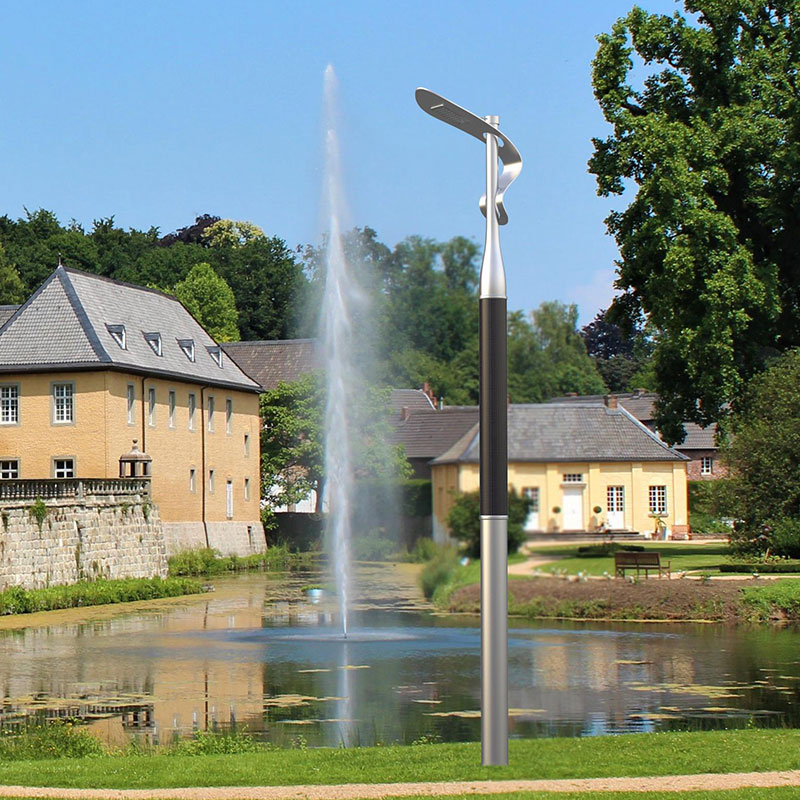
A solar light pole is a self-contained, off-grid street lighting system that generates its own electricity from a roof-mounted photovoltaic panel, stores it in an onboard battery, and delivers light through an LED lamp head, requiring no connection to the utility grid. A sodium lamp street light, by contrast, is a grid-connected luminaire that produces light by passing an electrical current through sodium vapor inside a sealed glass arc tube, drawing power from the municipal electricity network through underground cables and a transformer. These two technologies differ not just in their power source but in light quality, efficiency, service life, installation method, maintenance requirements, environmental impact, and total cost of ownership over the full operational period. In practice, solar LED light poles can cut 10-year total cost of ownership by 40 to 70 percent compared to high-pressure sodium (HPS) systems, driven by 50 to 70 percent lower energy use and 30 to 60 percent lower maintenance costs (source: U.S. Department of Energy, 2024, cited in ZCLEDS LED Street Light Cost Guide, 2026). The solar light pole category covers a range of mounting heights, panel configurations, battery technologies, and LED output levels suited to residential streets, arterial roads, parks, and remote infrastructure projects. The sections below compare each key dimension in practical depth.
Content
- 1 How Each Technology Produces Light
- 2 Light Quality: Color, Visibility, and CRI
- 3 Energy Efficiency: Lumens Per Watt Compared
- 4 Lifespan and Lumen Maintenance Over Time
- 5 Installation Requirements and Infrastructure Costs
- 6 Total Cost of Ownership Over 10 Years
- 7 Environmental Impact and Carbon Footprint
- 8 Performance in Off-Grid and Remote Locations
- 9 Smart Control and Monitoring Capabilities
- 10 When Each Technology Is Appropriate
How Each Technology Produces Light
The Sodium Lamp Working Principle
High-pressure sodium (HPS) lamps are a type of high-intensity discharge (HID) light. Inside the arc tube, an electrical arc passes through a mixture of sodium vapor and other gases, exciting the sodium atoms and causing them to emit light. The characteristic amber-orange glow of sodium street lighting comes from the spectral emission of sodium vapor, which is concentrated in a narrow band of the visible spectrum. Because the sodium lamp cannot be started instantly at full output, it requires a warm-up period of 3 to 4 minutes before reaching full brightness and a re-strike time of several minutes after a power interruption (source: HeiSolar; ZCLEDS). The arc tube operates at very high internal pressure and temperature, and the entire assembly including ballast, igniter, and outer glass envelope constitutes a chemically reactive, thermally stressed system that degrades over time regardless of whether it is running continuously or cycling on and off.
How a Solar Light Pole Produces Light
A solar light pole uses three integrated subsystems: a photovoltaic panel that converts sunlight into direct current electricity during the day, a lithium iron phosphate or gel battery that stores that charge, and an LED lamp module that draws from the battery at night. LED light generation is a solid-state process in which an electrical current passes through a semiconductor chip, causing electrons to release energy as photons rather than as heat. This process produces light almost instantly with no warm-up delay, and the LED output is precisely controllable through the charge controller or driver circuit, allowing the system to dim automatically during low-traffic hours to extend battery autonomy. Unlike sodium lamps, LEDs do not rely on any gas, filament, or pressurized arc tube, so the failure modes that characterize HPS lamps simply do not exist in the LED subsystem.
Light Quality: Color, Visibility, and CRI
Light quality is one of the most practically significant differences between the two technologies, yet it is often underweighted in procurement decisions that focus mainly on wattage and initial purchase price.
HPS lamps produce a warm, amber-orange light that falls in a color temperature range of roughly 2,000 to 2,200 K. Their Color Rendering Index (CRI) is typically between 20 and 25, meaning colors observed under HPS illumination are significantly distorted from how they appear under natural daylight (source: Leap Pole, 2025). A CRI of 25 means that the human eye struggles to distinguish the color of clothing, vehicle paint, facial features, or signage under sodium lamp illumination, which is a direct safety and security concern in pedestrian-heavy areas and around intersections where quick visual discrimination matters. HPS lamps also produce omnidirectional light, emitting in all directions from the arc tube, and significant optical engineering is required to direct that light downward onto the road surface. Light lost to the upper hemisphere represents wasted energy and contributes to sky glow.
Solar light poles using LED lamp heads deliver a color temperature typically between 4,000 and 6,000 K, producing a white light with CRI values of 70 or higher. A CRI above 70 allows drivers, pedestrians, and security cameras to accurately identify colors, read signs, and detect hazards at greater distances than is possible under sodium light of equivalent lux level. LED optics are designed to direct light toward the road surface in a defined distribution pattern, which means more of the generated lumens reach the intended target area and less is lost to upward or sideways spill. Studies on road safety lighting in multiple countries have found that white light at CRI 65 to 80 improves peripheral vision detection times compared to equivalent sodium lamp installations, an effect that is relevant to both pedestrian safety and nighttime driving response times.
| Light Quality Factor | HPS Sodium Lamp | Solar LED Light Pole |
| Color temperature | 2,000 to 2,200 K (amber-orange) | 4,000 to 6,000 K (cool white) |
| Color Rendering Index (CRI) | 20 to 25 | 70 or above |
| Warm-up time | 3 to 4 minutes to full output | Instant, full output from switch-on |
| Re-strike after power interruption | Several minutes | Instant |
| Light distribution | Omnidirectional, requires reflector | Directional LED optics, less waste |
| Sky glow contribution | Higher due to upward light loss | Lower due to controlled beam pattern |
Sources: Leap Pole, 2025; hylele.us, 2026; ZGSM LED comparison guide.
Energy Efficiency: Lumens Per Watt Compared
Energy efficiency in lighting is measured in lumens per watt (lm/W), which expresses how much visible light output is produced for each watt of electrical power consumed.
High-power HPS tubes in the 250 to 400 W range achieve efficacy of 130 to 140 lm/W at the lamp level, while lower-power HPS tubes in the 100 to 150 W range deliver approximately 80 to 100 lm/W (source: ZCLEDS, 2025). These figures are lamp-level measurements. At the system level, after accounting for ballast losses, reflector losses, and the inefficiency of redirecting omnidirectional output toward the target surface, the effective system efficacy is substantially lower. Modern LED fixtures used in solar light poles achieve 140 to 180 lm/W at the fixture level, with premium-tier products exceeding 180 lm/W and some reaching 200 lm/W (source: hylele.us, 2026). Because LED optics deliver a much higher proportion of the generated lumens to the road surface, the comparison is even more favorable at the application level. A 100 W LED fixture can replace a 250 W HPS lamp while delivering equivalent or superior road illuminance, resulting in immediate energy consumption savings of 50 to 70 percent per lighting point (source: hylele.us, 2026). For a solar light pole, this efficiency advantage is compounded: the same solar panel and battery capacity can support a longer autonomous night of operation or a higher lumen output when serving an LED lamp compared to what would theoretically be required for an HPS load of equivalent brightness.
Lifespan and Lumen Maintenance Over Time
Service life determines how often each technology requires lamp replacement and what the ongoing maintenance burden looks like across a fleet of street lights.
A standard HPS lamp has a rated service life of approximately 24,000 hours, and at the midpoint of that life at around 12,000 hours it still provides approximately 90 percent of its initial light output (source: ZGSM; American Electric Lighting). However, lumen depreciation accelerates in the later portion of the lamp life, and by end of life the output may have dropped by 15 to 30 percent from the initial value before the lamp actually fails (source: hylele.us, 2026). This means that a sodium lamp street system needs lamp replacement approximately every 3 to 5 years under typical continuous operation schedules, plus ballast and igniter replacements that may occur at different intervals.
LED modules used in solar light poles have rated lifespans of 50,000 to 100,000 hours, representing 2 to 4 times the service life of HPS lamps, with lumen maintenance at 80 percent or better at the end of rated life (source: SLD; ZGSM; hylele.us). In practical terms, an LED module rated at 50,000 hours at 12 hours per night of operation will last more than 11 years before requiring replacement, compared to 5 to 6 years for an HPS lamp at the same operating schedule. The battery on a solar light pole system is the component that typically determines the maintenance cycle on the solar side, with lithium iron phosphate batteries commonly rated for 2,000 or more charge cycles before capacity degrades below 80 percent, corresponding to approximately 5 to 7 years of nightly charging under normal conditions. Advances in battery management systems and cell chemistry continue to extend this interval in newer products.
| Lifespan Factor | HPS Sodium Lamp | Solar LED Light Pole |
| Lamp or LED module rated life | 24,000 hours typical | 50,000 to 100,000 hours |
| Lumen maintenance at midlife | Approximately 90 percent at 12,000 hours | Approximately 97 percent annually (hylele.us, 2026) |
| Lumen maintenance at end of life | 70 to 85 percent before failure | 80 percent or better at 50,000 hours |
| Approximate replacement interval (12 hr/night) | Every 3 to 5 years | Every 11 to 20 years for LED module |
| Additional consumable component | Ballast and igniter | Battery (5 to 7 year cycle depending on chemistry) |
Sources: ZGSM LED comparison guide; SLD Lighting; hylele.us, 2026; American Electric Lighting.
Installation Requirements and Infrastructure Costs
The installation process for each technology type has a profound effect on total project cost, especially for new installations in areas without existing grid infrastructure.
Sodium Lamp Street Lighting Installation
Installing a grid-connected sodium lamp street lighting system involves civil works for underground cable trenching, the laying and jointing of power cables, the installation of service connection points, and often a local transformer or distribution board for a section of road. A typical high-pressure sodium street light costs approximately USD 1,350 for the pole, fixture, and mounting bracket, but installation costs for setting the pole and running electrical wiring from the pole to the transformer can cost upwards of USD 4,550, and that figure does not include the ongoing electricity bill (source: EnGoPlanet, 2024). Trenching one kilometer of cable through urban paving can cost USD 8,000 to USD 15,000 in direct civil works costs alone, and the disruption to road surfaces, traffic, and local businesses during trenching adds indirect costs that are difficult to quantify but are significant for municipal projects (source: beamfact.com, 2026). In remote or rural areas where the grid does not exist, extending the network to reach a lighting project can involve substantially higher infrastructure spending that may dwarf the cost of the lighting equipment itself.
Solar Light Pole Installation
A solar light pole requires no trench, no cable, no transformer, and no grid connection. Each pole is an independent unit that is installed by setting the foundation, mounting the pole, attaching the solar panel arm, connecting the battery box or internal battery pack, and directing the LED lamp head. Installation costs range from approximately USD 50 to USD 300 per light depending on terrain and site conditions, compared to the USD 4,550 or more required for a grid-connected pole in a new installation (source: Leap Pole, 2025; EnGoPlanet, 2024). The elimination of trenching and electrical infrastructure reduces installation time by approximately 60 percent compared to a conventional grid-connected system (source: Leap Pole, 2025), which has direct implications for project delivery timelines. Solar poles can also be deployed in phases, with individual units installed as budget allows, whereas a grid-connected street lighting project requires the full infrastructure investment to be in place before any section of road can be lit.
Total Cost of Ownership Over 10 Years
Comparing the two systems on upfront cost alone produces a misleading picture, since the operating cost of grid-connected sodium lamp systems accumulates continuously while the solar pole carries minimal ongoing costs after installation.
Conventional HPS grid-connected street lighting accrues monthly electricity charges averaging approximately USD 20 per fixture per month for energy and infrastructure fees, amounting to USD 2,400 over ten years in energy costs alone, before any lamp replacements, ballast replacements, or maintenance call-out costs are added (source: Leap Pole, 2025). A 10-year total cost of ownership for a conventional HPS pole has been cited between USD 1,800 and USD 2,400 in published U.S. Department of Energy and International Energy Agency benchmarks (source: ZCLEDS, citing DOE 2024 and IEA 2022 data). Solar poles carry higher upfront costs at approximately USD 1,500 per unit in a new installation, but decade-long costs fall to around USD 2,000 compared to USD 4,000 for conventional grid-connected lights once operational costs are included (source: Leap Pole, 2025). Across a city-scale installation of 10,000 street lights, the 10-year total cost of ownership difference between networked LED solar poles and HPS grid systems can exceed USD 10 million in total savings (source: ZCLEDS, citing DOE 2024). The return on investment period for solar street lights is typically 3 to 7 years depending on local electricity rates and project scale, after which the savings are realized directly as reduced municipal operating expenditure (source: quenenglighting.com, 2024).
| Cost Factor | HPS Sodium Lamp (Grid Connected) | Solar LED Light Pole |
| Typical unit purchase cost | USD 1,350 (pole, fixture, bracket) | USD 200 to 2,500 depending on output |
| Typical new installation cost per pole | USD 4,550 or more including trenching | USD 50 to 300 per pole |
| Monthly electricity cost per fixture | Approximately USD 20 | Zero grid electricity cost |
| 10-year total cost of ownership per pole | USD 1,800 to 4,000 | USD 900 to 2,000 |
| Typical ROI period for solar | Not applicable | 3 to 7 years |
| 10-year savings vs HPS per 10,000 lights | Baseline | Over USD 10 million (DOE 2024 benchmark) |
Sources: EnGoPlanet, 2024; Leap Pole, 2025; ZCLEDS citing DOE 2024 and IEA 2022; quenenglighting.com, 2024.
Environmental Impact and Carbon Footprint
The environmental credentials of the two technologies differ significantly, and this difference is increasingly relevant to municipal procurement decisions, sustainability reporting requirements, and public expectation around infrastructure.
A grid-connected sodium lamp street light operating continuously on an electricity grid with an average carbon intensity generates approximately 1,500 pounds of CO2 equivalent per year per fixture through its electricity consumption (source: Leap Pole, 2025). Across a typical city lighting network, this makes street lighting one of the largest single sources of municipal carbon emissions, and HPS systems are among the least efficient components of that network. Sodium lamps also contain mercury in some configurations, creating a regulated hazardous waste disposal obligation when lamps are replaced. The ballast units contain capacitors and other materials that require separate disposal streams under electrical and electronic waste regulations in many markets.
A solar light pole produces zero operational carbon emissions, since all electricity is generated locally from the photovoltaic panel with no grid connection and no combustion. The environmental impact of the system over its lifecycle is limited to the embodied energy and materials in manufacturing the panel, battery, LED module, and pole structure, and the recycling and end-of-life handling of the battery and panel at the end of service. Compared to a conventional HPS system, the operational emissions reduction is approximately 99 percent (source: Leap Pole, 2025). For municipalities with carbon reduction commitments, this figure directly translates into reportable emission reductions under national and local climate accounting frameworks.
Performance in Off-Grid and Remote Locations
One of the most practical advantages of the solar light pole is its ability to operate in locations where grid connection is economically or physically impractical. Remote roads, mountain passes, desert highways, rural communities, island settlements, and temporary construction sites all represent environments where running underground power cable to a conventional street lighting system would cost many times the value of the lighting itself.
A solar light pole designed for these environments incorporates additional battery capacity or a larger panel area to maintain autonomous operation through periods of reduced solar irradiance, such as consecutive cloudy days or locations at higher latitudes with shorter winter day lengths. Battery autonomy specifications of 3 to 5 consecutive cloudy nights are common for commercial solar street lighting products intended for consistent all-year-round operation. Modern charge controllers also include adaptive load management that automatically reduces LED output during extended low-charge periods to extend the number of operating hours before battery depletion, prioritizing a minimum light level throughout the night over delivering maximum output for a shorter duration.
By contrast, a sodium lamp system provides no service at all when grid power fails, and power outages caused by weather events, infrastructure faults, or load shedding disable the entire connected network simultaneously. The independence of each solar pole from every other pole and from the grid means that a localized fault affects only the individual unit and not the entire road section.
Smart Control and Monitoring Capabilities
Modern solar light poles increasingly incorporate wireless communication modules that allow remote monitoring of battery state, panel output, LED module status, and motion sensor activity from a central management system. This capability gives municipal operators visibility into the performance of every individual pole without sending a maintenance crew to inspect it physically, and it allows proactive identification of degrading batteries or underperforming panels before a complete failure occurs.
Dimming control is another practical advantage of LED-equipped solar poles. The charge controller can be programmed to deliver full output during peak hours, such as the first and last two hours of the night when pedestrian and vehicle traffic is highest, and to reduce output to 30 to 50 percent during the low-traffic hours in between, extending battery life and increasing the system's autonomy margin. Motion sensing can further optimize this by restoring full output when a pedestrian or vehicle is detected, then returning to dim mode when the area is clear.
HPS sodium lamps, by contrast, cannot be dimmed to a fraction of their output without stability problems in the arc, and full dimming capability requires either costly dimming ballasts or switching to solid-state alternatives. Remote monitoring of HPS systems is possible through add-on telemetry equipment but is not a native feature of the lamp technology itself.
When Each Technology Is Appropriate
Despite the clear long-term advantages of solar LED light poles in most metrics, the right choice for a specific project depends on local conditions, grid availability, budget structure, and performance requirements.
Situations Where a Solar Light Pole Is the Stronger Choice
- New road lighting installations where no grid infrastructure exists, since avoiding trenching and cabling saves the majority of the conventional system's installation cost
- Remote, rural, or island communities where grid extension is prohibitively expensive or technically challenging
- Municipalities with carbon reduction commitments who need to reduce operational emissions from their existing lighting network
- Locations with high electricity tariffs where the 50 to 70 percent energy saving of LED compared to HPS, combined with zero grid cost, accelerates return on investment
- Projects requiring rapid or phased deployment, such as temporary road lighting for construction, event infrastructure, or emergency response
- Parks, pathways, and landscaped areas where underground trenching would damage established planting or heritage surfaces
Situations Where Grid-Connected Systems Remain Relevant
- Dense urban networks where grid infrastructure already exists and the incremental cost of connecting a new light is low
- High-traffic arterials requiring very high lux levels sustained for long hours, where a very large panel and battery would be needed to deliver consistent solar autonomy
- Locations at high latitudes or with persistent cloud cover that would require exceptionally oversized solar arrays to guarantee all-season performance
- Retrofit situations where the existing pole and cabling infrastructure is in good condition and only the lamp head needs upgrading to LED, making the grid-connected LED retrofit the most cost-effective path