English
 Español
 Français
 عربى
عربى italiano
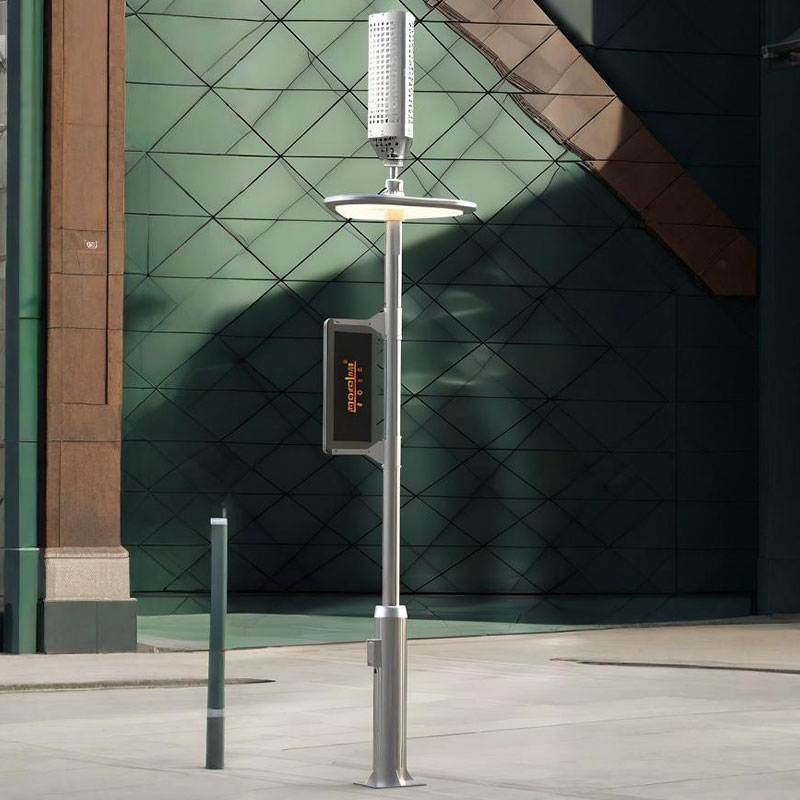
Smart light poles offer a powerful combination of urban lighting, data collection, connectivity, and public services — all from a single piece of infrastructure. Rather than serving only as a source of illumination, modern smart poles function as multi-layered urban management hubs that reduce operational costs, improve public safety, and accelerate the buildout of smart city ecosystems. Cities deploying smart pole networks have reported energy savings of up to 70% compared to conventional street lighting, while simultaneously gaining real-time visibility into traffic, environment, and public safety conditions.
The advantages span across energy efficiency, data intelligence, public safety, connectivity, and citizen services — making smart light poles one of the highest-return investments in modern urban infrastructure.
Content
- 1 Significant Energy Savings Through Intelligent Lighting Control
- 2 Integrated 5G and Wi-Fi Connectivity for the Connected City
- 3 Comprehensive Public Safety Enhancement
- 4 Real-Time Environmental Monitoring Across Urban Areas
- 5 Multimedia Information Display and Smart City Communication
- 6 EV Charging Integration and Green Urban Mobility Support
- 7 Layered Architecture That Scales With City Needs
- 8 Reduced Infrastructure Footprint Through Consolidation
- 9 Cloud-Based Remote Management and Operational Efficiency
- 10 Key Advantages of Smart Light Poles at a Glance
- 11 Supporting Broader Smart City Goals and Long-Term Urban Planning
Significant Energy Savings Through Intelligent Lighting Control
One of the most immediate and measurable advantages of smart light poles is their ability to dramatically cut energy consumption. Traditional street lighting systems operate on fixed schedules regardless of real-world conditions — lights stay on at full brightness even when roads are empty at 3 a.m. Smart poles replace this inefficiency with adaptive, sensor-driven control.
LED smart poles combined with dimming controls can reduce energy usage by 50–70% compared to legacy high-pressure sodium lamps. Ambient light sensors automatically adjust brightness based on natural light levels, while motion detection ensures full brightness only when pedestrians or vehicles are present. At other times, poles dim to 20–30% output, preserving public safety while minimizing waste.
- Timed lighting schedules can be configured remotely via PC or mobile device, allowing city managers to adjust entire districts in minutes.
- Fault detection alerts maintenance teams instantly when a lamp or sensor fails, reducing outage duration and manual inspection rounds.
- Centralized energy monitoring dashboards provide granular consumption data per pole, enabling predictive maintenance and budget forecasting.
- Group control capabilities allow operators to adjust lighting across entire corridors or zones with a single command.
For a mid-sized city with 50,000 streetlights, transitioning to smart LED poles can save millions of dollars annually in electricity bills alone — a compelling return on infrastructure investment typically achieved within 3 to 5 years.
Integrated 5G and Wi-Fi Connectivity for the Connected City
Smart light poles are uniquely positioned to serve as the backbone of urban wireless networks. Their widespread distribution across cities, combined with existing power supply infrastructure, makes them ideal hosts for 5G small cells, Wi-Fi access points, and other communication equipment.
By embedding 5G micro base stations directly into lamp poles, cities can achieve dense network coverage without installing separate tower infrastructure — a critical advantage as 5G deployment requires far more antenna nodes than previous generations of mobile technology. This approach significantly lowers the cost and visual footprint of 5G rollouts in dense urban environments.
Public Wi-Fi Hotspots
Installing Wi-Fi AP hotspot devices on smart poles creates a city-wide free internet network accessible to all citizens and visitors. This reduces the digital divide, supports tourism, and enables IoT devices throughout the urban environment to communicate seamlessly. Coverage areas of 50–100 meters per pole ensure continuous connectivity in commercial districts, public squares, and transportation hubs.
Vehicle-Road Collaboration
Smart poles equipped with V2X (vehicle-to-everything) communication modules enable real-time data exchange between road infrastructure and autonomous or connected vehicles. Traffic signal status, road hazard alerts, and speed advisories can be broadcast directly to vehicles, improving traffic flow efficiency and road safety — a foundational requirement for self-driving vehicle ecosystems.
Comprehensive Public Safety Enhancement
Public safety is among the most compelling advantages of smart light poles. By integrating high-definition cameras, emergency call systems, and real-time monitoring capabilities, smart poles transform ordinary street furniture into an active safety network.
24/7 HD Video Surveillance
Built-in high-definition cameras with infrared night vision enable continuous monitoring of public spaces regardless of lighting conditions. Video feeds are streamed in real time to centralized command centers, giving law enforcement and city managers full situational awareness across the entire pole network. AI-powered video analytics can automatically detect anomalies such as abandoned objects, crowd surges, or unauthorized entry, triggering instant alerts without requiring operators to monitor every feed manually.
One-Click Emergency Alarm
Smart poles equipped with emergency call buttons allow citizens in distress to instantly connect with a management center. Upon activation, the system transmits the precise GPS location of the pole along with live audio and video to emergency responders, dramatically reducing response times. This feature is particularly valuable in parks, underpasses, and other locations where personal safety risks are elevated.
Remote Audio Broadcasting
Built-in broadcast speakers allow city managers to push audio announcements remotely — whether for emergency evacuations, public event guidance, or routine notices. Two-way intercom capability also enables direct communication between field operators and management centers, improving coordination during incidents.
Real-Time Environmental Monitoring Across Urban Areas
Smart light poles serve as distributed environmental sensing stations, providing continuous, hyperlocal data about urban conditions. A single pole can host multiple meteorological and environmental sensors, creating a dense monitoring network that far surpasses traditional weather station coverage.
Commonly integrated sensors include:
- Air quality sensors — measuring PM2.5, PM10, CO2, NOx, and ozone levels in real time.
- Meteorological sensors — monitoring temperature, humidity, wind speed, wind direction, rainfall, and UV intensity.
- Noise sensors — tracking decibel levels to enforce noise ordinances and assess the acoustic environment near schools or hospitals.
- Light intensity sensors — enabling automatic adaptive dimming and providing data for urban lighting planning.
This continuous environmental data stream feeds into city management platforms, enabling evidence-based decisions on traffic restrictions during pollution events, early warning systems for extreme weather, and long-term urban planning informed by granular neighborhood-level data. Cities like Singapore and Copenhagen have deployed pole-based sensing networks to track and respond to air quality in near real time, demonstrating the practical value of this capability at scale.
Multimedia Information Display and Smart City Communication
Smart light poles equipped with digital displays become a powerful channel for city-to-citizen communication. Unlike static signage, digital screens on smart poles can be updated instantly and remotely from a central platform, enabling dynamic content delivery tailored to time, location, and audience.
Applications include:
- Real-time weather and traffic condition updates displayed at key transit points.
- Emergency alerts and evacuation instructions pushed instantly city-wide during crises.
- Public health announcements, community event schedules, and municipal service updates.
- Directional and wayfinding information in tourist districts and transportation hubs.
- Commercial advertising on designated screens, which can generate revenue to offset infrastructure costs.
The ability to manage all display content from a single cloud-based platform dramatically reduces the operational overhead of managing a citywide information network, compared to maintaining hundreds of individually programmed signs.
EV Charging Integration and Green Urban Mobility Support
As electric vehicle adoption accelerates globally, smart light poles offer a practical and cost-effective way to expand public EV charging infrastructure. By leveraging the existing electrical connections already present at each pole, cities can deploy charging points without the significant civil works required for standalone charging stations.
Pole-integrated charging points support mobile app reservations, real-time availability monitoring, and cashless digital payment — providing a seamless experience for EV drivers. Cloud-based remote management allows operators to monitor energy usage, detect faults, and update pricing across the entire charging network from a central dashboard.
This integration positions smart light pole networks as a key enabler of urban EV adoption, aligning city infrastructure investment with national carbon reduction commitments. Countries including the UK, Germany, and China have begun incorporating pole-mounted charging into their national EV infrastructure strategies.
Layered Architecture That Scales With City Needs
The technical architecture of a smart light pole platform is designed for scalability and integration, not just standalone functionality. A well-designed system is organized into four interconnected layers that together enable end-to-end smart city management:
| Architecture Layer | Components | Primary Function |
|---|---|---|
| Device Perception Layer | Cameras, environmental sensors, motion detectors, emergency buttons | Collect real-world data from the physical environment |
| Network Communication Layer | 5G modules, Wi-Fi AP, fiber connections, NB-IoT | Transmit data between poles and management platforms |
| Data Aggregation Layer | Edge computing units, cloud servers, data middleware | Process, store, and structure incoming data streams |
| System Application Layer | City management dashboards, mobile apps, API integrations | Enable operators and citizens to act on aggregated intelligence |
This layered approach means new functions can be added to existing pole hardware through software or modular hardware upgrades, protecting the initial investment as city needs evolve. A pole installed today can be upgraded with new sensor modules, display technologies, or communication standards as they become available — a critical advantage in rapidly changing technology environments.
Reduced Infrastructure Footprint Through Consolidation
One of the often-overlooked advantages of smart light poles is their ability to consolidate multiple separate infrastructure systems into a single physical structure. Traditionally, a city block might require separate installations for streetlights, traffic cameras, environmental sensors, public Wi-Fi nodes, EV chargers, and digital signage — each with its own power supply, mounting hardware, and maintenance schedule.
Smart poles eliminate this fragmentation by housing all of these functions within a single unified structure connected to a single power and data network. The benefits compound across the city at scale:
- Reduced street clutter, improving urban aesthetics and pedestrian experience.
- Lower total installation cost compared to deploying separate systems for each function.
- Simplified maintenance with a single maintenance team managing all pole functions.
- Reduced civil works since a single trench carries both power and data cabling for all functions.
- Lower carbon footprint per unit of functionality delivered.
Cloud-Based Remote Management and Operational Efficiency
Smart light poles are managed through cloud platforms that give city operators real-time control and visibility across thousands of nodes simultaneously. This centralized management model transforms how cities operate their public infrastructure.
Through a web dashboard or mobile application, operators can:
- Remotely switch individual poles or entire zones on, off, or to a specified brightness level.
- Schedule automated lighting programs based on time of day, day of week, or special events.
- Receive instant fault alerts when any hardware component on any pole requires attention.
- Monitor energy consumption per pole, per zone, or across the entire network in real time.
- Access historical data and generate reports for financial planning and regulatory compliance.
- Update firmware and software on connected devices over the air, eliminating manual field visits for routine updates.
Cities that have implemented centralized smart pole management platforms report reductions in maintenance labor costs of 30–50%, as technicians are dispatched only for confirmed hardware faults rather than routine inspection rounds. This shift from reactive to predictive maintenance fundamentally changes the economics of urban infrastructure management.
Key Advantages of Smart Light Poles at a Glance
The following table summarizes the principal advantages of smart light poles compared to conventional street lighting infrastructure:
| Dimension | Traditional Street Light | Smart Light Pole |
|---|---|---|
| Energy Efficiency | Fixed output, no adaptive dimming | 50–70% energy savings via adaptive control |
| Connectivity | None | 5G, Wi-Fi, NB-IoT, fiber |
| Public Safety | Passive illumination only | HD cameras, emergency alarms, broadcasting |
| Environmental Monitoring | None | Air quality, weather, noise, UV, light sensors |
| Management | Manual on-site inspection | Cloud remote control, predictive maintenance |
| Citizen Services | None | EV charging, public Wi-Fi, digital displays |
| Infrastructure Footprint | Single-function, multiple separate systems needed | Multi-function consolidation in one structure |
Supporting Broader Smart City Goals and Long-Term Urban Planning
Smart light poles do not operate in isolation — they are integral nodes in the broader smart city data ecosystem. The data generated by pole-based sensors feeds directly into city management platforms covering traffic control, emergency response, environmental compliance, urban planning, and citizen services.
The pole network becomes, in effect, a city-wide nervous system — continuously sensing, communicating, and enabling intelligent responses to urban conditions. This integration creates compounding value: environmental data improves traffic routing, surveillance data informs public space design, and connectivity infrastructure supports economic development and digital equity goals.
For city planners and municipal governments, the advantages of smart light poles extend well beyond any single function. They represent a foundational investment in digital infrastructure that enables future capabilities not yet fully defined — from autonomous vehicle corridors to real-time carbon accounting — while delivering immediate, measurable returns in energy savings, operational efficiency, and public safety today.