English
 Español
 Français
 عربى
عربى italiano
Steel light poles are used across a wide range of outdoor and semi-outdoor lighting applications — from urban street lighting and highway illumination to sports facilities, industrial sites, architectural installations, and smart city infrastructure. Their combination of high structural strength, long service life of 40–50 years with hot-dip galvanizing, repairability, and adaptability to diverse aesthetic and functional requirements makes them the most widely specified pole material globally for public, commercial, and industrial lighting. With the continued upgrading of anti-rust and manufacturing technology, the application scope of steel light poles continues to expand.
Content
- 1 Urban Street Lighting: The Most Common Application
- 2 Highway and Major Road Lighting
- 3 Sports and Recreation Facility Lighting
- 4 Industrial and Commercial Site Lighting
- 5 Architectural and Decorative Lighting Applications
- 6 Multi-Function and Smart Infrastructure Applications
- 7 Why Steel Remains the Dominant Light Pole Material Across All Applications
Urban Street Lighting: The Most Common Application
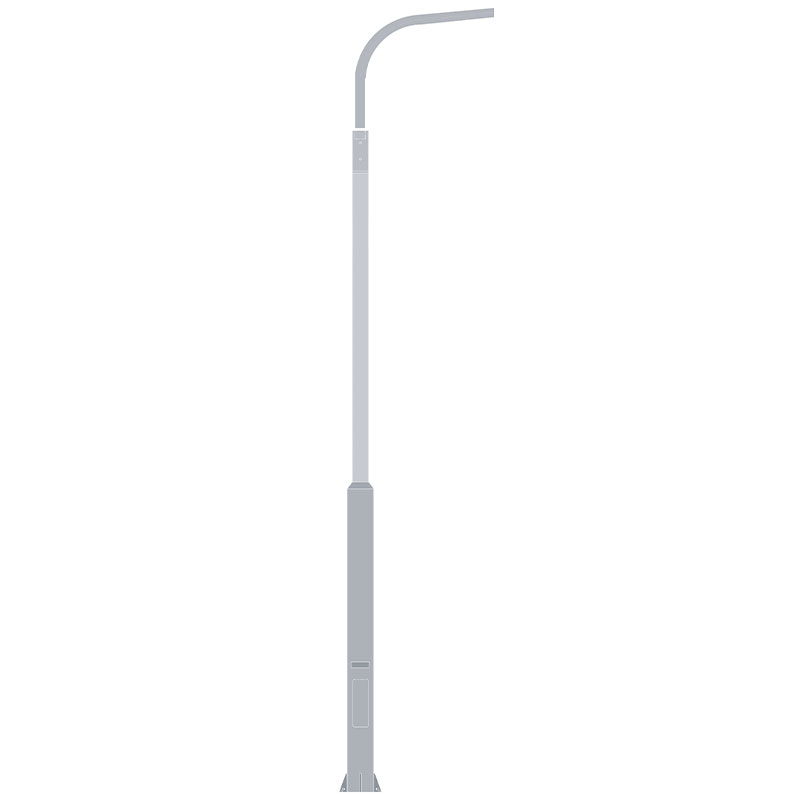
Urban street lighting is the largest single application category for steel light poles. Cities, towns, and residential developments worldwide rely on steel poles to support LED street lighting fixtures along roads, pavements, cycle paths, and pedestrian zones. Their durability and long service life reduce the lifecycle cost of street lighting infrastructure — a key consideration for municipal authorities managing thousands of light points across large geographic areas.
Steel poles for urban street lighting are typically specified at heights of 6 to 10 meters for residential roads, rising to 10 to 14 meters for main arterials and dual carriageways. Their structural strength allows single poles to carry multiple luminaire arms — enabling efficient road lighting with fewer poles per kilometer than would be required with lighter, less rigid materials.
The classic tapered cylindrical profile of a galvanized steel street lighting pole has become a recognized visual element of the urban environment — its clean, familiar form contributing to the streetscape without demanding architectural attention. For locations where a more distinctive aesthetic is required, steel poles can be powder-coated in custom colors, fitted with decorative base plates and bracket arms, or manufactured in ornate heritage styles that complement historic city centers.
Highway and Major Road Lighting
High-speed roads, motorways, and major arterial routes impose demanding structural requirements on lighting poles — high wind loading from vehicle wake turbulence, risk of vehicle impact, and the need to support heavy high-mast luminaires at heights that maximize road surface coverage. Steel is the material of choice for these applications precisely because its structural properties meet these requirements in ways that lighter materials cannot.
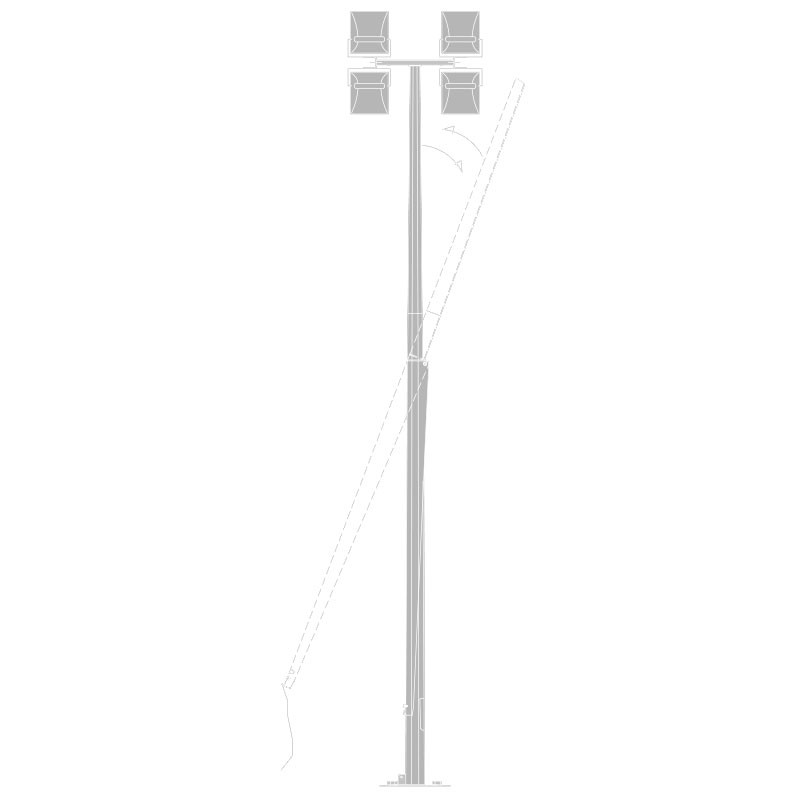
- High-mast lighting poles: Poles of 20 to 45 meters in height carrying multiple luminaires on a rotating ring are used at motorway junctions, toll plazas, and major interchanges. The structural demands at these heights — bending moments from wind load can exceed several hundred kilonewton-meters — require steel as the only practical material for economical construction at these heights
- Breakaway poles: In roadside locations close to traffic lanes, safety regulations in many countries require poles designed to break away cleanly when struck by a vehicle — reducing injury severity in impact events. Steel poles can be engineered with frangible base connections or specific wall thickness profiles that achieve controlled breakaway behavior while maintaining normal structural performance in service
- Tunnel and underpass lighting supports: Steel poles and brackets carry lighting fixtures in road tunnels and underpasses where structural reliability, resistance to the corrosive tunnel atmosphere, and the ability to withstand the vibration from passing traffic are critical requirements
Sports and Recreation Facility Lighting
Sports facility lighting requires poles that can support multiple high-power floodlights at significant heights while withstanding wind loading from both the exposed position and the additional drag of the luminaires themselves. Steel poles are used in virtually every category of outdoor and covered sports facility lighting.
| Sports Application | Typical Pole Height | Key Structural Requirement |
|---|---|---|
| Football / soccer pitch | 16–20m | Multiple floodlight arms; high wind load |
| Athletics track | 12–16m | Uniform illuminance across track width |
| Tennis / basketball courts | 8–12m | Glare control; precise aiming |
| Baseball / cricket ground | 20–30m | Very high mast; large luminaire payload |
| Golf course | 10–14m | Wide spacing; aesthetic integration |
| Swimming pool / aquatic center | 8–12m | Corrosion resistance in humid environment |
Industrial and Commercial Site Lighting
Industrial facilities, commercial developments, logistics parks, and large-area surface car parks all require robust, reliable outdoor lighting that can withstand demanding operational environments and deliver consistent illuminance over large areas. Steel poles are the preferred choice for these applications because of their strength, their ability to carry heavy commercial luminaires, and their resistance to the mechanical and chemical challenges of industrial environments.
Key Industrial and Commercial Applications
- Logistics and distribution centers: Large warehousing and distribution facility perimeters and loading areas use steel poles at heights of 10–16m to illuminate large working areas with high-output floodlights, enabling safe 24-hour operation
- Car parks and parking structures: Surface car parks use steel poles at 6–10m spacing to deliver uniform illuminance across parking areas to the levels required by security standards — typically 20–50 lux minimum average across the parking surface
- Ports and container terminals: High-mast steel poles of 30–45m provide the wide-area flood illumination required for safe container handling operations around the clock at major port facilities
- Mining and quarry sites: Exceptionally robust steel poles withstand the vibration, dust, and mechanical impact exposure of active mining environments where lighter materials would suffer premature failure
- Power stations and substations: Electrical generation facilities require poles that meet specific safety separation requirements from live equipment while delivering reliable perimeter and working area lighting — steel poles engineered to the required specifications are standard in these environments
Architectural and Decorative Lighting Applications
Steel light poles are not limited to functional utilitarian applications — their versatility in fabrication makes them equally at home in high-aesthetic environments where the pole itself is a visible design element that contributes to the visual character of the space.
Steel can be fabricated into complex decorative forms that concrete, aluminum, and composite materials cannot achieve as economically — fluted columns, ornate bracket arms, heritage lantern-style posts, and custom contemporary sculptural profiles are all achievable in steel through forming, casting, and welding. This design flexibility, combined with the ability to apply powder coatings in any RAL color, allows steel poles to be specified as coherent elements of a designed streetscape or public realm rather than merely functional fixtures.
- Heritage and conservation areas: Historic city centers, conservation zones, and heritage-designated streetscapes often require lighting poles that reference traditional Victorian or Edwardian cast-iron lamp post profiles — these are typically manufactured in steel or cast iron with appropriate surface finishes that comply with heritage authority requirements
- Public plazas and civic spaces: High-footfall public spaces such as town squares, civic plazas, and waterfront promenades use architecturally designed steel poles as focal elements that combine nighttime illumination with daytime visual interest
- Commercial and retail developments: Premium retail environments, shopping center car parks, and business park entrances use custom-designed steel poles in corporate colors with proprietary bracket and luminaire configurations that reinforce brand identity and create a consistent visual experience
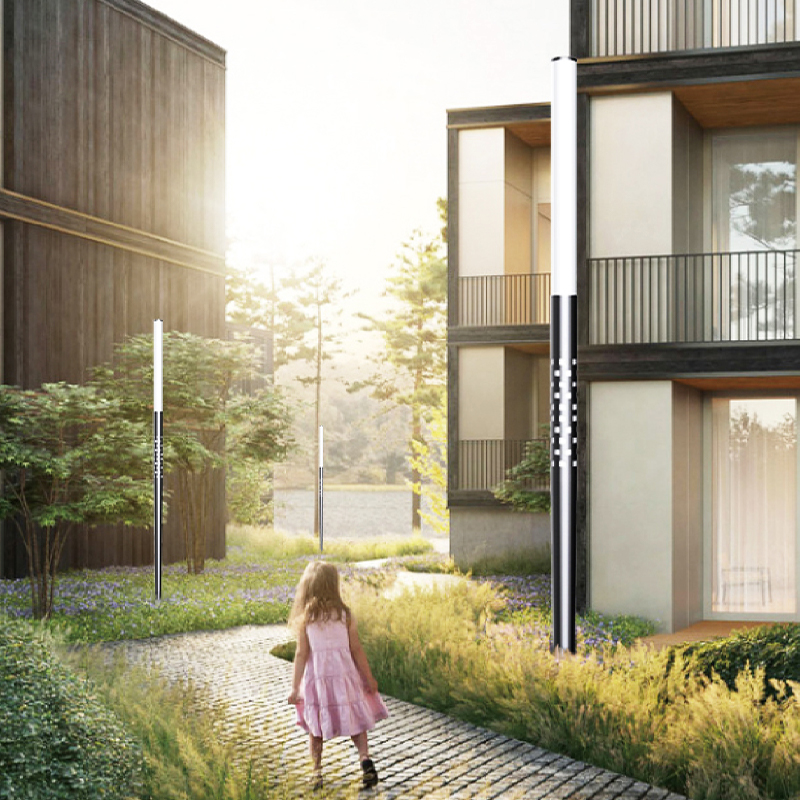
- Parks, gardens, and leisure routes: Amenity areas use lower-height decorative steel bollard poles and amenity columns at 3 to 5 meters that provide soft pedestrian-level illumination while contributing positively to the landscape character
Multi-Function and Smart Infrastructure Applications
The structural strength and large cross-section of steel poles make them ideal mounting structures for equipment beyond lighting — supporting the expansion of their use into smart city, telecommunications, and multi-function infrastructure roles.
- CCTV and security cameras: Urban steel street lighting poles increasingly carry integrated or bracket-mounted surveillance cameras, sharing the pole infrastructure and power supply with the lighting fixture to avoid the cost of separate camera masts and power connections
- Traffic signals and signs: Signal-controlled junctions routinely use steel poles to carry traffic signal heads, pedestrian crossing signals, variable message signs, and junction cameras — the structural capacity of steel poles accommodates the combined loading of multiple pieces of equipment with appropriate safety margins
- Small cell and 5G antenna hosting: Telecommunications operators increasingly mount small cell antennas and 5G equipment on existing street lighting poles to extend network coverage without requiring separate mast infrastructure — steel poles' structural capacity and widespread urban distribution make them ideal host structures
- Electric vehicle charging: Some urban street lighting programs are integrating EV charging points into the base or bracket of steel street lighting poles, using the pole's existing grid connection to provide charge points without additional infrastructure cost
- Environmental monitoring sensors: Air quality monitors, noise sensors, and weather stations can be mounted on steel poles as part of urban environmental monitoring networks — combining data collection infrastructure with existing lighting pole assets to reduce the number of separate structures required in urban streets
Why Steel Remains the Dominant Light Pole Material Across All Applications
The breadth of steel light pole applications across such diverse contexts reflects the unique combination of properties that no single alternative material replicates across all performance dimensions simultaneously.
- Structural strength across all height ranges: From 3m amenity posts to 45m high-mast poles, steel can be economically engineered to the required bending moment capacity at any height — without requiring the disproportionately heavy sections that concrete needs at equivalent heights
- Repairability after damage: A steel pole that has suffered localized corrosion or impact damage can be repaired by welding — restoring structural capacity and extending service life at a fraction of the cost of full replacement. This repairability is a major lifecycle cost advantage over composite and aluminum poles, which must typically be replaced as complete units when structurally damaged
- Corrosion protection effectiveness: Hot-dip galvanizing — the standard anti-rust treatment for outdoor steel poles — provides 40–50 years of maintenance-free corrosion protection in typical urban environments through a self-repairing zinc-iron alloy coating of 55–85 micrometers
- Cost-performance balance: At equivalent heights and load capacities, galvanized steel poles typically offer a lower total installed cost than aluminum or composite alternatives — a decisive advantage when hundreds or thousands of poles are being specified for a large-scale infrastructure program
- Design versatility: Steel can be formed, welded, cast, and finished to virtually any shape, profile, and color — enabling both utilitarian standard-production poles and bespoke architecturally designed poles to be produced from the same base material platform